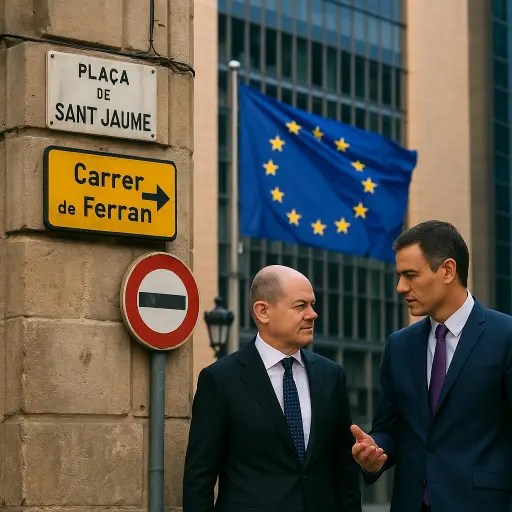
The bilateral initiative revives a long‑stalled campaign as Madrid seeks to fulfil coalition commitments and secure a vote before year‑end
A fresh diplomatic chapter opened this week as Spain and Germany announced the launch of bilateral negotiations aimed at elevating Catalan to full official language status within the European Union (EU). The move marks a turning point in a long‑running effort by Spain to secure equal recognition for its regional co‑official languages.
According to a joint statement released on Friday, the two governments have agreed “to open a dialogue aimed at finding an answer to the Spanish request that its official languages, other than Spanish, be recognised as official within the European Union in an acceptable way for all EU Member States.” The statement emphasises that “the incorporation of these languages constitutes an essential part of Spain’s plurilingual national identity.”
What the initiative entails
For Catalan to become an official EU language, approval must come from all 27 EU Member States, given the unanimity requirement under the relevant EU regulations for language status. Spain plans to draft and submit a text to the next meeting of the EU’s Council of the European Union’s General Affairs Council, currently scheduled for 17 November, with a final decision hoped for by the 16 December session.
Germany, historically the main stumbling block against the move, has not abandoned its concerns but has expressed willingness to engage. The German government emphasises that the dialogue does not presuppose any outcome. “We have not changed our position,” a German spokesperson reportedly said, “and we call on our partners not to prejudge the result of the talks.”
Political backdrop in Spain
The timing of the announcement is politically significant. Spain’s government led by Pedro Sánchez is under pressure from the Catalan‑pro independence party Junts, which had made recognition of Catalan (and other co‑official regional languages) in the EU a key condition for its parliamentary support. With internal tensions rising and a Monday deadline for Junts to decide on staying in the coalition, the government sees the move as key to maintaining its majority.
In a statement via social media platform X, the Catalan regional leader expressed confidence: “We are closer to making Catalan an official language of the EU.” The announcement offered a breath of fresh air for Sánchez’s government, which has faced faltering support amid regional discontent.
The implications of recognising Catalan
Recognition of Catalan at EU‑level would carry symbolic and practical consequences. On the symbolic side, it would place Catalan among the officially recognised languages of the EU institutions — a status enjoyed by national languages of Member States, but until now denied to Spain’s regional co‑official tongues. Practically, it could entail increased translation and interpretation costs for EU institutions, and raise complex questions about funding, logistical capacity and precedent for other regional or minority languages across Europe.
From Brussels’ vantage point, the addition of a new official language triggers the need for institutional adjustments: regulatory amendments, staffing of translators, and submission of documents in the new language. According to Spanish advocates, the cost argument is overstated given Catalan’s wide speaker base and that many Spanish interpreters already command Catalan.
Why Germany changed gear
Germany’s evolution in this dossier is notable. Previously, Berlin — backed by other northern and smaller EU states — argued that the proposal was premature, citing cost issues and the risk of opening the door to many more regional languages seeking equivalent recognition. Sources say that meetings between Sánchez and German Chancellor Friedrich Merz, including one in Madrid in September, paved the way for a softening of German resistance. Some German officials reportedly view this as part of a broader recalibration of EU lingua‑policy, especially in the face of rising demands for linguistic equality and diversity.
Road ahead and potential obstacles
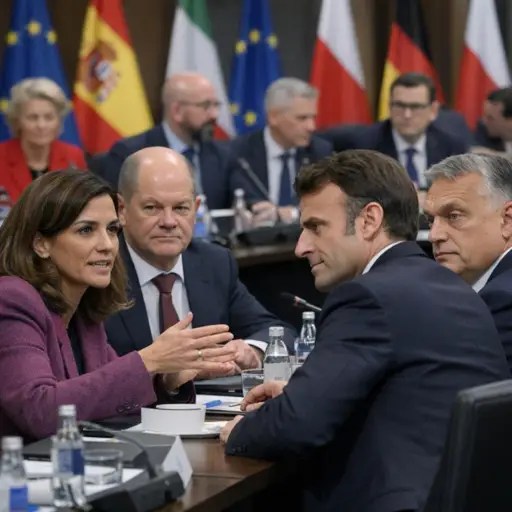
Despite the positive tone, many hurdles remain. First and foremost is the requirement of unanimous consent from all EU member states — a high bar. Several countries, including Sweden, Finland, Lithuania and Latvia, have already expressed doubts or reservations about granting Catalan full official status. Second, the timeline is tight: the November and December Council meetings leave little room for delay if this is to come to a vote this year.
Moreover, even if the proposal passes, the exact operational form remains unclear: will Catalan become a fully working language (with full translation, interpretation, and correspondence rights) or a more limited form of recognition? Germany and other states have previously suggested a “medium‑term” solution leveraging AI translation, rather than full immediate integration.
Broader context in Europe
The push for Catalan must also be seen against growing European emphasis on multilingualism and the rights of regional and minority language speakers. For years, the European Language Equality Network and other NGOs have highlighted the paradox of Catalan being one of the most spoken native languages in the EU without official EU status. At the same time, other Member States worry about triggering a wave of similar demands from regions across the bloc — from Belgium to Italy to France.
What to watch
In the coming weeks, key developments include:
- Whether Spain submits a formal draft text to the General Affairs Council in early November.
- Whether Germany signals any concrete concessions beyond agreeing to dialogue.
- How other EU capitals respond in behind‑the‑scenes diplomatic circulation — the decision of one or two smaller states could be pivotal.
- Whether the Catalan pro‑independence party Junts remains in the governing coalition, potentially reshaping Spanish domestic politics depending on the outcome.
If the proposal gains traction this year, Catalan could become the 25th official language of the European Union. If it fails, Spain may face renewed domestic political friction while the broader question of regional language recognition in Europe remains unsettled.
Conclusion
The announcement of bilateral talks between Spain and Germany marks a fresh and potentially transformative step for Catalan language status in the European Union. As Madrid seeks to fulfil domestic political commitments and Berlin recalibrates its stance, the initiative now enters a critical phase: negotiating text, building support, and navigating the unanimity requirement. For Catalan speakers across Catalonia, Valencia and the Balearic Islands, the possibility of writing to EU institutions in their language and seeing it appear in Brussels’ translation layers moves closer. Yet the finish line remains distant and fraught with complexity — for both linguistic equality and the intricate dynamics of EU diplomacy.



 The Tower Post