
As October 2025 unfolds, the American luxury‑fashion sector is increasingly defined by digital workflows, immersive experiences and innovation platforms that are rewriting what luxury means.
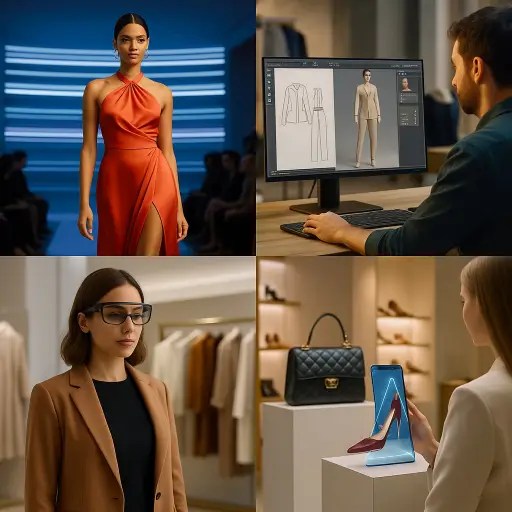
For decades, luxury fashion in the United States was defined by iconic store fronts on Fifth Avenue, exclusive runway shows, and rich heritage craftsmanship. Today, that narrative is undergoing a striking transformation: digital tools, virtual platforms, and technology‑enabled workflows are quietly yet irrevocably shaping the business of luxury. Brands are no longer just selling heritage or handcrafted pieces — they are selling experiences, personalization and connectivity, in which technology plays a starring role.
The digital overhaul of luxury design and production
The first major shift is happening behind the scenes: design, sampling and production processes are increasingly digitised. Technologies such as AI‑forecasting, 3D design and virtual sampling are now core to fashion houses’ operations. For U.S. luxury brands, this means accelerating time‑to‑market, reducing waste and maintaining creative flexibility while keeping the craftsmanship narrative intact.
Take for example design studios in New York and Los Angeles that now utilise virtual garment draping, avatar modelling and digital “fit” platforms, enabling designers to iterate without full physical prototypes. This shift not only speeds the process but aligns with sustainability goals by minimising excess production.
Immersive experiences: Beyond the brick‑and‑mortar store
Luxury retail in the U.S. has long been anchored in the in‑store experience: polished surfaces, personalized service, and exclusivity. But as digital permeates luxury, bricks‑and‑mortar is being complemented by virtual and hybrid experiences. From augmented‑reality (AR) try‑ons to digital fashion drops, U.S. luxury brands are embracing tech to engage consumers in new ways.
Consumers in the U.S. luxury market increasingly demand convenience, novelty and digital sophistication. In response, brands are introducing virtual previews of collections, immersive story‑led campaigns and digital‑first engagements linked to physical collection launches.
Personalisation and data‑driven clienteling
Another technologic frontier is personalisation. Data‑driven systems are enabling luxury brands to tailor offerings to the individual client more meaningfully. In the U.S., high‑end customers expect the kind of curated service once reserved for private clients — now with the speed of digital. Tools leveraging AI to predict tastes, suggest accessories, or even propose full looks, are increasingly in use.
One luxury conglomerate revealed that artificial‑intelligence agents serve millions of internal users across dozens of brands, helping plan pricing, production, marketing and design in real time. For U.S. luxury houses, which face slower growth in mid‑2020s compared with the boom years, technology is seen as both a lever for efficiency and a means to elevate the client relationship.
Innovation platforms: Where luxury meets tech ecosystem
Beyond internal workflows and front‑line retail, luxury fashion in the U.S. is getting pulled into the broader tech ecosystem. Platforms that enable digital fashion, blockchain‑based provenance, NFTs, metaverse activations and community‑driven brand engagement are becoming part of the luxury toolkit.
For instance, digital‑fashion houses create garments designed solely for online avatars, or physical garments equipped with NFC tags that connect to virtual assets. U.S. luxury brands are increasingly exploring these models — not merely as hype, but as ways to connect with younger, digitally native luxury consumers who view status, ownership and experience differently.
U.S. market dynamics: Challenges and opportunities
For U.S. luxury fashion houses, the embrace of digitisation comes amid a tougher external landscape. Global luxury‑goods growth is expected to slow to 1‑3 percent annually across major markets including the U.S. in the years ahead. In this context, tech becomes not just an opportunity, but almost a necessity.
Digitisation and tech‑empowerment allow luxury brands to differentiate, extend lifetime value, and maintain relevance with younger, digitally fluent consumers. The U.S. luxury consumer now expects brands to mirror the speed and convenience of digital commerce, while still delivering the craftsmanship, exclusivity and story that define true luxury.
Spotlight on October 2025: Key trendlines to watch
As of October 2025, several developments merit attention in the U.S. luxury fashion context:
- 3D digital‑first collection launches.
- Augmented‑reality try‑ons in luxury boutiques.
- Data‑driven micro‑collections.
- Blockchain‑enabled provenance.
- Collaborations with tech‑startups.
What this means for the consumer and brand
For the U.S. luxury consumer, the shift means a richer, more dynamic experience: whether it’s previewing a garment in digital form, customizing finishes through an AR interface, or buying a limited‑edition item tied to a virtual asset.
For the brand, the mandate is clear: adopt techno‑creative fluency without sacrificing luxury’s roots of craftsmanship, story and exclusivity. The risk is that technology becomes spectacle rather than substance. Luxury’s challenge is to apply tech in “quiet” ways that respect the heritage of quality.
The path ahead: Strategic considerations
As U.S. luxury fashion enters this tech‑inflected chapter, brands must:
- Maintain authenticity.
- Balance exclusivity with accessibility.
- Ensure sustainability and transparency.
- Protect brand value.
- Cultivate digital‑native talent.
Final word
The luxury‑fashion landscape in the U.S. stands at an inflection point. Digitisation and tech empowerment are central to how luxury brands design, produce, market and engage. While the tools are new, the core of luxury remains the same: rarity, craftsmanship, story, and emotional resonance.
Brands that succeed will weave technology into their DNA — where digital innovation enhances the luxury promise rather than replacing it. The future of luxury is not simply what you own, but how you engage, personalise, and connect — and in the U.S., that future is already fashionably here.




 The Tower Post