
From tens of thousands to nearly a million participants and big‑brand backing, HYROX sets sights on 1.6 million in its biggest leap yet
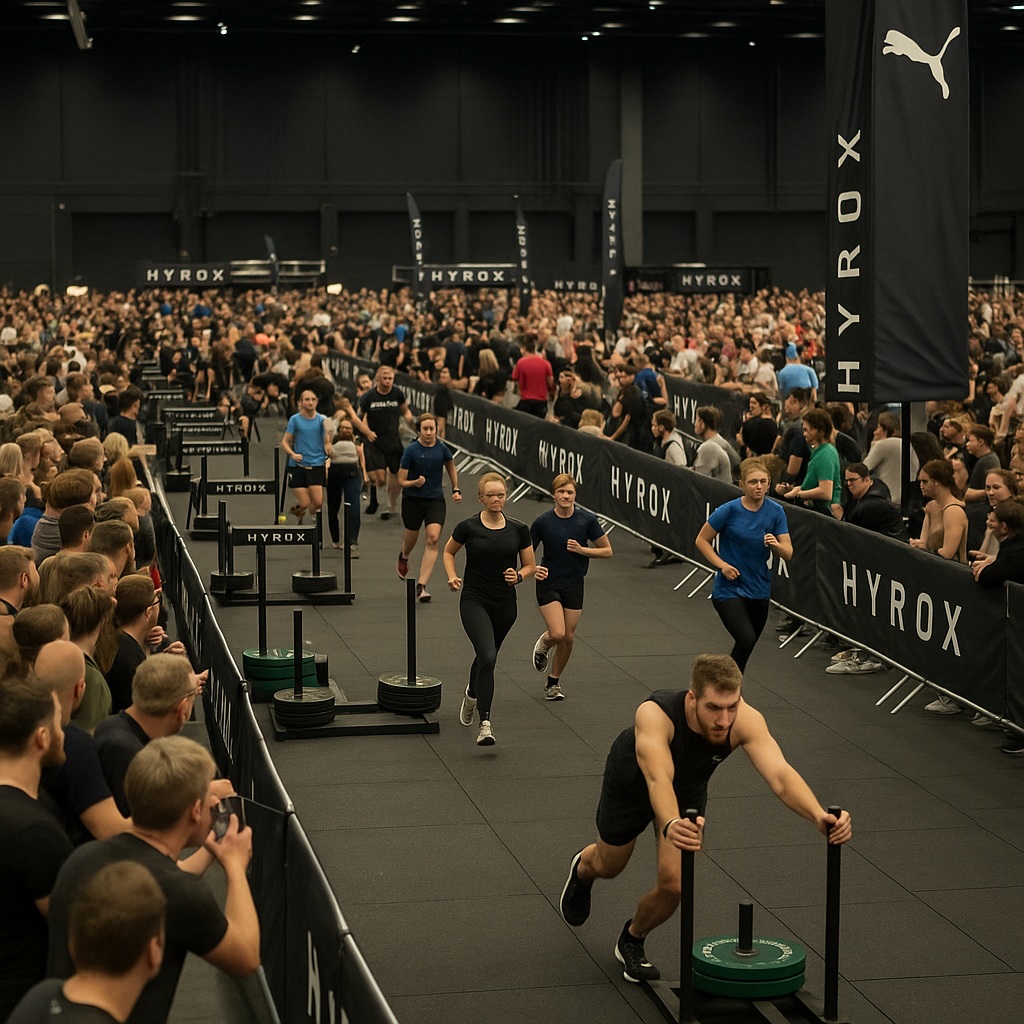
What began as a modest fitness racing experiment in Germany in 2017 has evolved into a full‑blown global movement. HYROX – the “world series of fitness racing” – is smashing through the boundaries of conventional sport, scaling from niche to mass participation, backed by major corporate investment, and poised for its most ambitious phase yet.
The rise of a hybrid sport
HYROX launched with a straightforward concept: combine indoor running with functional fitness stations. Participants run 1 km, hit a workout station, repeat eight times—sled pushes, wall balls, rowing, carries. The standardised format made it easy to replicate globally and benchmark across cities.
Over the years, HYROX has grown rapidly. Reported figures note some 600 000 participants in recent seasons, and recent articles suggest the figure may be closer to 900 000 worldwide. Organisers now aim to hit 1.6 million participants next year, propelled by plans to establish multi‑day events in major cities across the globe.
The appeal is clear: hybrid fitness offers everyday athletes a tangible goal, a community event and a measurable performance benchmark. As the sport crosses the barrier from enthusiast to mass‑participation, it has attracted attention from not just athletes, but investors and brands.
Big‑brand backing and commercial traction
Corporate investment has followed the growth curve. Global sportswear giant Puma renewed and extended its long‑term partnership with HYROX through to 2030, making HYROX its “title partner” for the World Championships and providing official footwear and apparel for the series.
Additionally, retail network player Intersport is listed among the brand partners of HYROX in the 2025 sponsor guide. This signals that HYROX is moving from fitness‑niche into mainstream sporting‑market relevance, positioning itself alongside established endurance events and team sports in terms of brand equity.
For Puma and others, the attraction lies in tapping a younger, performance‑focused, gym‑going demographic – shifting the brand conversation from traditional running or team sports into hybrid fitness, functional movement and race‑event culture.
Scaling globally: major cities, multi‑day formats
HYROX is now setting its sights on major global expansion. Organisers talk of staging multi‑day events in around 150 major cities, transforming from single‑day races into destination fitness festivals.
Such a scale would mark a shift: rather than a boutique competition series, HYROX is becoming a mass‑sport platform. Multi‑day formats allow higher participant counts, festivals of fitness, more side events (recreational divisions, expo, training clinics) and—critically—more commercial revenue streams (sponsorship, broadcasting, licensing, retail).
In practical terms, that means cities across Europe, North America, Asia and beyond being considered. Each event would draw thousands (and perhaps tens of thousands) of participants plus spectators, exhibitors and brand activations.
The challenge of growth and relevance
But as HYROX grows, the challenge becomes maintaining the original community vibe while building for scale. Some early‑adopter participants have expressed concern that rapid demand and commercialisation may erode the inclusive, every‑body ethos that made HYROX attractive in the first place.
Operationally, staging large‑scale indoor events in major cities is complex: venue logistics, timing, safety, equipment, standardisation of the eight‑station format, quality of athlete experience. Moreover, the jump from hundreds of thousands to over a million participants brings expectations—both of participants (entry ease, race experience) and of brands (visibility, ROI, measurement).
Then there’s media and exposure: while HYROX is growing fast in participation, mainstream sports broadcasting still lags behind. The brand needs to build not only participation but reach (via streaming, TV, digital) to fully realise its commercial potential.
Implications for sport, fitness and business
The HYROX story illustrates a broader shift in the fitness‑sport landscape: the lines between traditional sport, fitness competition and mass‑participation events are blurring. Hybrid events catering to “everybody” — not just elite athletes — are commanding scale and sponsorship, often with lifestyle‑event formats (standing up to music, expo‑style activation, social media shareability).
For the fitness industry: gyms, training clubs and coach networks are tapping into HYROX programmes, affiliating with the brand to capture eager participants. For sports brands: HYROX offers a fresh positioning — high‑performance but accessible, competitive yet community‑focused.
For cities and event organisers: HYROX presents a new event‑type with economic spin‑offs — hundreds or thousands of visiting participants plus spectators, training leads, hotel stays, travel, retail. Multi‑day formats amplify that.
What to watch for next
- Whether HYROX hits the target of 1.6 million participants next year and how evenly that growth is distributed globally, versus concentrated in a few major markets.
- The rollout of the multi‑day events in 150 major cities: which cities, which formats, what the participation baseline will be per city.
- Sponsorship and broadcast deals beyond apparel: will HYROX begin to monetise media rights, digital streaming, branded content at scale?
- Participant experience consistency: as numbers grow, will HYROX maintain the ‘sport for every body’ feel or shift toward performance/elite orientation?
- The interplay with traditional endurance events (marathons, obstacle races) and functional‑fitness competitions (CrossFit, etc): will HYROX redefine or simply co‑exist?
In essence, HYROX is no longer just a fitness race—it is positioning itself as a global sport‑event brand, operating at the intersection of mass participation, corporate investment and lifestyle fitness culture. If the next year plays out as planned, that figure of 1.6 million participants, multi‑day city‑wide events in 150 major markets, and big‑brand backing will mark a pivotal moment: HYROX moves from the periphery to the mainstream of global sport.




 The Tower Post