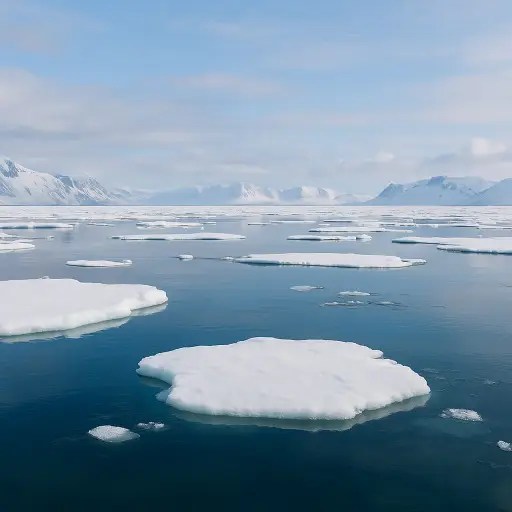
Von der Leyen declares the Arctic the keystone of EU security and competitiveness
In a decisive address in Stockholm, Ursula von der Leyen placed the Arctic at the very heart of Europe’s strategic thinking, asserting that the region is no longer a remote margin but a central front of European security and economic competitiveness. The speech signals a major shift in the European Union’s posture and policy‑priorities as it braces for a more contested northern hemisphere.
Changing geography, changing stakes
Speaking at the Nordic Council summit in Sweden, von der Leyen said that “as the ice retreats, the Arctic is moving ever closer to the centre of global geopolitics.” This observation came amid growing awareness in Brussels that melting polar zones are opening new sea routes, exposing untapped raw‑material reserves and bringing previously remote geographies into high strategic tension.
According to von der Leyen, Europe must now adopt “a new mindset” if it is to preserve its sovereignty and competitiveness in an evolving climate‑and‑security environment. She warned that the combination of climate change and major‑power competition is transforming the Arctic into a strategic frontier.
From policy footnote to strategic pillar
The speech marks a clear elevation of the Arctic from an environmental or scientific concern to a full‑blown security and economic priority for the EU. Previously, Brussels had framed its Arctic engagement around cooperative science, environmental protection and regional development.
Von der Leyen announced that the European Commission is revising its Arctic policy “to make it fit for our time.” The upcoming iteration will reflect the region’s heightened strategic importance — in particular the connectivity of Arctic routes, raw‑material value chains, new civilian and military infrastructure, and the need to safeguard supply‑chains and access in a competitive environment.
She underscored the importance of Greenland and other northern territories to Europe’s future. Noting that some of the critical raw materials for European industry lie beneath polar ice and rock, she urged stronger strategic commitments to the region.
Security, partnerships and Nordic leadership
In her remarks, von der Leyen placed special emphasis on Europe’s northern members and partners — countries that are already closest to the Arctic realities. Their militaries, infrastructure and civil‑defence habits, she said, give them a vantage point in readiness that the Union as a whole can learn from.
She called for enhanced cooperation with Arctic‑adjacent states, stronger coordination in monitoring and infrastructure (including dual‑use facilities), and alignment between defence, energy and transport policies. The message: the Arctic challenge is not only military, but also logistical, environmental, economic and technological.
Competitiveness meets security
Von der Leyen’s framing links two often‑separate policy domains: economic competitiveness and security. By placing the Arctic at the nexus of those, she signals that Europe must treat the region not just as a remote zone of climate interest, but as an arena of industrial and strategic contest. That includes access to shipping corridors, mining and value chains for critical materials, and infrastructure resilience in cold environments.
She warned that rival powers are already operating with long‑term strategic ambitions in the north, and Europe must match that. The Arctic, she argued, “holds the key to Europe’s strategic independence.”
Implications and challenges
Europe’s pivot to the Arctic raises questions about resources, sovereignty, environment and partnerships. As sea‑ice melts and routes open, Europe will face new decisions: how to raise infrastructure, how to regulate shipping and mining, how to partner with indigenous populations and the states of the North, and how to balance environmental protection with commercial access.
There is also the security angle: the Arctic is becoming an area of heightened interest for strategic competition. As von der Leyen pointed out, Europe must integrate the north into its overall strategic architecture. This could mean more assets deployed northward, renewed focus on the High North in defence planning, and possibly new responsibilities for Arctic‑adjacent states within the EU’s security network.
However, the shift will not be without tension. There are environmental sceptics warning of over‑exploitation; regional stakeholders concerned about sovereignty and external actors pressing in; and budgetary pressures in Brussels at a time of multiple crises. The description of the Arctic as a “strategic frontier” implies new burdens for a Union already stretched on defence, green transition and global diplomacy.
What comes next?
Brussels will now turn words into strategy. The revision of the Arctic policy document is imminent, and it will likely outline the EU’s roadmap for northern infrastructure, dual‑use investments, raw‑material partnerships and strategic shipping routes. Member‑states in the north will play a key role in shaping how the EU leverages the region’s potential.
In the coming weeks, expect a flurry of announcements: joint EU‑Nordic initiatives, defence‑industry forums focused on the Arctic environment, new investment pledges for northern infrastructure and an uptick in attention to dual‑use capabilities in Arctic conditions. Holding the Arctic at the centre of European policy may mark one of the more consequential strategic re‑orientations in recent years.
Conclusion
In the crisp air of Stockholm, Ursula von der Leyen delivered a clear message: Europe must wake up to the north. The Arctic is no longer distant; it is integral to Europe’s future security and prosperity. By reframing the region as a strategic frontier, the EU is stepping toward a new era — one where climate, commerce and defence converge in the land of ice and sea. The challenge now is turning ambition into action.
 The Tower Post