
In a defining moment for the Donetsk front, President Volodymyr Zelenskyy warns that Russian units now vastly outnumber Ukrainian troops in the strategic town of Pokrovsk as the assault intensifies.
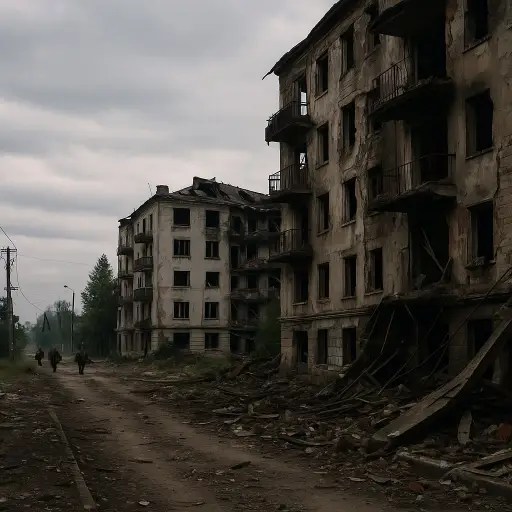
The town of Pokrovsk, nestled deep in eastern Ukraine’s Donetsk Oblast, finds itself at the heart of one of the war’s most perilous flashpoints. Ukrainian President Volodymyr Zelenskyy has publicly acknowledged what battlefield analysts have long feared: Russian forces are now out‑numbering the Ukrainian defenders in Pokrovsk by a margin of approximately eight to one.
A Town Besieged
For months, the Russian military has honed in on Pokrovsk — a vital rail and road hub that connects the war‑torn Donbas region with wider supply lines. Control of the town would allow Moscow to cut off Ukrainian logistics and deepen its grip on the Donetsk front.
In recent days, the pressure has mounted. Russian infantry units, supported by drones and artillery, are reported to have infiltrated positions around and even within the township’s outskirts. Ukrainian sources confirm the situation is “difficult” and characterize the fighting as “fierce.”
Numbers Tell the Story
The eight‑to‑one ratio comes directly from Zelenskyy, who stated that in the Pokrovsk area Russian soldiers out‑number Ukrainian troops eight to one. While exact unit counts remain unverified independently, open‑source analysts note the imbalance is palpable: Russian formations concentrated for this sector far exceed the available Ukrainian manpower and materiel.
For Ukraine, this means defending with fewer bodies, stretched supply lines, and escalating risk of encirclement.
Tactical Stakes & Strategic Significance
The battle for Pokrovsk is no mere skirmish; it is emblematic of the broader war in eastern Ukraine. If Russian forces succeed, it would:
- Sever key supply and rail arteries for Ukraine’s eastern front.
- Grant Moscow a critical staging point for further advances westwards.
- Deliver a symbolic blow to Ukrainian morale, while boosting Russian momentum.
Conversely, for Ukraine to hold Pokrovsk — or at least delay its capture — is to maintain a bulwark in the Donetsk region, buying time and preserving paths for reinforcements.
On the Ground: Conditions & Morale
Sources inside the region describe a grueling day‑night cycle of shelling, drone strikes, and infantry scrambles. Defensive positions around the town are under constant pressure; Ukrainian commanders say many units are holding by the skin of their teeth.
Morale remains mixed: on one hand, defenders draw strength from Zelenskyy’s public backing and international aid; on the other, the sheer weight of enemy numbers, and the exhaustion of continuous combat, pose daily challenges.
What’s Next?
Military analysts suggest that Russia may attempt a final encirclement of Pokrovsk — cutting roads, severing supply routes, and forcing defenders either to withdraw, surrender, or fight street by street.
For Ukraine, the imperative is clear: hold the town long enough for reinforcements to arrive, for supplies to flow, and for international support to translate into tangible defensive capability.
Broader Implications
The outcome at Pokrovsk may ripple far beyond its immediate geography. A Russian breakthrough could destabilize nearby sectors of the front, while a successful Ukrainian hold could become a rallying point for Western support and lend weight to Kyiv’s diplomacy.
President Zelenskyy’s warning — of being vastly out‑manned — serves both as a call for urgency and a rallying cry for resilience.
As Friday closes in and the lights flicker across frontline trenches and shattered buildings, the fight for Pokrovsk stands as one of the most consequential chapters yet in Ukraine’s eastern war. The next moves, made in rain‑soaked fields, bomb‑scarred streets and under the hum of drones overhead, will matter not only for this town but for the trajectory of the conflict that has reshaped Europe’s security map.


 The Tower Post