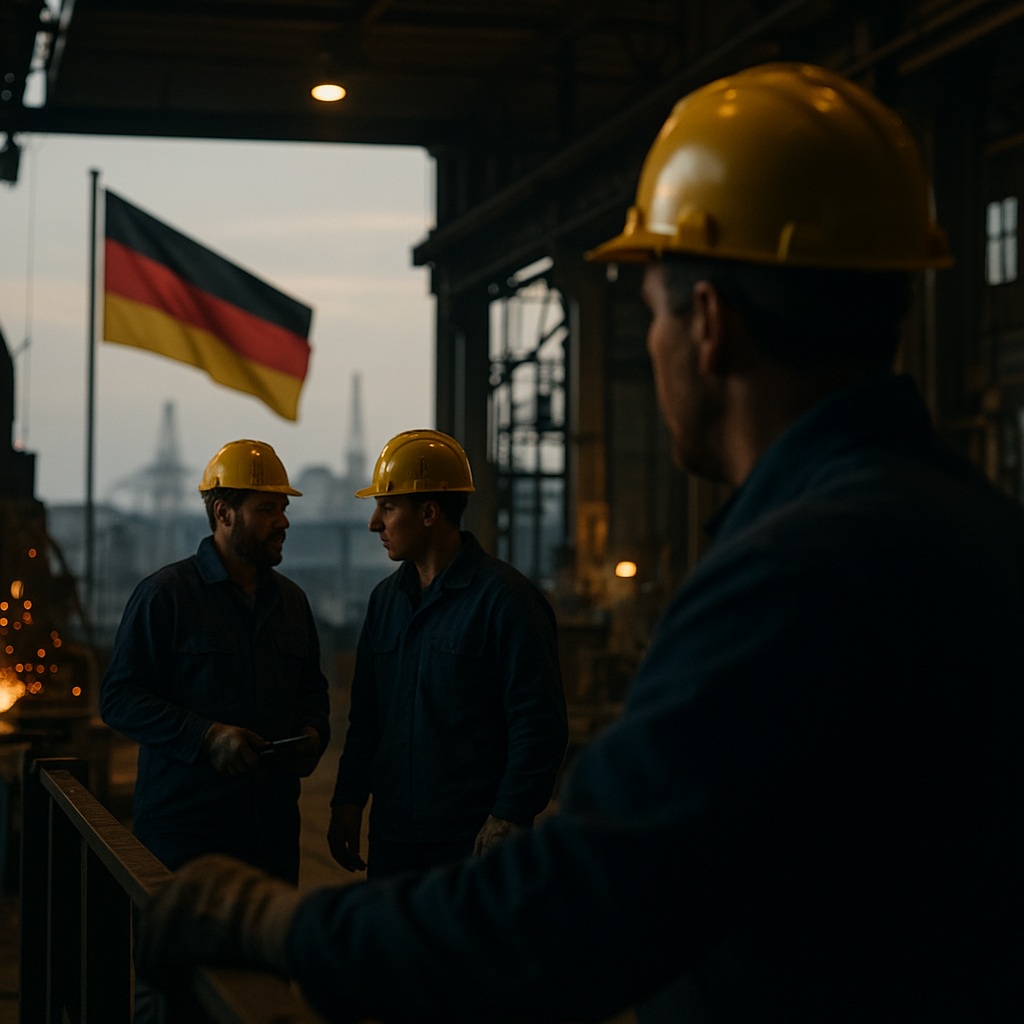
Federal Cabinet’s Approval of a Minimum Wage Hike Signals a Shift Toward Social Justice and Labour‑Market Rebalancing

As Germany turns the page into November, the federal government has taken a decisive step in reshaping its domestic economic policy by approving a notable increase in the statutory minimum wage. This move, long in the making, marks a clear tilt in favour of social justice—aligning labour‑market regulation with the rising cost of living and labour‑market pressures facing Europe’s largest economy.
The cabinet’s decision formalises a plan for a two‐stage rise in the hourly minimum rate, moving it from the currently quoted level of €12.82 to €13.90 in the coming year, and then to €14.60 by 2027. According to government figures, the measure is set to benefit up to six million workers across Germany’s diverse economy.
A Policy Shift Toward Fairer Compensation
The decision reflects a significant shift in the way the German government, employers and trade unions conceive of minimum wage policy. In the earlier years after the introduction of the minimum wage in 2015, incremental rises were modest and closely attentive to business costs. Now, with inflation and global economic uncertainty weighing heavily, the move signals a stronger commitment to shore up income for low‑paid workers and to bolster demand in the domestic economy.
Labour Minister Bärbel Bas welcomed the decision as “an important step towards greater fairness and recognition for those who keep our country running day in and day out.” The approval also reflects the outcome of negotiations within the independent “Minimum Wage Commission” (Mindestlohnkommission), which groups representatives from both employers and unions.
Labour‑Market Context: Why the Timing Matters
Germany’s labour market is navigating multiple headwinds: after years of strong performance, growth has slowed, inflation remains elevated, and social pressures—especially in lower‑wage sectors—are intense. The minimum wage adjustment comes against this backdrop, offering relief to tens of thousands of workers whose wages have not kept pace with rising living costs.
Employers’ associations have voiced concerns that higher labour costs may reduce hiring or shift employment toward non‑standard contracts. Indeed, economists caution that while wage rises raise living standards for workers, they must be balanced against competitiveness, especially for small and medium‑sized enterprises.
Nevertheless, supporters view the move as an investment in the social contract of work, shifting the tacit assumption that minimum wage policy was a residual safety‑net toward a more central role in promoting inclusive growth.
Economic and Political Implications
From an economic policy standpoint, the wage hike is a signal: Germany is implicitly accepting that boosting consumption through better pay may be as important as controlling costs through austerity. For households on low incomes, this is widely perceived as a long‑overdue recognition. Politically, the measure helps the governing coalition respond to pressure from the social‑democratic wing of the alliance and to pre‑empt labour discontent in sectors such as retail, care and hospitality.
Yet the increment falls short of the €15 hourly target that some parties had originally championed for 2026, raising questions about whether further rises will follow. The two‑stage timetable also gives businesses time to adapt, thereby reducing the shock effect that a one‑off jump might produce.
What to Watch Going Forward
- Adjustment in employment structure: Watch for data in the next year that reveals how many employers shift toward part‑time, contract or gig‑employment models in response to rising mandatory costs.
- Regional and sectoral impact: Some regions—especially those in former East Germany and smaller service‑firm‑dominated areas—may feel the change more intensely; monitoring will be key to understanding whether the rise alleviates regional wage disparity.
- Inflationary feedback: A wage rise in a large economy can ripple through costs; policymakers will need to monitor whether rising labour input costs feed through into price inflation.
- Further legislative movement: Although the increase is already approved, trade unions will push for further rises toward the €15 mark; employers may resist. The political negotiation will continue.
A Broader Message: Labour Justice in Focus
Beyond the numbers, this decision underlines a shifting ethos in German labour policy: the principle that full‑time work should guarantee a dignified income is gaining stronger institutional affirmation. In a time of global economic uncertainty, Germany is signalling that it intends not just to compete on productivity, but to share its fruits more broadly.
For workers earning at the bottom of the wage scale, the increase offers both relief and recognition. For policymakers, it poses a test: to align rising expectations of work with sustainable business practices and macro‑economic stability.
As Germany grapples with demographic change, digitalisation, and the challenges of a globalised economy, the wage increase may prove one of the most tangible markers of a new social contract between labour, business and the state. The true test will lie in its implementation, effects on employment, and how it shapes the broader trajectory of wage fairness in Europe’s leading economy.



 The Tower Post