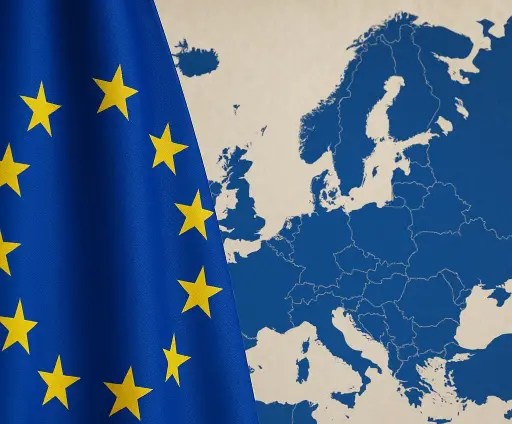
New poll underscores public endorsement of enlarging the European Union — strengthening the hand of candidate countries on the accession path
As Europe enters another chapter of political flux, a freshly‑released poll reveals that a clear majority of citizens across the 27‑member bloc support the idea of further expansion of the European Union. According to the survey, 56 % of respondents believe the Union should welcome additional members — a result that marks a significant endorsement of the strategy of enlargement and provides encouragement to nations seeking accession.
The data appear at a particularly pivotal moment, as the EU’s institutions and existing members grapple with the twin challenges of deepening internal integration while broadening their circle of partners. With public sentiment now tipping in favour of enlargement, candidate countries are finding fresh momentum in the corridors of Brussels.
Public mood and political impact
The poll, conducted across every EU‑member state, suggests citizens are increasingly receptive to enlargement. While 56 % of respondents back the expansion agenda, a significant minority remain sceptical — pointing to concerns about internal cohesion, migration and cost burdens. Yet the overall signal is clear: the public is leaning into the idea of a larger Europe.
This shift matters politically. National governments within the Union often deflect enlargement momentum until they sense strong domestic backing. With a majority now on board, political leaders may feel more confident advancing accession negotiations or updating institutional frameworks to accommodate new members. For the Commission and Council, the poll gives further validation to the narrative that enlargement remains viable — provided the conditions are met.
Candidate countries take heart
For countries aspiring to join the Union, the public‑opinion boost offers practical advantages. Governments in Brussels and member states frequently cite “citizen readiness” as an informal criterion for enlargement. With a 56 % approval rate, the domestic political barrier within existing member states appears less daunting than previously assumed.
Moreover, candidate countries see the result as a signal that the enlargement debate is no longer confined to technocrats and diplomats — it enjoys popular resonance. That may accelerate reforms in the applicant nations, intensify lobbying efforts, and bring the accession agenda more prominently onto national media waves.
Road ahead: reforms, negotiations and institutional adjustment
Despite the positive poll result, many hurdles remain. Enlargement remains complex politically: there are strict accession criteria covering governance, rule of law, market economy readiness and alignment with EU law. Candidate countries must navigate each step carefully, and existing members must consent — often unanimously — to further enlargement.
The poll’s implications may also spark internal debate about how the Union can absorb new members without diluting its common decision‑making capacity or worsening integration fatigue. Many analysts argue parallel reforms of EU institutions or more flexible models of integration might be needed if new members arrive in the coming years.
Risks and caveats
While the majority backing is welcome, it is not overwhelming. Forty‑four % of citizens either oppose further enlargement or remain undecided. Some governments are taking note of this margin, arguing that enlargement must proceed cautiously and with strong safeguards.
Further, public opinion can shift. Economic downturns, migration crises or external shocks could quickly dampen enthusiasm. Similarly, if candidate countries fail to progress or reform, public support in member states could waver — reinforcing the sceptics’ argument that enlargement must be conditional and gradual.
Significance for Europe’s future
In the broader sweep of European politics, the poll indicates that enlargement continues to be viewed not simply as a legal or diplomatic exercise, but as a strategic signal of openness, solidarity and stability. After years of inward‑looking debates — Brexit, migration, institutional reform — the public’s willingness to expand the union suggests a renewed appetite for outward ambition.
Candidate countries — from the Western Balkans to Eastern neighbours — may interpret the moment as their opportunity. For the Union, the challenge will be to convert public support into coherent policy and credible timelines. The 56 % figure gives them the political space; the institutional and reform work ahead remains intense.



 The Tower Post