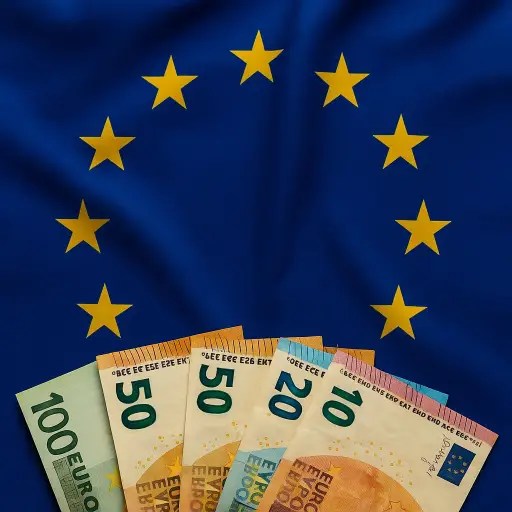
How the EU increasingly leans on sanctions, trade controls and investment rules to address geopolitical and domestic challenges
On this November day, Europe finds itself witnessing a subtle but significant shift: the European Union (EU) is relying more than ever on economic policy instruments as levers of power. Where once diplomacy, military deterrence or sheer moral authority dominated the discussions, today sanctions, trade controls and investment regulation have become first‑response tools when dealing with both external actors and internal challenges.
The rise of economic policy as strategic tool
Historically, the EU’s economic architecture—characterised by free trade, internal market regulation and structural investment—served primarily to drive growth, integration and stability within the bloc. But in recent years, external shocks have accelerated a transition: from purely economic ends to explicit political means. Consider how widespread sanctions against third countries have become a central feature of EU foreign‑policy responses. The mechanisms of asset‑freezes, export controls and financial exclusions have moved from the periphery into the mainstream of Europe’s strategic toolbox.
Equally, trade policy—once framed almost exclusively as market access and liberalisation—is now deployed with an eye toward safeguarding strategic autonomy. The EU’s investment screening regimes, protections around critical technologies, and push for on‑shoring of key supply chains all reflect a mindset in which economic policy is not incidental but integral to security and sovereignty.
Geopolitical impetus: sanctions and trade as power
The driving factor behind this shift is unmistakably geopolitical. Whether responding to systemic rivalry, energy coercion or technology competition, the EU increasingly views economic instruments as levers to influence behaviour—from adversaries and neighbours alike. The logic is simple: military engagement is costly and politically fraught, diplomacy often slow, but economic pressure can be swift, scalable and multilateral.
For example, trade restrictions imposed by the EU on certain countries or sectors serve dual purposes: penalising undesirable conduct and signalling European unity and resolve. At the same time, cooperation on sanctions amplifies power when partner nations align—turning economic policy into collective strategy. In this way, economic policy becomes not just about revenue or regulation, but about shaping the global order.
Addressing internal challenges with economic rules
Yet the turn toward economic levers isn’t only about external relations. Internally, the EU is confronting structural pressures: stagnating productivity, strategic competition with other major blocs, climate‑transition requirements and digital sovereignty. The response? Use economic policy proactively.
Investment rules now embed strategic aims: directing capital toward green technologies, critical infrastructure and Europe‑based innovation. Trade and procurement rules are used to favour domestic resilience and to guard against dependencies—especially in areas such as semiconductor manufacturing, rare‑earth processing and key pharmaceuticals. Sanctions regimes are even leveraged internally, for instance when financial flows are used to enforce compliance with the rule of law, anti‑money‑laundering or human‑rights commitments within member states. In other words, the economic toolkit has become a governance tool inside the union as much as a foreign‑policy instrument.
The benefits and the risks
One benefit of this shift is that economic levers are often less politically fraught than hard power options. They provide a means of action when military engagement would be excessive and diplomacy insufficient. They allow the EU to act in concert, reinforcing the notion of European strategic autonomy. They give Brussels and member states a means to “walk and chew gum” by aligning economic and security goals.
However, there are risks. Overuse of economic tools can lead to blow‑back: trade disruption, supply‑chain retaliation, fragmented global value‑chains and diplomatic alienation. The internal use of economic levers to enforce political aims can generate resentment or accusations of heavy‑handedness—especially among smaller or less‑resourced states within the bloc. There is also the danger of policy incoherence: economic policy requires predictability for business, yet constantly shifting regimes may undermine confidence and investment.
Where this leaves Europe
As of early November 2025, the EU stands at an inflection point: economic policy is no longer just the background scaffolding of European integration—it is becoming a primary instrument of strategy. From shaping external relations to governing internal resilience, the economic turn is underway.
The question now is not whether this shift will continue—it inevitably will—but how the EU will manage it. Will the union maintain coordination, transparency and balance between growth and security? Will the internal cohesion necessary for these economic levers to work remain intact? And will the EU ensure that its economic instruments strengthen rather than fragment its global role?
For Europe’s leaders and policymakers, the task is significant: to wield economics with precision, adaptivity and legitimacy. After all, in a world of rising geopolitical competition and internal strain, the EU is betting that its most powerful weapon may not be a battalion or vote in the UN, but the levers of trade, investment and finance.

 The Tower Post