
Defence Minister flags orchestrated flights over air‑base as part of a wider surge in Europe
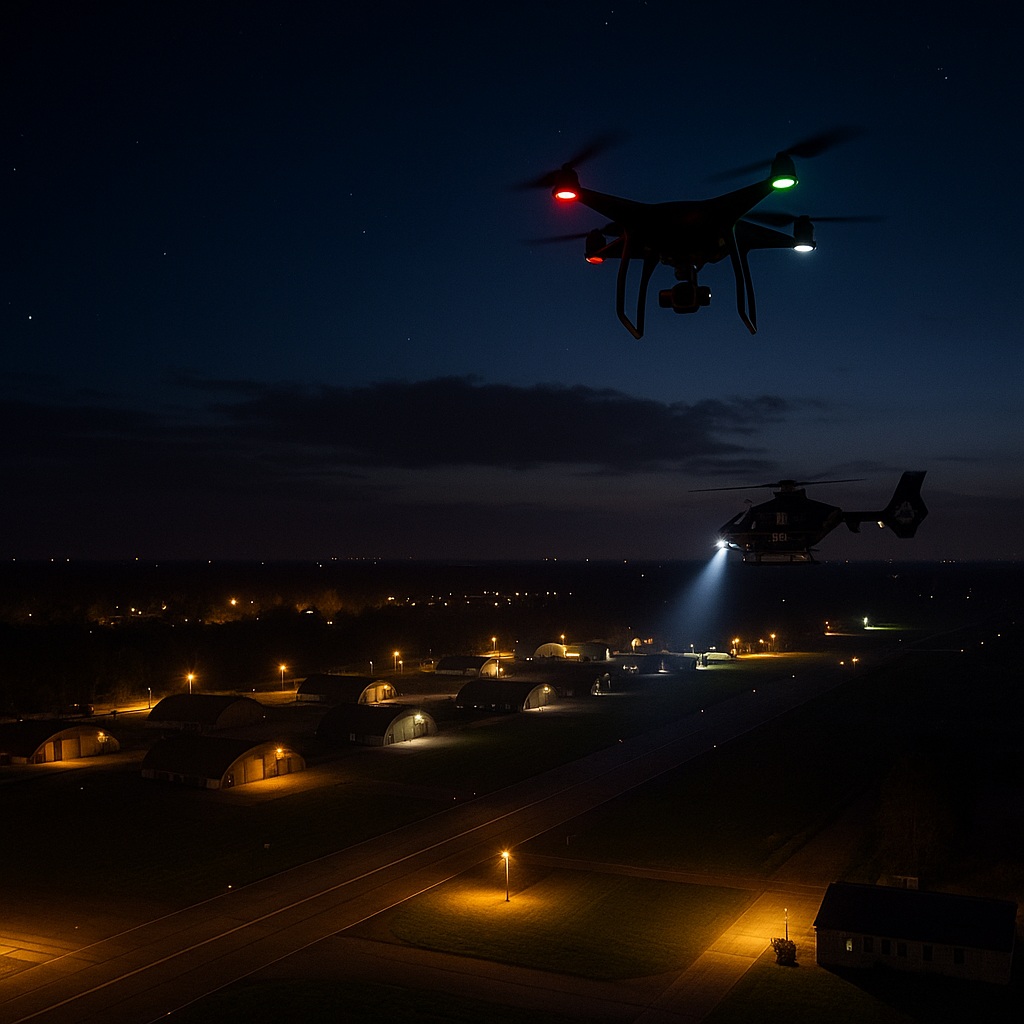
A fresh wave of drone activity over Belgium’s military infrastructure has triggered alarm within the defence establishment and raised questions across Europe about the vulnerability of critical airspace. According to the country’s Defence Minister, Theo Francken, police and military intelligence are investigating sustained flights of unidentified unmanned aerial vehicles (UAVs) over a prominent air base in eastern Belgium.
Unnerving Nighttime Overflights
In the evenings preceding 4 November, security personnel at Kleine‑Brogel Air Base — a Belgian air‑force installation near the Netherlands border — reported multiple drone sightings hovering above restricted sections of the site. One incident, captured by the base’s detection system, prompted a police helicopter scramble which ultimately failed to intercept the devices.
In a message posted on social media, Minister Francken wrote that the flights “were not random” and that “we must be able to bring down such drones.” The base in question is believed — though not publicly confirmed — to host elements of NATO’s nuclear‑sharing arrangements, amplifying concerns about the intent and target of the flights.
A Pattern Across Europe
Belgium’s incident arrives amid a visible uptick in drone incursions across multiple European countries. In the past weeks, nations including Denmark, Germany, and the Baltic states have recorded UAV flights above military zones and airports — in some cases triggering air‑traffic disruptions.
Security analysts describe the flights as part of a “hybrid” operation: low‑cost, low‑visibility drones probing air‑defence systems, gathering intelligence, or simply testing response times. Though no state actor has accepted responsibility, European officials are increasingly attentive to the possibility of Russian‑linked activity.
What Belgium Is Doing
Belgian authorities say the investigation is ongoing, involving the federal police and the military intelligence service ADIV. Meanwhile, the Defence Ministry is preparing a counter‑UAS (unmanned aerial system) package that has already been submitted for inter‑cabinet review.
Officials have signalled that the package will include enhanced detection networks, jamming systems, and possibly kinetic defeat measures (such as drone nets or interceptors) at priority sites. Minister Francken emphasised that the current capabilities are “limited” and stressed the need for rapid additional investment.
Strategic Implications
The choice of target is notable. Kleine‑Brogel is not a routine airfield but a strategic node: it is located a short distance from the Dutch border, is set to house Belgium’s incoming F‑35 fighter fleet in the coming years, and is speculated to host allied nuclear assets, though this is not officially verified.
That a drone or drones could fly undetected above such a site underscores the growing challenge that military and security agencies face from evolving unmanned technologies. In a recent statement, a defence official noted that adversaries no longer need manned aircraft to probe air‑defence systems: “A swarm of drones can do the job.”
Risks, Response and the Road Ahead
In the immediate term, Belgium is assessing whether these flights were intelligence‑gathering missions, provocations meant to test response times, or dryness for more aggressive operations. The fact that no wreckage or captured drone remains have been publicly reported implies that the operators either recovered the devices or used them with plausible deniability.
There are four pressing policy questions:
- Attribution – Who launched the drones and from where? Are the operators state‑linked or non‑state actors?
- Intent – Was the aim espionage, disruption, psychological pressure, or something more direct?
- Capability gap – How many sites in Belgium (and Europe) remain vulnerable to similar incursions?
- Allied coordination – How will NATO and the EU pool resources to detect, attribute and deter such threats?
Belgium is already moving on the third front: deploying real‑time drone registration, and tracking systems and collaborating with neighbouring states on detection.
Broader Context
Beyond Belgium, the spike in drone‑related incidents reflects a larger shift in how adversaries operate. Traditional air‑space violations are being replaced or supplemented by flexible unmanned operations that exploit gaps in radar, regulatory oversight and response capability. For smaller drones, kinetic interception is difficult; for larger ones, geo‑fencing and jamming are often the only option.
Furthermore, the political dimension is significant. For NATO member states, base security is not simply about protecting aircraft or personnel, but about safeguarding the credibility of collective deterrence. A successful intrusion — even if non‑violent — erodes confidence in the ability to protect strategic assets.
Conclusion
As of early November 2025, the Belgian government has not named suspects, nor disclosed the full technical details of the incident. But the message — loud and clear — is that the country takes the threat seriously. Defence Minister Francken’s public tone suggests he sees this as a wake‑up call: “We cannot assume the skies above our bases are safe anymore.”
With drones proliferating and adversaries adapting fast, Belgium’s response may serve as a bellwether for how European states rebuild deterrence in the unmanned‑age.




 The Tower Post