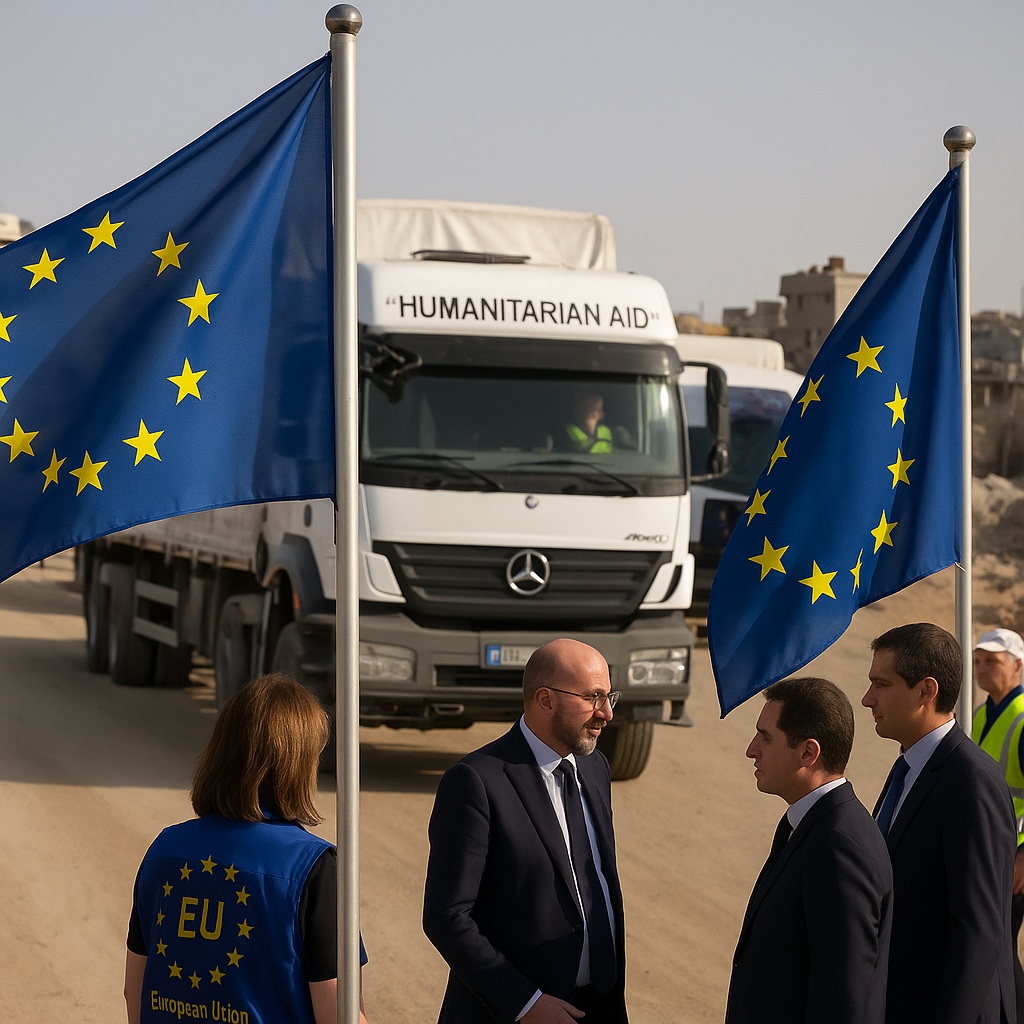
With U.S.-brokered cease‑fire in place, EU leaders press to step into governance and recovery track across Gaza and the West Bank
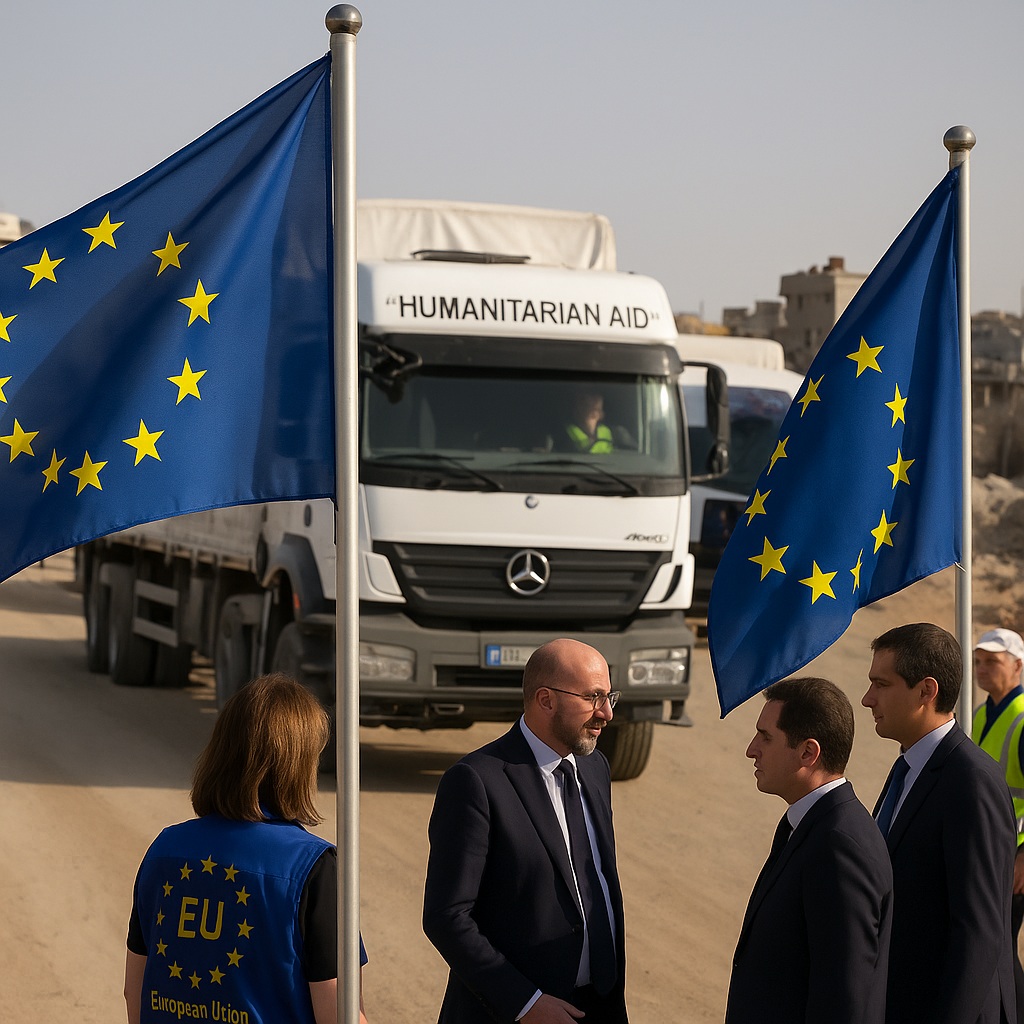
As a fragile cease‑fire brokered by the United States takes hold in the Gaza region, European Union leaders are pushing to assert themselves in a role that until now has largely been defined by Washington. On the agenda: engagement in governance, border assistance, police training and reconstruction in both the Gaza Strip and the West Bank, should conditions allow.
The bloc’s diplomacy has already entered a new phase. At a recent summit in Brussels and follow‑up meetings in Paris, ministers from a number of EU member states quietly signalled readiness to reactivate and scale up existing missions in the Palestinian territories. According to the official set of conclusions, the European Union “stands ready to contribute to Gaza’s stabilisation, transitional governance, recovery and reconstruction.”
A wider European footprint
Under the terms of the U.S.‑brokered deal that paused hostilities in Gaza, the United States remains the lead external actor. But European capitals contend that their longstanding financial commitments, humanitarian reach and diplomatic presence give them a potentially indispensable role. In October, European and Arab foreign ministers met in Paris to flesh out a “next‑phase” track for Gaza: including border control, internal governance, and rebuilding of infrastructure.
In Brussels, the Council of the EU reaffirmed that existing EU missions — such as the European Union Border Assistance Mission to the Rafah Crossing Point (EUBAM Rafah) and the European Union Police Mission for the Palestinian Territories (EUPOL COPPS) — could be enhanced or redeployed, depending on security and political conditions. A key question is whether Europe will be given the mandate to work directly in Gaza, or how much of the track will remain under U.S. or regional leadership.
Governance, security and reconstruction: Three strands
European diplomats expect their efforts to fall into three main strands:
- Governance and administration: Support for the Palestinian Authority’s return to parts of Gaza and strengthening its role in state‑building and public‑service delivery.
- Border and security management: The Rafah crossing — the gateway between Gaza and Egypt — is central. EUBAM Rafah is likely to be reactivated once the security situation stabilises. Police‑training and internal‑security work under EUPOL COPPS may also be extended deeper into Gaza or linked to the West Bank.
- Reconstruction and humanitarian stabilisation: Europe has mobilised major funding for humanitarian aid and early recovery across Gaza and the West Bank; as reconstruction moves from emergency relief into stabilisation, the EU aims to bring its development toolkit into play.
Tensions with the U.S. role
While Europe aims to deepen its footprint, the reality is that the U.S. retains centralised influence within the cease‑fire and transition plan. Some European leaders believe their bloc was sidelined in initial talks leading to the cease‑fire agreement and are now keen to make up for lost ground.
From Washington’s perspective, integrating EU missions requires alignment with U.S. strategic priorities and the cooperation of Israel and key regional players. That means Europe must navigate not only Israeli and Palestinian politics, but also U.S. expectations and the broader regional architecture in which countries like Egypt, Jordan and Saudi Arabia play roles.
Political and security conditions remain uncertain
Despite the cease‑fire, the environment remains highly volatile. The United Nations Security Council has warned that swift action is needed to stabilise Gaza otherwise the fragile calm may unravel. For Europe, the decision to fully deploy or expand its missions will hinge on three conditions: Israeli and Egyptian consent, a viable Palestinian partner on the ground, and sufficient security guarantees to protect personnel and aid flows.
In the West Bank, the EU is also pushing for de‑escalation, calling for limits on settler violence and opposing settlement expansion as undermining the two‑state solution. These issues are directly linked to any governance plan for Gaza because the West Bank and Gaza trajectories are intertwined.
What this means for Brussels and capitals
The push for increased European presence reflects political as well as strategic ambitions. Brussels has faced internal pressure to be more visible in the Middle East theatre, where it has traditionally been weaker compared to Washington. A role in Gaza stabilisation offers a chance to demonstrate relevance and leadership.
Moreover, for individual EU member states — notably Germany, France, Italy and Denmark — participation in a post‑conflict track in Gaza can serve multiple goals: support for European diplomatic credibility, stability in a volatile region, and an opportunity to connect humanitarian efforts with longer‑term state‑building.
Of course, this is not without risk. Should conditions deteriorate, European missions may become targets or embroiled in renewed hostilities. And if Europe moves in before clear agreements are in place, the bloc could find itself enmeshed in a complex governance tangle without a clear exit.
Outlook to early November and beyond
As the calendar turns to early November, European capitals view this window as pivotal. If the cease‑fire holds, the next weeks may mark the moment when Europe confirms its willingness and capacity to assume a more active role in Gaza. Talks are underway, mandates are being reviewed, and funding pledges are in motion.
For now, Brussels is watching closely. The EU’s next steps — whether dispatching monitors to Rafah, launching training teams, or sending funds for infrastructure — will signal whether Europe intends to remain a partner in the long haul or simply a donor sideline player.
In short: the cease‑fire may have paused the guns, but the real heavy lifting has only just begun. For Europe, this is the moment to decide whether to step into the frame — or risk being left behind once again.
 The Tower Post