
Germany’s Chancellor Visits Ankara to Deepen Ties Despite Sharp Gaza Disagreements — Europe’s Strategic Pivot toward Turkey Surges as Stabilisation Force Debates Intensify
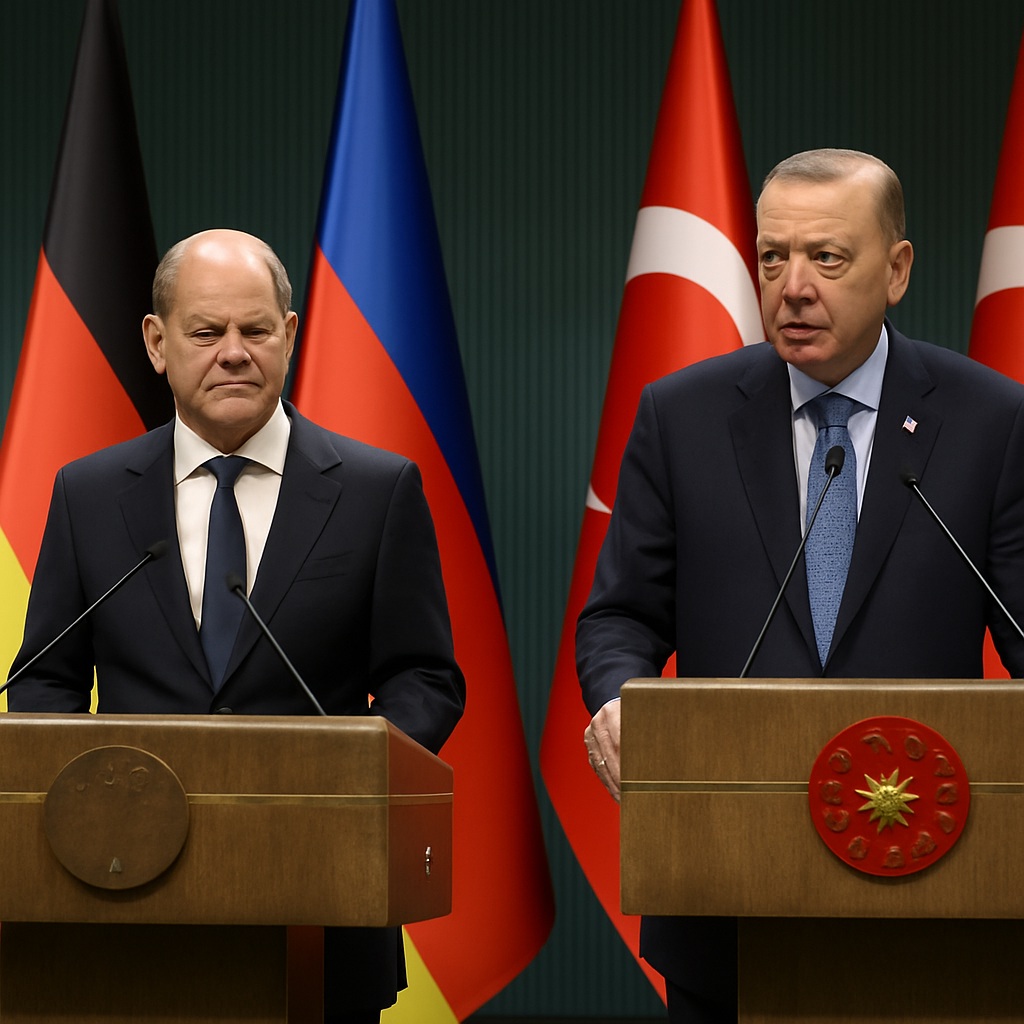
As Europe grapples with renewed turbulence in the Middle East and fractures within its own diplomatic architecture, the spotlight on Turkey has sharpened. A high‑level visit by Friedrich Merz, Chancellor of Germany, to Ankara underscores the Turkish capital’s growing role as both partner and interlocutor for Europe in a volatile region — even as sharp disagreements persist over the war in Gaza and the design of any multinational stabilisation force.
A strategic recalibration
The Ankara trip, held just days ago, signals Germany’s intent to deepen strategic cooperation with Turkey rather than let differences dominate. Chancellor Merz declared Turkey a “close partner” of Europe, emphasising economic, defence and migration dimensions of the relationship. In turn, Recep Tayyip Erdoğan used the meeting to reiterate Turkey’s capacity to pivot and engage — offering joint defence‑industrial projects and up‑graded cooperation in return for Europe’s political embrace.
Behind the scenes, Germany is backing Ankara’s access to the EU’s sweeping “SAFE” defence initiative, a 150 billion‑euro project built to bolster Europe’s ability to act in an unstable world. Turkey’s membership hinges on unanimity among EU governments — notably including the opposition of Greece. Germany now appears willing to shepherd Ankara’s path into the bloc’s strategic orbit.
Diplomatic fracture lines: Gaza, migration & regional posture
Yet the rapprochement occurs amid substantive fault‑lines. Turkey has been vociferously critical of Israel’s campaign in Gaza, with Erdoğan describing Israeli action as “genocide,” while Germany and much of Europe affirm Israel’s right to self‑defence and call for humanitarian pauses rather than full cessation. Merz himself acknowledged the divergence, yet insisted Europe must look beyond these differences to cultivate a broader strategic relationship with Ankara.
On migration, Germany pressed for Turkish follow‑through on repatriating rejected asylum seekers and tighter border controls, placing immigration at the heart of the discussions. Turkey, for its part, sees the moment as an opportunity to convert its decade‑old role as gatekeeper into a more equal partnership with Europe.
Turkey’s regional leverage & Europe’s ambitions
Turkey’s position straddles many theatres. Its geography links Europe to the Middle East; its NATO membership anchors it to the Atlantic alliance; its diplomatic engagements stretch from Ukraine to Gaza to Libya. Europe, feeling the strain of multiple crises — from the Russia‑Ukraine war to Middle Eastern instability and migration pressures — has reason to seek Turkey’s cooperation.
Ankara, aware of its leverage, is engaging opportunistically. For instance, the long‑standing German veto on the sale of the Eurofighter‑Typhoon jets to Turkey has been lifted. That prospect now enables Ankara to strengthen its air‑force capabilities and signals its strategic ambition. Turkey’s posture is shifting from regional player to strategic hub — and Europe is watching.
The Gaza stabilisation debate: Who leads, who joins?
Parallel to the Germany‑Turkey rapprochement is a heated discussion in Brussels and beyond about how to stabilise Gaza in the aftermath of intense conflict. Europe proposes a post‑conflict force or mission to help consolidate order, protect civilians and reconstruct critical services. But the question remains: who will be allowed into that mission — and under whose mandate?
Turkey has made clear it expects to be part of any stabilisation architecture. Its influence in the region, ability to engage multiple parties, and military‑logistical assets make it a natural candidate. Europe, however, is wary. Some member states fear Turkey will shape the mission in its own mould, while others question Ankara’s human‑rights record and insist on strict frameworks. Meanwhile, states outside Europe also vie for roles — the Gulf states, Arab League members, and even non‑Western actors see a stabilisation force as a diplomatic prize.
The German‑Turkish talks are implicitly bound to this debate. Berlin’s signalling that Turkey may get access to European defence programmes strengthens Ankara’s hand in claiming a seat at the table. At the same time, Germany must balance this with concerns among European partners about alignment, values, and regional stability.
What’s next for Europe‑Turkey diplomacy?
In the coming weeks and months, several developments will test whether this German‑Turkish reset can mature into meaningful cooperation:
- Defence projects: Joint manufacturing, export approvals and defence‑industry ties between Berlin and Ankara will reflect deeper trust or continued ambivalence.
- Migration and asylum flows: Germany will expect concrete actions from Turkey on returns and border management. Whether Turkey delivers — and whether Brussels supplies the incentives — will be watched.
- Middle East diplomacy: Turkey’s mediation role in Gaza or in wider Middle East settings could serve as a bridge between Europe and the region — or as a friction point if Ankara pursues unilateral initiatives.
- Stabilisation mission design: As Europe designs any mission for Gaza, Turkey’s inclusion or exclusion will shape the broader architecture of post‑conflict diplomacy, and implicitly the EU’s external identity.
- Human rights and values: While strategic imperatives push Europe toward deeper cooperation with Turkey, unresolved issues around rule‑of‑law and rights in Ankara may continue to complicate relations and provide flashpoints within EU capitals.
Conclusion
Europe finds itself at a crossroads. Confronted by overlapping crises — from the Middle East to migration to defence readiness — the need for new partnerships is pressing. Turkey is emerging as a central node in that strategy. The visit of Germany’s Chancellor to Ankara is less symbolic than deliberate — it reflects a recalibration of Europe’s diplomatic compass, anchored in realpolitik but attentive to values.
The underlying tension remains: can Europe align strategic necessity with normative coherence? Can Turkey be integrated into European‑led frameworks without unraveling long‑standing fault‑lines? And can the Gaza stabilisation debate become a bridge rather than another battleground in which Europe and Turkey clash?
The answer remains unsettled — but the direction is clear. Europe has turned its gaze East and South; Turkey has taken its hand. The real work now begins.
 The Tower Post