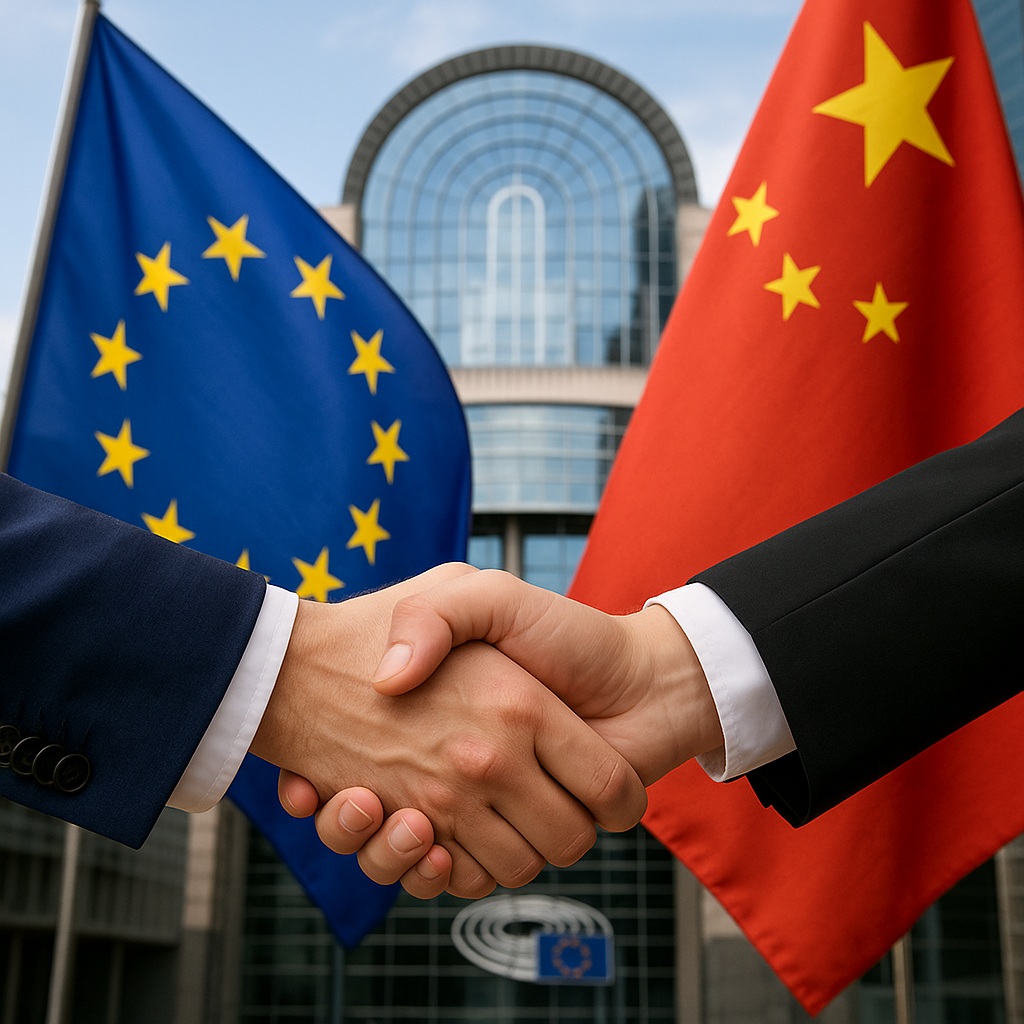
On the eve of a joint public hearing, the European Parliament probes Beijing’s influence on democratic resilience and strategic autonomy
In a pivotal moment for European democracy, the European Parliament’s Special Committee on the European Democracy Shield (EUDS) and the Committee on Foreign Affairs (AFET) are convening a joint public hearing titled “China’s influence in the EU and globally”—scheduled for early November. The event, being held as Europe faces mounting concern over geopolitical pressures and democratic institutions, seeks to cast light on how the People’s Republic of China is advancing both subtle and overt strategies to shape political, economic and technological landscapes within the European Union and beyond.
A Growing Strategic Concern
For years, China has positioned itself not just as an economic powerhouse, but as a global actor with increasing reach into democratic societies. At stake for the EU are questions of strategic autonomy, democratic resilience and the integrity of its technological and information environments.
According to the programme for the hearing, the first panel will focus on China’s influence inside the EU — from political persuasion and disinformation, to economic and digital dependencies. A second panel will then look outward at how China’s infrastructure, investment projects and institutional leverage are reshaping global governance and regional geographies beyond Europe.
These topics are increasingly urgent. Analysts note that Europe’s open economies and diverse political systems present fertile ground for influence operations, while dependencies in key technologies may limit policy flexibility. The EU itself acknowledged that building a resilient democratic shield is a pressing task in the digital era.
Why Now Matters
The timing of this hearing is especially significant. The EU is navigating a complex global environment: Russia’s war in Ukraine, supply‑chain disruptions, competition over semiconductors and growing rivalry between major powers. China, meanwhile, is deepening infrastructure ties through its Belt and Road Initiative, expanding its presence in global institutions and making significant investments in Europe’s neighbourhood. The hearing comes as member states and EU institutions alike recognise the risks of being under‑prepared for subtle influence tactics.
Moreover, the EUDS committee’s very creation attests to the heightened awareness. Its mandate to protect democratic processes, monitor foreign information manipulation and coordinate with member states reflects a shift in Brussels’ posture.
Key Themes on the Agenda
Among the core issues set to be explored in the hearing:
- Soft power and disinformation: how China may deploy media, cultural ties and academic partnerships to influence EU public opinion and policy‑making.
- Economic leverage and investment: how Chinese capital, major infrastructure projects or technology supply‑chains might translate into political influence or dependency.
- Technological dependencies: especially in digital infrastructure, telecommunications, 5G/6G and AI, where Europe may find itself in a strategic bind.
- Global governance and neighbourhood influence: China’s role in international organisations, its outreach to Africa, Latin America and the Western Balkans, and how that affects Europe’s own strategic interests.
- Democratic resilience and strategic autonomy: how the EU can bolster its institutions, guard against interference, and maintain the freedom to determine its own path.
The hearing is thus expected to not only assess the current state of Chinese influence, but also propose a forward‑looking agenda for safeguarding European democratic systems.
Implications for the EU’s Future
What emerges from the hearing could shape Brussels’ policy trajectory in several ways. For one, it may accelerate efforts toward a legislative framework to regulate foreign investment screening, digital sovereignty and transparency of stakeholder influence. The EU’s ambition to bolster technological independence might gain renewed momentum, with consequences for funding, industrial strategy and partnerships.
Secondly, the hearing underscores that democratic resilience is no longer just about elections and civil society — it’s about systemic exposures: supply‑chains, data flows, academic networks, diaspora relations, media ownership. The European response will need to be holistic.
Thirdly, the message to China is also diplomatic. The EU is signalling that influence operations are not cost‑free and that democratic nations expect clear reciprocity, transparency and respect for the institutional norms underpinning governance. Whether Beijing responds with cooperation or pushback remains to be seen.
Challenges Ahead
Even as the hearing promises to be a milestone, much depends on follow‑through. The sheer complexity of Chinese influence—blending commercial, informational and diplomatic tools—poses measurement and enforcement challenges. Member states differ in their appetite for confrontation with Beijing, balancing economic ties and geopolitical risk. Moreover, maintaining unity across 27 nations in the EU on a coherent China strategy will test Brussels’ cohesion.
In addition, the technological front is moving fast: from AI to quantum computing, from digital platforms to networks of influence. If regulation lags, the vulnerabilities become ever more entrenched. The EU will need to refine its early‑warning mechanisms, strengthen fact‑checking and invest in resilience infrastructure.
What to Watch
In the coming weeks, observers should watch for: the final hearing conclusions; any draft recommendations or reports emerging from EUDS/AFET; signals of legislative intent in the European Commission or Council; shifts in major EU member states’ China posture; and new indicators of influence operations or dependency risks.
The hearing in early November thus marks more than a moment of reflection — it may be the starting point of a new chapter in how Europe addresses strategic competition and defends democratic systems. For Brussels, the message is clear: democracy is not passive — it must be actively shielded.




 The Tower Post