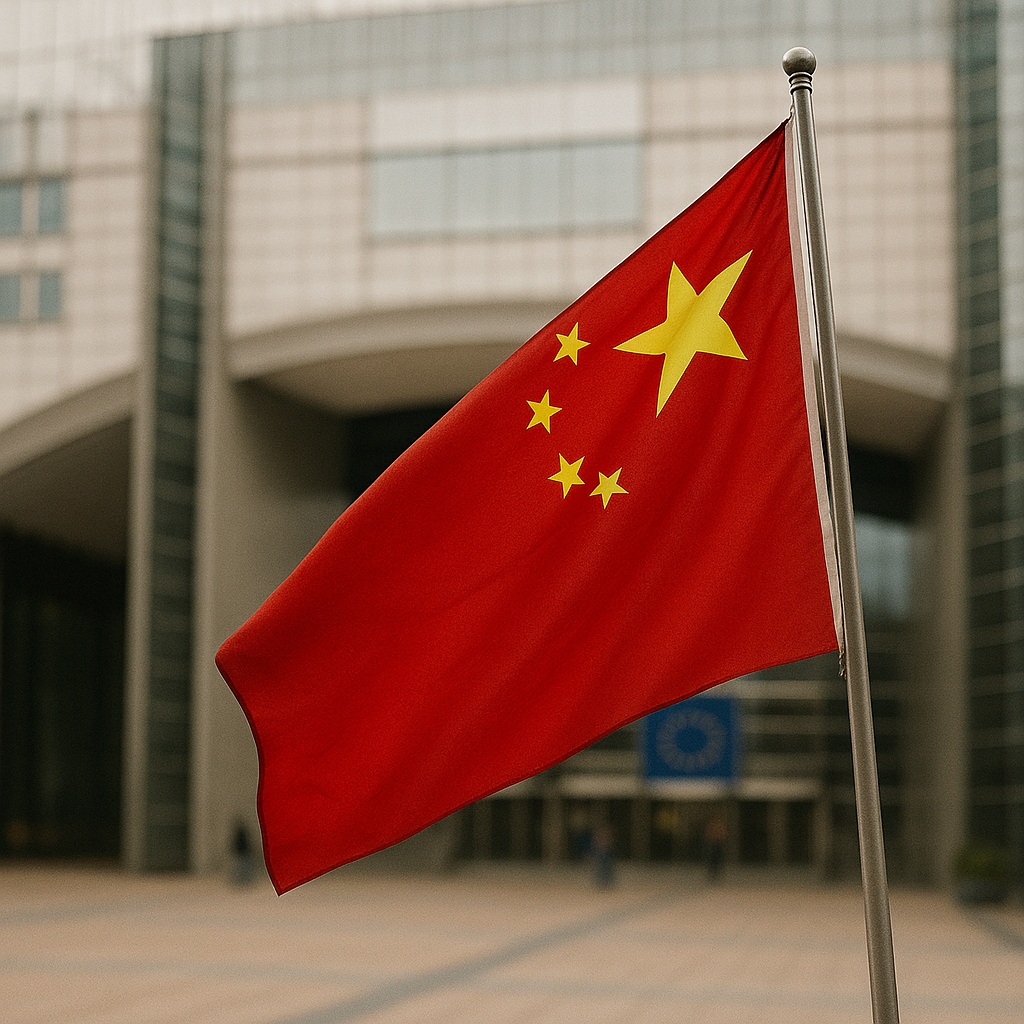
As Beijing’s ambitions reach Europe’s doorstep, Brussels convenes to chart a democratic response
In a moment laden with geopolitical significance, the European Parliament’s special committees convene to examine the sweeping global influence of the People’s Republic of China — not merely as a matter of trade or diplomacy, but as a challenge to democratic resilience, strategic autonomy and Europe’s position in an evolving world order. On the eve of the hearing organised for early November, Europe’s policy‑makers are sharpening their focus on Beijing’s reach and asking what it means for the future of the European project.
The Stakes: Influence Beyond Economics
The hearing, jointly organised by the Parliament’s committee on foreign affairs and the newly‑established democracy shield committee, explicitly intends to explore how China “exerts its influence through infrastructure investments, academic and technology partnerships, media ownership, and pressure on diaspora communities,” with consequences for European business sectors, security and technological independence.
In Brussels’ corridors the language is shifting: China is no longer framed solely as a partner, but increasingly as “a competitor, a systemic rival.” The rare‑earth export controls Beijing recently imposed have sharpened this lens: Europe is waking up to the vulnerabilities of its supply chains, the dependencies embedded in its economic ties, and the risk that strategic interdependence can morph into strategic leverage.
Democracy Under Pressure: Soft Tools, Hard Effects
What makes this moment critical is that influence can be subtle yet profound. Investments in ports, railways and digital infrastructure do not on their surface look like threats — yet they open space for longer‑term dependencies. One analysis finds that when Chinese firms operate ports abroad, trade patterns shift in China’s favour over time.
European democratic systems are alert to two parallel concerns: first, that economic ties become vectors for political or strategic pressure; and second, that the norms underpinning open debate, media independence and academic freedom may face new strains when major global actors engage at scale. The hearing is expected to address issues such as diaspora engagement, media presence, technology partnerships that offer both innovation and risk, and the implications for European institutions’ resilience.
Strategic Autonomy: Europe’s Tightrope
For the European Commission and the Parliament, the challenge is delicate: how to seek cooperation with China where interests align (climate change, global infrastructure, trade) while safeguarding values and autonomy. One upcoming policy brief emphasises the need to “defuse confrontational rhetoric while developing a proactive agenda of pragmatic engagement” with Beijing.
At the same time, internal European divisions persist: not all member states view China in the same way, and some continue to seek bilateral ties more enthusiastically than others. The hearing is as much about forging a unified EU posture as about responding to an external challenge.
What to Watch: Outcomes and Signals
The joint hearing on China represents a strategic pivot. Among the key questions:
- Will the Parliament propose new frameworks to scrutinise Chinese investments, technology partnerships and influence operations more systematically?
- Will there be calls to deepen Europe’s supply‑chain resilience, especially in strategic sectors such as rare earths, semiconductors and telecoms?
- How will Europe articulate its narrative: as a values‑based actor, a trade bloc, a geopolitical power or all of the above?
- What signals will Brussels send to Beijing — and to its own member states — about willingness to act collectively?
The outcome will matter not just for EU‑China relations, but for Europe’s broader positioning in a world of intensifying great‑power competition.
The Bigger Picture: Global Order in Flux
Behind the hearing lies a wider recalibration of global power: China’s global reach, through its infrastructure‑led outreach and technology diplomacy, has begun to reshape the contours of influence. For Europe, this creates both opportunities and risks: access to new markets, leverage in infrastructure financing, but also exposure to coercion, vulnerability in strategic sectors, and tension in governance and values.
For Brussels, it is a moment of truth. The European democratic model — open, pluralistic, anchored on the rule of law — now faces a test not only from internal pressures but from external entanglements. The hearing thus is not simply a parliamentary exercise; it marks the beginning of a more proactive European era.


 The Tower Post