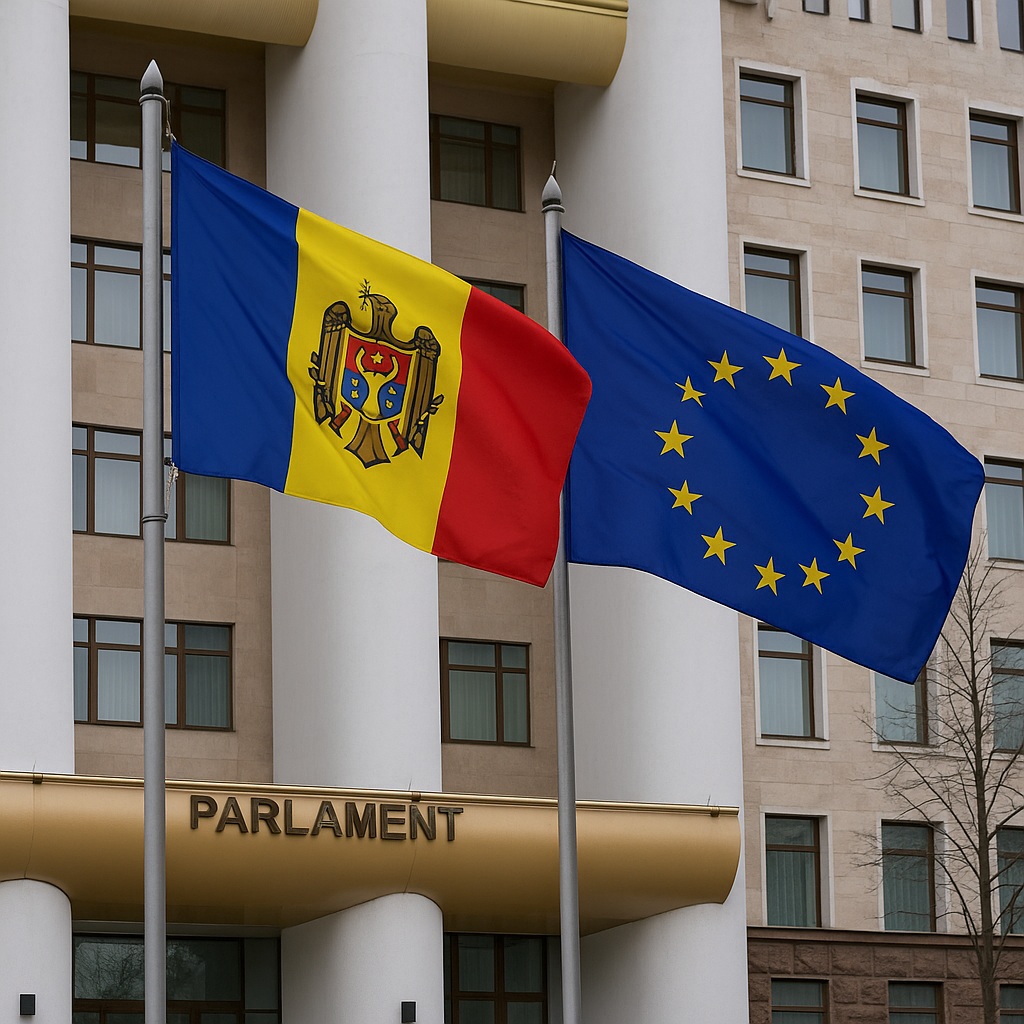
With a strong pro‑European election result and the European Commission’s 2025 focus on enlargement, Moldova is accelerating reforms and integration — but faces questions on breadth and pace of change.
As the crisp autumn air settles over Chişinău and Brussels alike, the small but strategically positioned country of Republic of Moldova stands at an inflection point. Following a parliamentary election that bolstered the pro‑European camp and a freshly‑released enlargement agenda from the European Union, Moldova is grappling with both the opportunity and the challenge of deep reform and eventual accession.
Political validation for the European path
In the recent national elections, Moldova’s electorate reaffirmed a clear preference: the ruling pro‑European coalition won decisive support, reinforcing the vision of closer ties with Brussels rather than Moscow. International observers view the result as a reaffirmation of the European orientation of the country’s leadership and citizenry, a trend steadily rising over recent years.
That political backing arrives at a moment when institutional momentum in Brussels is growing. The EU’s 2025 enlargement package places added emphasis on countries in the Eastern neighbourhood, and Moldova has been repeatedly cited as a case where “delivery matters” in parallel with ambition.
Leveraging reform for concrete gains
On the institutional front, Moldova has picked up pace. Effective from early November, the country will join the Convention on a Common Transit Procedure and the Convention on the Simplification of Formalities in Trade in Goods, bringing it into aligned customs frameworks with the EU. These technical steps are far from mere symbolism: they signal that Moldova is ready to harmonise with core single‑market rules and deepen economic integration. For businesses in Chişinău and the regions, the promise of smoother logistics, fewer bureaucratic delays and closer access to EU supply chains is genuine.
Reform fatigue—and the need for clarity
Yet momentum alone will not guarantee success. President Maia Sandu has called for sustained engagement and clarity from the EU, warning that Moldova’s path must not be stalled or overshadowed by other enlargement front‑profiles. “We need sustained engagement and clarity from the EU to keep enlargement as a strategic priority and to maintain the momentum for those who deliver,” she stressed in recent remarks.
Domestic challenges also loom. Legal disputes involving investor claims and a handful of unresolved high‑profile corruption cases have been flagged by analysts as risks to the integrity of Moldova’s reform drive. The concern: if the rule of law is seen as lagging, the credibility of the accession process may erode.
Sequencing accession negotiations & managing expectations
Another key dimension is sequencing. While negotiations for EU accession were opened previously, Moldova must still undertake wide‑ranging reforms in areas from the judiciary and public procurement to media freedom and structural economic policy. The EU’s enlargement roadmap implicitly expects reform volume, not just pro‑European sentiment.
In practice, this means Moldova’s leadership must keep domestic political momentum alive, ensure technocratic capacity to implement change, and reassure ordinary citizens that integration will translate into tangible improvement in public services, investment and governance.
Strategic geography and external pressures
Moldova’s geopolitics add weight to the integration push. Positioned between Romania and Ukraine, and with the unresolved separatist region of Transnistria still a complicating factor, its western orientation carries both economic promise and security implications. Moscow’s interest in maintaining influence remains potent and persistent.
Against this backdrop, the EU has underscored enlargement not only as a matter of normative alignment but as a strategic stabiliser. The forthcoming EU Enlargement Forum planned in Brussels for mid‑November underscores that enlargement policy is back in focus.
On the ground: what this means for Moldovans
For ordinary Moldovans, the acceleration in integration presents a mixture of hope and caution. On one hand, better trade access, potential investment from EU funds, and a clearer rule‑book for business promise improvement. On the other hand, reform means disruption: sectors must adapt, governance standards must rise, and growth will depend on sustained political stability.
The government has begun speaking of “integration dividends” — better infrastructure, improved public procurement, digital services aligned with European standards. But delivering these in a tangible way before public patience wanes will be key.
Looking ahead: what to watch
Over the next year or two, several developments will serve as litmus tests:
- Whether Moldova can pass major judicial or anti‑corruption legislation without back‑sliding.
- Whether Brussels can give clear signals (and timelines) of progressive opening of accession chapters, thus keeping the “reward‑for‑reform” dynamic alive.
- Whether external shocks — economic, security or political — undermine the reform drive.
- Whether public opinion remains favourable, not just to the abstract goal of EU accession, but to the personal benefits of reform in daily life.
Conclusion
As of early November 2025, momentum is on Moldova’s side. Political winds have shifted decisively in favour of Europe, and institutional avenues within the EU are aligning to welcome deeper engagement. Yet the road ahead remains steep: the opportunity is real, but converting that into a binding integration roadmap will require discipline, clarity, and tangible progress.
If Moldova can keep pace with reform and sustain domestic consensus, its journey toward full alignment with the European Union may well become a model for other aspirants. But if it falters or becomes merely symbolic, the risk is that stagnation—or worse, disillusionment—might set in.
For now, the European tide appears to be lifting the Republic of Moldova. The key question is whether Chişinău will ride the wave, rather than being swept aside.




 The Tower Post