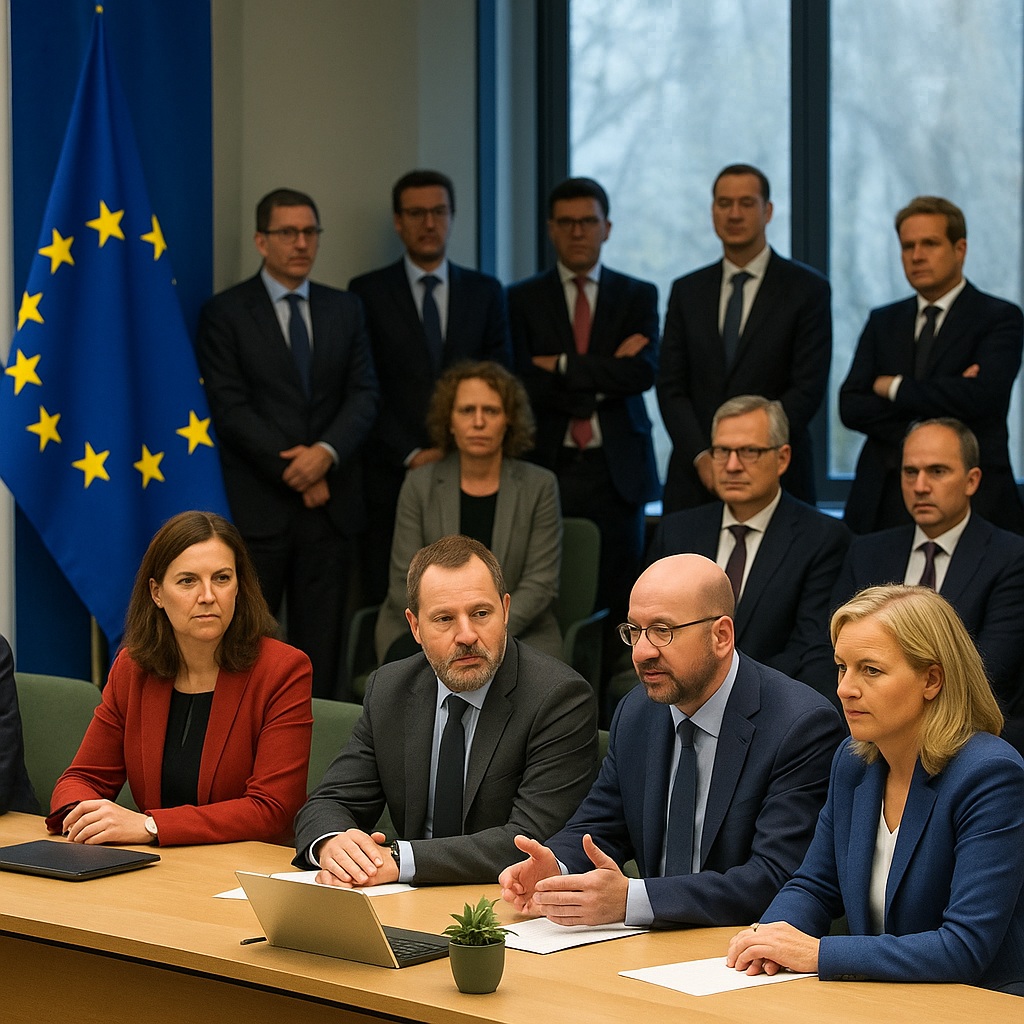
Brussels meeting sets the tone as EU member states seek coordinated emissions targets before COP30 in Brazil
Today in Brussels, environmental and climate ministers from across the European Union gathered in a high‑stakes meeting to align their national emissions reduction strategies ahead of the upcoming global climate conference in Brazil. The gathering, held under the auspices of the European Commission and with strong engagement from the rotating Council presidency, aims to present a unified European front as the world’s governments convene for COP30 later this year.
The meeting comes at a critical juncture: with pressure mounting both domestically and internationally, the European bloc is seeking to refine and perhaps deepen its commitments under the global climate regime. While member states have already submitted national plans under the United Nations Framework Convention on Climate Change (UNFCCC), ministers in Brussels emphasised that the window remains open for enhanced ambition — but only if states demonstrate shared effort and fairness across the bloc.
Ministers discussed a range of issues, from the timelines of sectoral decarbonisation (energy, transport, industry) to the mechanisms for cooperation between member states — such as cross‑border energy exchanges, shared infrastructure for renewables, and joint investments in carbon capture and storage. A recurring theme was solidarity: wealthier member states signalled their willingness to support less advanced economies in the bloc, but insisted that support must come with clear accountability and measurable results.
One senior minister said, on condition of anonymity, that “alignment doesn’t mean uniformity” — noting that while each country’s national circumstances differ, a mismatched set of targets could undermine Europe’s credibility at the global summit. Several participants noted that a fragmented EU submission could be outweighed by larger emitters outside the bloc unless effectively addressed.
A focal point of the Brussels talks was the forthcoming summit in Brazil, where global attention will turn to the ambitions and governance of climate action. Ministers were keen to avoid arriving in Brazil with internal divisions still on display. One key agenda item was how the EU will present itself on issues such as adaptation finance, loss & damage, and a transition away from fossil‑fuel dependency — topics that are increasingly sensitive in the global South.
In practical terms, the ministers set out a roadmap for the next months: national administrations will revisit their emissions‑reduction schedules and report back to Brussels for a mid‑term check‑in. The European Commission will compile those updates into a consolidated “EU view” ahead of COP30. Although no concrete numerical targets were fixed during the meeting, ministers made clear that they expect several member states to up‑adjust their ambition in cooperation with peers.
The meeting revealed diverging national priorities, however. Some states emphasised the urgency of phasing out coal and ramping up renewable‑energy deployment, citing recent extreme‑weather events and climate‑risk assessments. Others focused more on maintaining industrial competitiveness and ensuring just transitions for mining and heavy‑industry regions. The Brussels discussions made clear that balancing ambition with fairness remains a challenge — but one that ministers are eager to face.
Another significant point of debate was the role of the EU’s internal market mechanisms — such as the emissions trading scheme and carbon‑border adjustment measures — and how they can be aligned with national policies without creating competitiveness distortions. Some ministers called for clearer signals to industry, including long‑term investment horizons and regulatory certainty, while others highlighted the need for flexibility to respond to geopolitical shocks or supply‑chain disruptions.
Beyond policy, the tone of the meeting struck a note of urgency. Several ministers referenced the latest scientific assessments and stressed that the margin for “business as usual” is shrinking fast. One remarked that “the world will judge us not only on our words in Brazil, but on whether our actions at home reflect them.” The reference underscored the wider diplomatic dimension of the meeting: the EU is aware that its credibility on the global stage is now being tested.
Looking ahead to COP30, the Brussels meeting sets a precedent for coordination. The European bloc hopes to enter the summit not as a loose alliance of national delegates, but as a coherent negotiating bloc with a credible path forward. Some external observers expect the EU to push for stronger language on fossil‑fuel phase‑out, increased adaptation funding, and more ambitious mid‑term targets — but only if internal alignment holds.
Analysts suggest that the true test will be whether member states commit detail to their national programmes and follow through in the coming months. The meeting in Brussels may mark the beginning, but real progress will be judged by concrete policy decisions, investment flows, and regulatory shifts on the ground.
In the end, the message from Brussels is clear: Europe must act in concert if it hopes to lead. With the eyes of the world turning to Brazil, alignment is not just a strategic option — it is fast becoming a necessity.



 The Tower Post