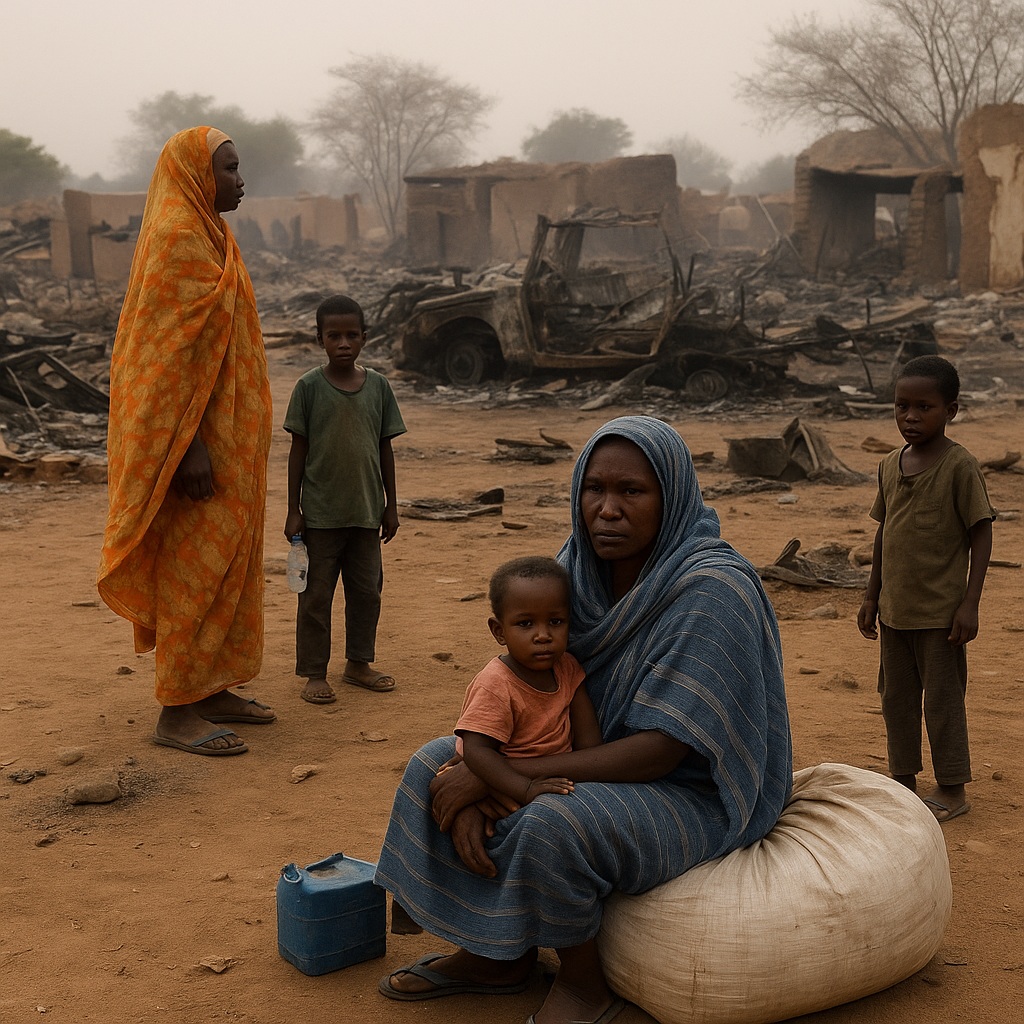
As violence surges beyond cease‑fire designs, aid collapses and arms flows intensify, Europe must act to prevent regional meltdown and demand accountability.
The war in Sudan has quietly but inexorably moved from national tragedy to a regional disaster, with the fighting between the Sudanese Armed Forces (SAF) and the Rapid Support Forces (RSF) outpacing diplomatic efforts, fuelling a broader humanitarian meltdown and posing a strategic test for Europe’s role in Africa. Analysts say current truce plans are lagging a conflict that keeps deepening its footprint — and warn that unless Europe steps up pressing for accountability, curbing arms flows and engaging diplomatically, the cascade effects will spill far beyond Sudan’s borders.
Conflict dynamics ahead of diplomacy
What was initially presented as a power struggle in the capital has metastasised. The fighting has extended across Darfur, Kordofan and into border zones, with civilian infrastructure, food production and markets ravaged. A recent commentary by Europe’s leading strategic think‑tank warned that the war is “outpacing” the latest truce initiatives after the fall of El Fasher in North Darfur — just days after an international meeting aimed at securing a partial cease‑fire.
This gap between diplomatic effort and battlefield momentum means that by the time talk of cease‑fires surfaces, significant ground has already been lost — physically, politically and in terms of humanitarian access. It also makes the demand for accountability all the more urgent: investigators warn that concerted campaigns of atrocities, including ethnic‑based violence and mass displacement, require swift international response.
Humanitarian implosion, regional reverberations
The human cost is staggering. Millions are internally displaced, whole cities under siege, famine declared in new regions, and relief channels collapsing. Bordering countries are absorbing tens of thousands of refugees, while vital corridors for aid remain under threat. The deterioration in Sudan’s humanitarian fabric is no longer contained within its borders. The risk of state collapse, regional insurgency spill‑over and uncontrolled migration is now real.
From a European vantage point, this creates both moral and strategic urgency. Failure to stabilise the situation risks resurgence of militant groups, arms flows through the Sahel, and destabilisation of neighbouring states — all of which carry high costs for Europe’s security and migration management.
Why Europe needs to up‑the‑ante
- Pressing for accountability: The pattern of atrocities documented in Sudan, particularly following recent seizures of key towns, calls for immediate international investigation and sanctions. Europe, individually and collectively via the European Union, must insist on full cooperation with fact‑finding missions and the International Criminal Court.
- Curbing arms flows and proxy dynamics: Investigations reveal that both sides in Sudan are being supplied with increasingly sophisticated weaponry and drones, often via external actors which may be bypassing arms embargoes. Without cutting these flows, diplomatic efforts will continue to face a heavily armed and mobile war machine.
- Sustained diplomatic engagement: While cease‑fire plans are necessary, they are insufficient alone. Europe must engage broker‑style: offering incentives, ensuring humanitarian guarantees, supporting negotiations among regional players, and linking aid to reform and accountability. Failure to engage means the conflict will become harder to reverse.
What’s at stake for regional stability
Sudan is absorbing the shock of emboldened non‑state forces, collapsed state services and a fractured security sector — a blueprint for contagion. Across the Sahel and Horn of Africa, extremist groups and criminal networks are actively exploiting weak borders and conflict spill‑zones. If Sudan is left unchecked, neighbouring states risk being drawn into the spiral. The destabilisation will imminently affect migration to Europe, trade flows via the Red Sea and cross‑border refugee burdens. These are not remote issues for Brussels or major European capitals.
What to watch now
With the calendar reaching early November, key markers will include: whether the UN Security Council undertakes a dedicated session on Sudan; whether fresh arms embargo enforcement measures take shape; how humanitarian access evolves in Darfur and Kordofan; and whether Europe, in co‑ordination with regional powers (Egypt, Saudi Arabia, UAE), adopts a unified stance rather than fragmented bilateral deals. The gap between dialogue and action remains wide — and the cost of delay is mounting.
In summary
The Sudan crisis is no longer a distant conflict; it is a crucible where humanitarian catastrophe, regional instability and geopolitical power plays converge. As fighting accelerates faster than diplomacy, Europe has a narrow window to pivot from reactive rhetoric to proactive strategy. By championing accountability, cutting arms flows, and engaging regionally, European actors can help turn a runaway war into a pathway toward containment and ultimately, peace. If not, the consequences will extend well beyond Sudan’s borders — with Europe next in line.



 The Tower Post