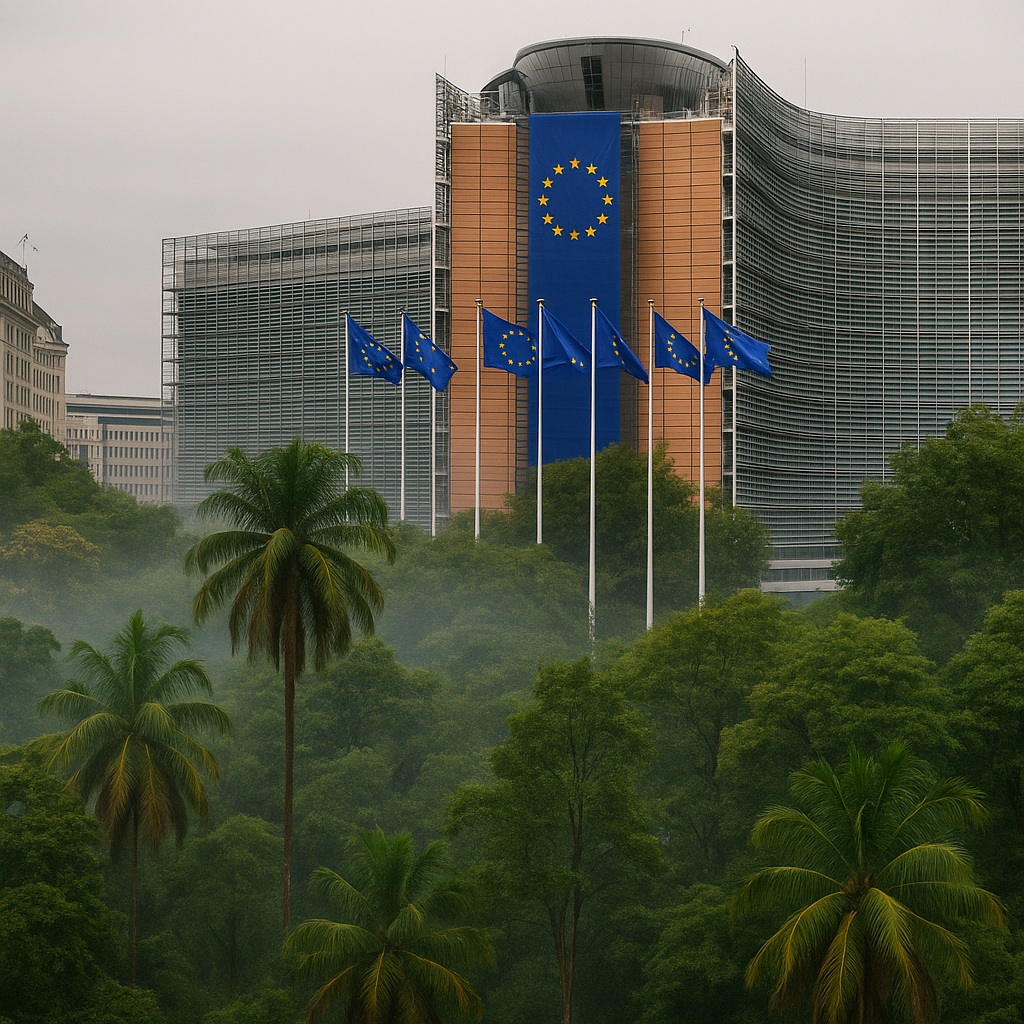
Brussels secures a 90% reduction target for 2040 — but the allowance for international carbon credits dilutes domestic effort to around 85%
In a high‑stakes meeting just ahead of the global climate summit in Brazil, the European Union has agreed to a new and ambitious emissions‑reduction target: cutting its greenhouse gas output by 90% by 2040 compared to 1990 levels. At the same time, Brussels has accepted concessions which permit member states to offset a portion of their reductions with international carbon credits, effectively softening the domestic burden to approximately 85%.
Background to the deal
The EU’s executive arm had earlier this year proposed a 90% target for 2040 in order to remain on track toward the bloc’s goal of climate‑neutrality by 2050. What changed in the run‑up to the summit is the inclusion of flexibility measures allowing certain member states to meet part of their obligations by purchasing carbon credits from abroad. One leaked draft indicated that up to 3 percentage points of the targeted reduction might be satisfied via carbon credits under Article 6 of the Paris Agreement.
These offsets permit EU‑countries to outsource a fraction of their cuts to projects in developing countries, such as forest conservation in South America, rather than solely achieving reductions within domestic borders. Critics warn this could undermine the integrity of the target.
Politics and pressure behind the compromise
The deal reflects the political tensions within the EU: on one hand there is strong scientific advice urging very deep domestic cuts (a reduction of 90‑95% by 2040) and on the other hand member states facing economic and industrial constraints pushing for more flexibility. The EU’s scientific advisory board recommended excluding international credits altogether.
Some countries, particularly those with energy‑intensive industries or historic dependence on fossil fuels, argued the target would impose undue burden on competitiveness and jobs. The offset flexibility was introduced as a bargaining tool to secure unanimity ahead of the upcoming global summit. Observers note that presenting a united front in Brazil was seen as vital for the EU’s image as a climate leader.
What’s new — and what remains vague
- New: A formally agreed‑upon 90% reduction figure for 2040, giving a clear forward target after the 2030 ambition (which in past legislation was at −55%).
- Adjustment: The allowance of international carbon credits means the effective domestic reduction might drop to around 85%. While many public reports cite 3% allowed credit‑based offsets, leaks suggest further flexibility may be negotiated.
- Unspecified: Exactly how the offsets will be counted, what projects qualify, and how much of the target can rely on those mechanisms remains to be legislated and approved. The mechanism kicks in only after further regulatory work, leaving room for interpretation.
Implications for the EU and globally
Domestically, the deal signals to businesses, investors and governments in the EU that decarbonisation remains a strategic priority, bolstering the market for clean technologies, renewables and industrial transition. Because the target extends beyond the shorter‑term 2030 goals, it offers a longer horizon for planning.
However, the use of offsets raises questions about environmental integrity and credibility. Many campaigners warn that allowing foreign credits risks shifting emissions reductions out of the EU, rather than driving required change in European industries and infrastructure. As one analysis argues: “even limited use of carbon credits could undermine domestic climate action and delay emission reductions within Europe.”
On the global stage, the EU’s renewed target provides a headline figure to bring to the summit in Brazil. It is a signal that the bloc intends to remain a major actor in international climate diplomacy and to maintain alignment with broader goals under the Paris Agreement and upcoming international commitments. But the concessions may also weaken the position from which the EU negotiates — other countries may interpret the flexibility as a lowering of ambition.
Next steps and scrutiny ahead
The agreement now moves toward formal legislative adoption across institutions including the European Parliament and national parliaments of member states. The exact legal text, detailing how offsets are integrated, quality criteria for credits, and monitoring mechanisms, will determine how ambitious the outcome actually turns out to be.
Meanwhile civil society, investors and markets will monitor closely whether the post‑2025 policy instruments — such as the extended EU Emissions Trading System and other sectoral regulations (transport, heating, industry) — align with what the headline target requires in practice. A recent study warns that watering down the ETS via offsets could “prove fatal” for the EU’s carbon market.
Conclusion: A symbolic milestone — but mixed substance
The EU’s deal ahead of the Brazil summit marks a symbolic milestone: a 90% 2040 target is bold — in name. But the allowance for international offsets means that the real domestic obligation may be weaker than the headline figure. With the summit looming, the EU will take the number to the world stage. Yet the substance of how much European industries will still need to transform – and how much reduction will be outsourced abroad – remains under negotiation and scrutiny.
The test for Brussels now will not just be in ink‑on‑paper but in the deployment of the regulations, the mobilisation of investment, and the pace at which real emissions fall. As climate events intensify and global expectations rise, the EU cannot afford for its leadership to be defined purely by target‑setting rather than credible delivery.


 The Tower Post