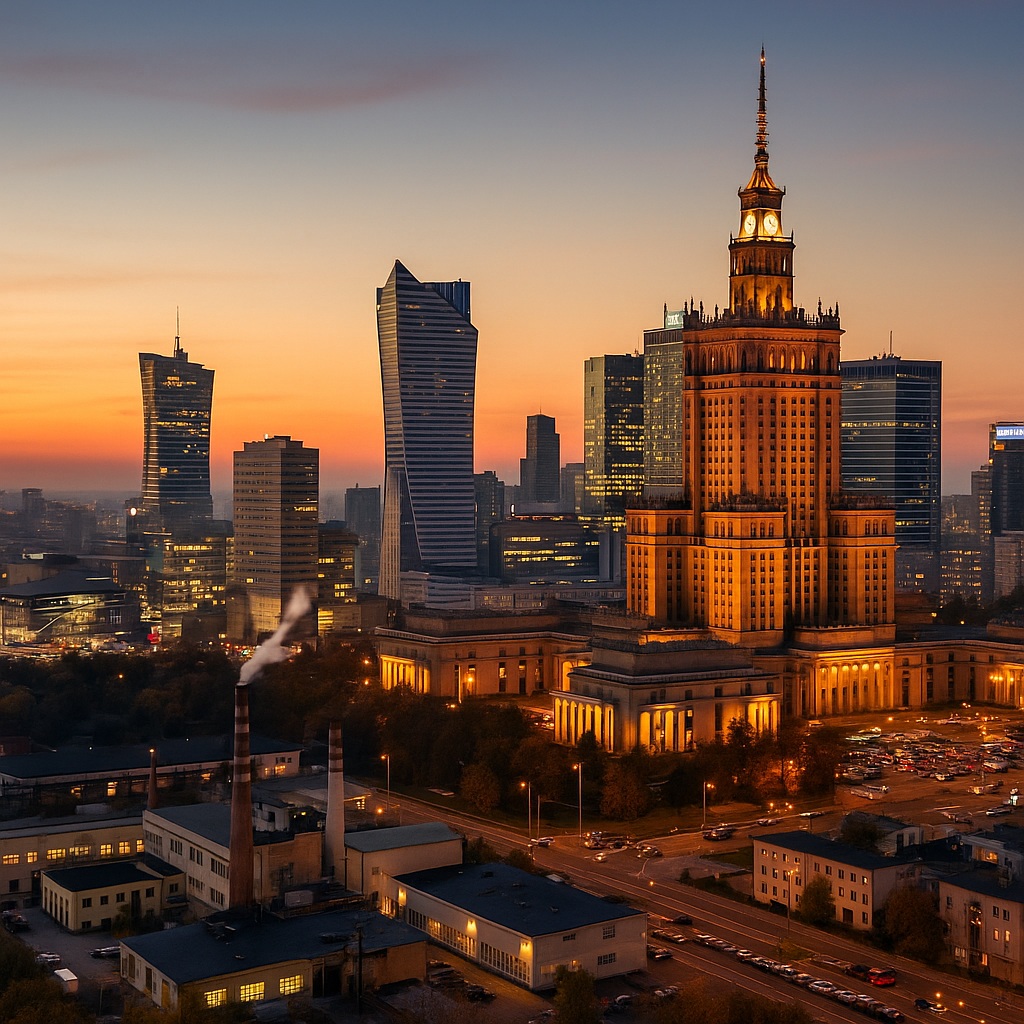
With Nominal GDP Approaching US$1.04 Trillion and Momentum in Consumption and Investment, Poland Breaks New Ground in Europe’s Growth Landscape
As Europe charts a cautious path through slowing growth and protracted structural challenges, one country stands out: Poland. New data and projections from the International Monetary Fund (IMF) and other international monitors suggest Poland’s economy is on the cusp of a historic leap — crossing the US$1‑trillion nominal gross domestic product (GDP) threshold in 2025 and thereby securing a place among the world’s top 20 economies.
That milestone, while still subject to revision, would mark the end of Poland’s long “catch‑up” journey and the beginning of a new phase: competing not just within Central and Eastern Europe, but across the developed‑market spectrum.
A Turning Point in Nominal Scale
Traditionally overshadowed by Western European neighbours, Poland has quietly reshaped its economic trajectory. According to IMF country data, Poland’s nominal GDP stood at approximately US$980 billion in recent years. While the official IMF figures for the US$1.04 trillion mark are still being assimilated across datasets, credible sources — including summary tables listing Poland at the 20th position globally in 2025 with a GDP around that figure — indicate the breakthrough is within reach.
Crossing the US$1 trillion barrier carries symbolic weight: it signals a level of economic scale once reserved for the world’s largest markets, and it raises Poland’s profile as a destination for capital, trade and regional leadership.
Why Now? — Growth Drivers and Structural Strengths
Several interlocking factors explain Poland’s emerging momentum:
- Domestic Recovery & Consumption: Analysts point to a rebound in private consumption, underpinned by rising real wages and declining inflationary pressure. The IMF notes that growth in 2024 picked up to around 2.8 percent, with domestic demand the main driver.
- Integration into Global Value Chains: Poland benefits from its strategic position in Central Europe, serving as a manufacturing and logistics hub. The accommodation of high‑tech, auto‑part and electronics supply chains has boosted its export and productivity profile.
- EU Funds and Infrastructure: The absorption of European Union structural and recovery funds has enabled investment in transport, digital infrastructure and energy‑transition projects, laying the groundwork for sustained growth.
- Resilience Amid Slow Europe: While many Western European economies struggle with weak growth — forecast below 1 percent for 2025 in some cases — Poland’s growth outlook remains relatively robust at around 3.2 percent for 2025.
Breaking Through: From Emerging to Established
Reaching this scale matters because it reflects the transition from “emerging market” to “established growth platform.” Poland is no longer simply catching up; it is beginning to lead. In per‑capita terms, projections show Poland aiming to surpass peers like Spain and Japan in terms of GDP per capita (PPP) by the end of the decade.
For investors and policymakers alike, scale matters: larger economies attract larger pools of capital, become more resilient to shocks, and can support more diversified growth models.
Challenges Ahead: Risks and Constraints
The milestone, while noteworthy, should not obscure the headwinds that remain:
- Export‑Drag and External Demand: Poland’s growth remains partially dependent on external demand — notably from the eurozone. Weak foreign orders or slower trade could dampen momentum.
- Demographic and Labour Constraints: Poland’s population is ageing and the pool of available labour is tightening. This could curb long‑term growth unless offset by productivity gains or immigration.
- Structural Shift Toward Services and High Tech: Sustaining growth above the European average will require a move beyond low‑cost manufacturing toward innovation and higher‑value services.
- Fiscal and Inflation Pressures: As Poland scales up, managing inflation expectations and public finances will become more important — especially if global interest rates rise or energy price shocks reemerge.
What It Means for Europe and the Region
Poland’s success reverberates far beyond its borders. For Central and Eastern Europe, a thriving Poland can act as a growth anchor, driving regional investment, supply‑chain linkages and intra‑EU trade flows. For Western Europe, Poland’s rise signals both competition and opportunity — as firms seek efficient hubs, and as markets shift.
From a strategic perspective, Poland entering the top‑20 economies alters the European economic map: it elevates the balance of power, the centre of gravity of investment, and underscores that growth leadership in Europe may no longer rest exclusively with old Western incumbents.
The Road Forward
As of this early November moment, the next steps for Poland’s economy are clear:
- Translating nominal scale into higher living standards and productivity.
- Managing the shift from investment‑led to innovation‑led growth.
- Fortifying external resilience by diversifying export markets and supply chains.
- Leveraging EU and private investment to transition energy and infrastructure sectors.
If Poland secures the US$1.04 trillion threshold in nominal GDP and holds growth above the European average, it will have earned more than a temporal accolade — it will have cemented a new economic era. For a country that only a generation ago was cast as a peripheral “re‑emerging” economy, that is an achievement worth noting.

 The Tower Post