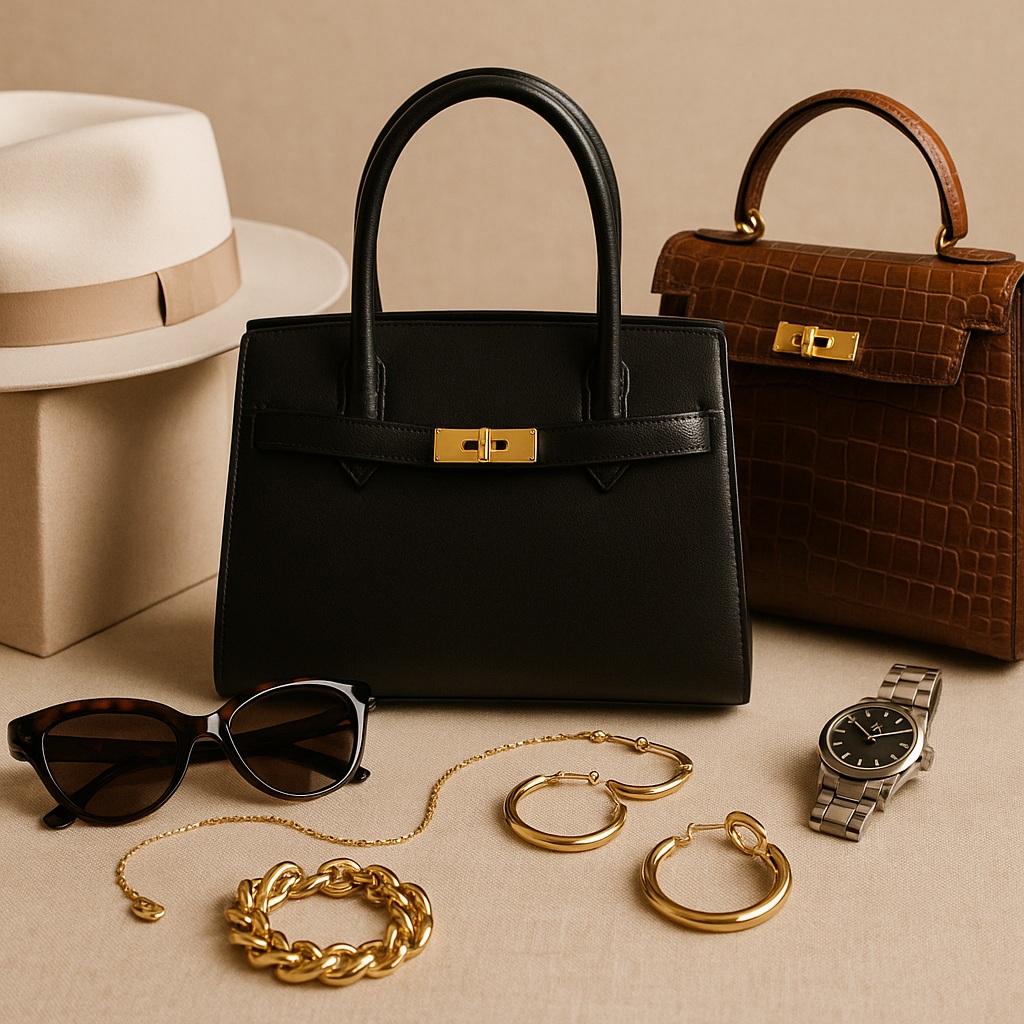
From handbags to watches, key houses like Dior, Fendi and Armani fuel a $1.5 trillion boom driven by e‑commerce, rising incomes and trend‑obsessed consumers
As of early November, the global fashion accessories sector stands on the cusp of what industry analysts are describing as a transformational leap. A recent market report estimates that the worldwide market — currently valued at around US $761 billion — is poised to grow to approximately US $1.52 trillion by 2033, effectively doubling over the next decade.
E‑commerce the prime engine
Much of this growth is being attributed to the accelerating shift of consumers toward online shopping. Rapid expansion of digital channels is enabling brands and retailers to reach beyond traditional brick‑and‑mortar markets — tapping emerging middle classes in Asia, Latin America and the Middle East. At the same time, major luxury houses such as Dior, Fendi and Armani are increasingly blending heritage craftsmanship with global digital platforms, enabling accessories like handbags, jewellery and timepieces to become not just style items but star drivers of growth.
A rise in disposable incomes and global style‑consciousness
Beyond the channel shift, underlying consumer economics are shifting as well. Rising disposable incomes, especially in Asia‑Pacific and parts of Africa and Latin America, are expanding the pool of buyers for branded accessories. Concurrently, the definition of what constitutes a fashion accessory is broadening — accessories are now seen as key personal‑style statements, investment pieces and lifestyle markers. Younger consumers in particular are driving demand for bespoke, limited‑edition or influencer‑led accessory collections, strengthening the premium segment even as mass‑market options proliferate.
Luxury houses at the forefront
Luxury fashion houses, long reliant on apparel and footwear, are increasingly leveraging accessories as growth drivers. Bags, belts, scarves, sunglasses, watches and jewellery sit at the intersection of visibility (they’re seen), desirability (they’re status symbols) and commercial scale (they’re repeatable). For instance, a signature handbag collection or a watch series with strong branding can generate outsized margins and become a recurring revenue source.
Regional dynamics and market segmentation
While Europe still hosts many of the storied luxury ateliers, growth is being led by Asia‑Pacific, where rising affluence meets digital infrastructure and fashion‑savvy consumers. Local brands in India, China and Southeast Asia are also gaining the first‑mover advantage in accessories, making regional expansions critical for global houses.
Segment‑wise, jewellery and watches are among the fastest‑growing categories, as are handbags and “premium” handbags in particular. Mass‑market accessories will continue to occupy the bulk of volume, but the premium and luxury tiers are where margin expansion and brand elevation are strongest. Meanwhile, omni‑channel retail — combining online, mobile and in‑store experiences — is increasingly the default business model.
Opportunities, risks and strategic imperatives
The projected market doubling presents rich opportunity, but also significant challenges. On the opportunity side:
- Brands that authentically connect with younger consumers, leverage digital content and social commerce, and tell compelling stories around craftsmanship or sustainability will be well placed.
- E‑commerce platforms offer unprecedented scale and global reach, enabling mid‑ and luxury‑brands to go direct or via curated marketplaces and bypass geographical constraints.
- Regional diversification — especially into high‑growth emerging markets — offers tailwinds of sharp growth for brands who move early.
On the risk side:
- Supply‑chain disruptions, raw‑material inflation and trade barriers remain real threats. The luxury accessory business is still vulnerable to logistics shocks and shifting global tariffs.
- Counterfeiting and brand dilution are a persistent challenge in the accessories space, where status signalling is central.
- Sustainability expectations are rising: eco‑materials, circular‑economy models and transparent sourcing are increasingly table stakes, especially for younger consumers.
- A premium‑accessory segment can become crowded quickly; brands must continuously innovate to stay distinct.
Strategic take‑aways for stakeholders
For brands and retailers: invest in digital‑first customer experiences, deepen storytelling (heritage, craft, sustainability), and tailor regional strategies — what works in Europe may need re‑imagining for Southeast Asia or Latin America. For investors and analysts: the accessories space offers one of the more resilient growth pockets in fashion — less exposed to rapid style‑cycles of apparel, more to status, collectibility and repeat purchase behaviour. For consumers: accessories are increasingly not just finishing touches, but centre‑pieces of wardrobes and personal identity.
As we move into the last months of the current year, the stage is set for what many in the industry regard as a sustained “accessories decade”. If the projected trajectory holds, by mid‑2030s accessories may no longer be the appendage of fashion houses — they may be their dominant business line.




 The Tower Post