
Congressional leaders push for import restrictions and security review over firmware, data and supply‑chain concerns centered on China’s dominant drone firm.
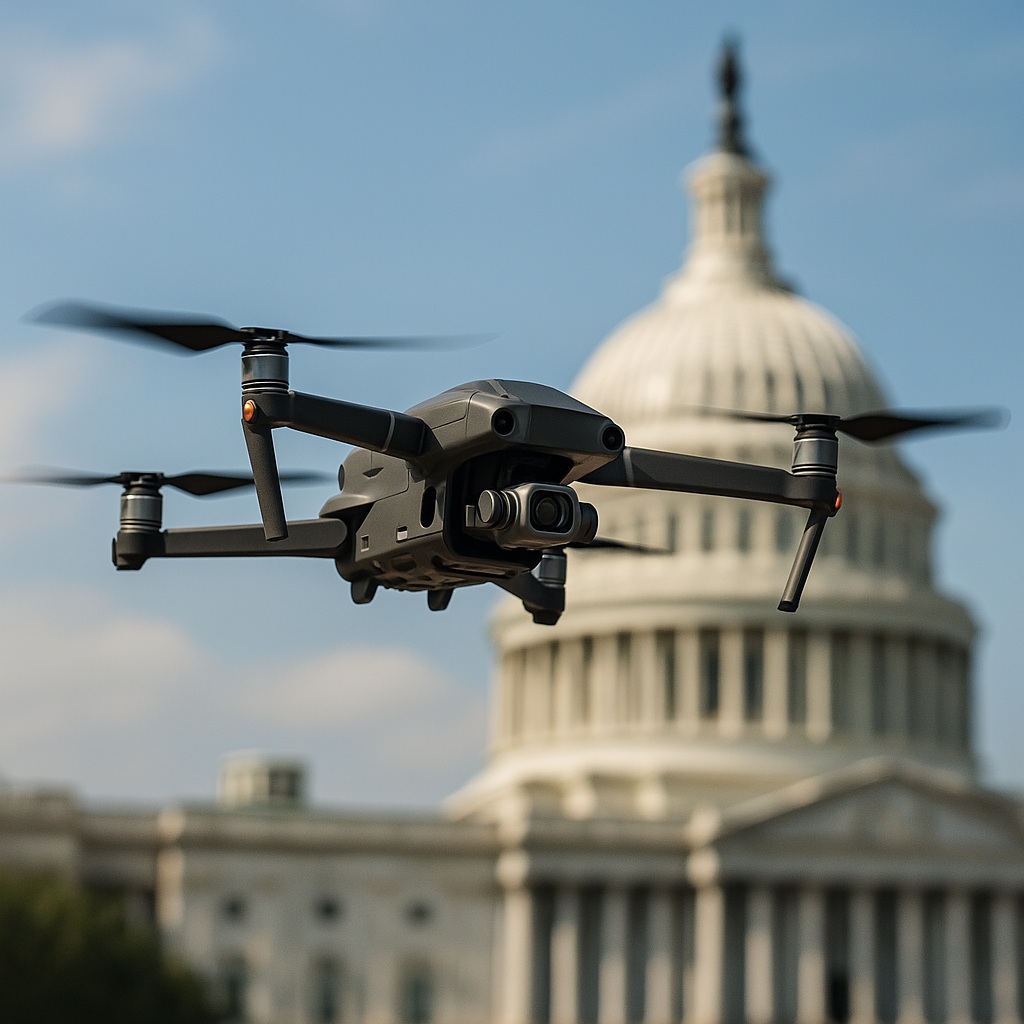
In a coordinated effort that underscores escalating U.S. concerns about technological dependence on China, a coalition of senior House committee chairs has formally urged the U.S. Department of Commerce to open a sweeping inquiry into drone‑technology products tied to China, with the world’s largest drone manufacturer specifically flagged for scrutiny. The move, issued via letter in late October, signals growing bipartisan alarm about the national‑security risks posed by foreign‑manufactured unmanned aerial systems and related components.
The letter—signed by the chairs of four key committees—including the House Permanent Select Committee on Intelligence and the House Committee on Foreign Affairs—raises fundamental questions about the integrity of firmware, the secrecy of data flows, and vulnerabilities in global supply chains that could expose U.S. infrastructure, public‑safety agencies and commercial users to potential exploitation.
At the heart of the letter lies a specific focus on DJI, the Shenzhen‑based company whose models dominate the global commercial drone market. U.S. regulators and lawmakers highlight concerns that DJI’s deep ties to Chinese electronics‑ and telecommunications‑ecosystems give rise to risk scenarios in which critical flight data, imagery or telemetry could be diverted or manipulated—or worst case, the devices used as a conduit for espionage or disruption of U.S. systems.
Impetus for the Probe: Firmware, Data and Supply‑Chain Risks
The urgency of the request stems from multiple overlapping developments:
- The Commerce Department has already launched broader national‑security investigations under Section 232 into the importation of drones and drone components from China, citing risks to domestic production capacity and supply‑chain concentration.
- The Federal Communications Commission (FCC) recently expanded its national‑security rules to permit retroactive restrictions on equipment from manufacturers deemed “foreign adversaries,” a change that effectively puts existing drone hardware and firmware in play for government action.
- The 2025 National Defense Authorization Act (NDAA) includes a provision mandating a formal security review of DJI by a designated U.S. national‑security agency before a deadline later this year. Should that review not be completed, DJI would automatically be placed on the FCC’s Covered List, barring new equipment shipments or import approvals.
The lawmakers’ letter highlights three specific concern vectors:
- Firmware control: Whether drone firmware allowing remote updates or data redirection poses a risk of “back‑door” access or hostile remote control.
- Data security: The possibility that imagery, sensor logs or control metadata may flow outside U.S. jurisdiction or be subject to foreign government access.
- Supply‑chain dependency: The dominance of Chinese manufacturing in key components (e.g., cameras, sensors, processors, wireless modules) raises strategic vulnerabilities in the event of export controls, cut‑offs or compromised parts.
Implications for Industry, Government and Commercial Use
If the Commerce Department acts on the request—and analysts expect a formal investigation to be initiated imminently—it could bring a range of consequences:
- A formal restriction or ban on the import of drones or components linked to flagged Chinese entities, which in turn could force U.S. operators (commercial, municipal, public‑safety) to seek alternative domestic or allied‑supplier platforms.
- Intensified scrutiny of firmware updates and data‑link architectures for drones already in operation; existing fleets may face lifecycle‑risk if support becomes limited or certification insurance becomes unavailable.
- A push for accelerated domestic drone‑manufacturing capacity, as the U.S. defense sector itself signals urgency to reduce reliance on foreign technology.
- Legal and commercial risks for DJI and similar companies: the company already is engaged in litigation challenging U.S. government designations and faces reputational damage and restricted access to U.S. markets.
For public‑safety agencies and commercial service providers that have built operations around drones, the regulatory overhang is creating significant uncertainty. Industry commentary warns that while an outright immediate ban is unlikely, the trend lines point toward gradually heightened operational and procurement risks.
Strategic and Geopolitical Dimensions
Beyond immediate regulatory concerns, the issue is increasingly viewed through a geopolitical lens: The U.S. strategy to maintain leadership in unmanned systems and aerospace is seen to hinge not just on first‑tier platforms, but on who controls the flow of data, firmware and supply‑chain inputs. The Pentagon’s recent push to expand domestic drone capacity reinforces this frame.
Lawmakers framing the letter explicitly link drone technology dependencies to broader China‑U.S. competition — particularly in emerging spaces such as AI, communications and surveillance systems. In this view, the drones are not just flying cameras, but nodes in a global architecture of data collection, control and influence.
What’s Next
The Commerce Department now faces a decision point: respond to the coalition’s request by launching a formal investigation; issue preliminary restrictions; or defer action and risk automatic regulatory triggers later in the year. Meanwhile, the deadline for the NDAA‑mandated review of DJI looms, which could itself trigger further enforcement even absent new findings.
For impacted stakeholders—manufacturers, drone service providers, public‑safety units, and regulators—the guidance is to prepare for increased compliance risk, supply‑chain disruption, and procurement uncertainty. Firms using Chinese‑tied drone platforms may now assess whether to shift toward supply sources aligned with U.S. regulatory safety nets and consider firmware/data‑governance exposures.
At this juncture, the broader question looms: Will the U.S. shift from a reactive posture of piecemeal restrictions to a comprehensive strategy for unmanned‑system sovereignty? And if so, can industry and government move quickly enough to reconfigure an ecosystem that, for now, still leans heavily on foreign‑manufactured platforms?
As the moment passes into early November, the story is far from concluded. The next phase will involve watching whether the Commerce Department acts, how DJI and other firms respond, and how the ripple effects manifest across procurement, manufacturing and operations.




 The Tower Post