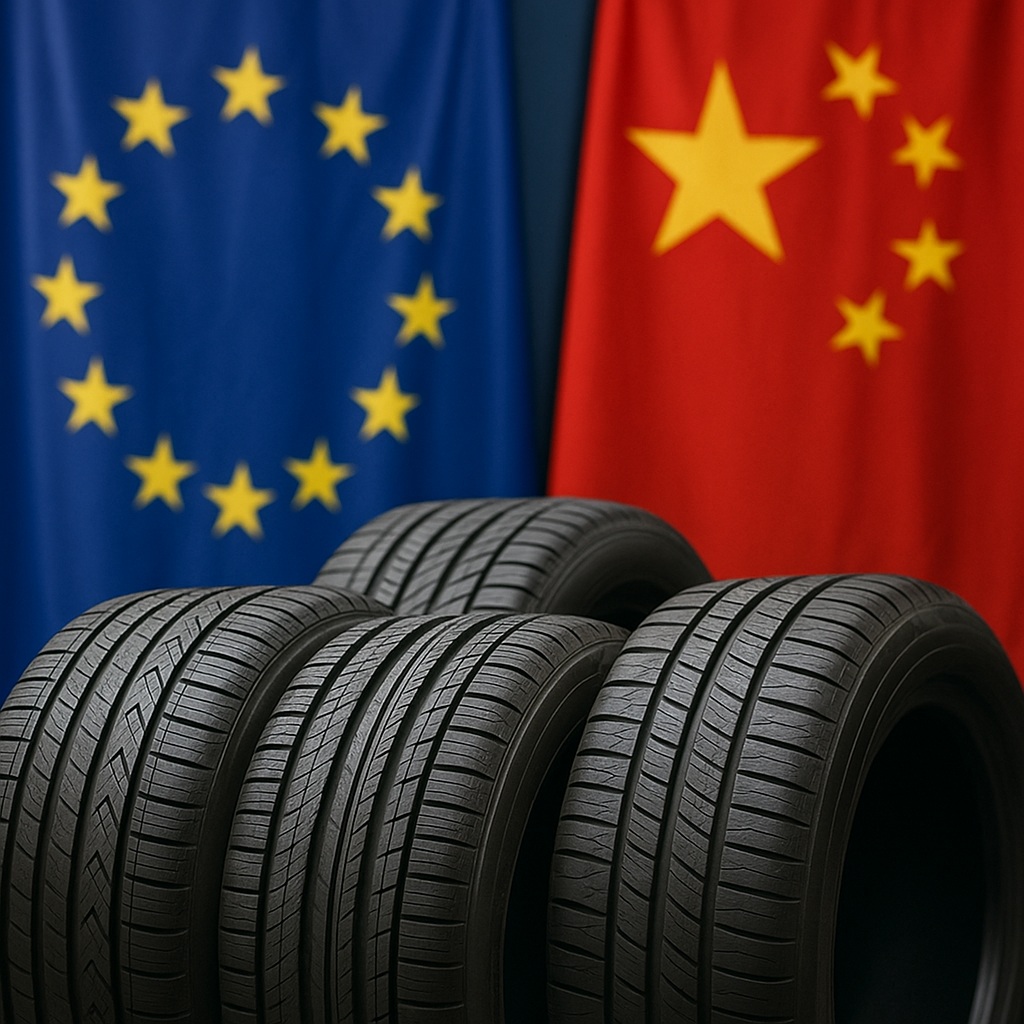
Brussels’ latest trade action intensifies scrutiny of Beijing’s industrial support as European firms warn of mounting competitive pressure
The European Commission has initiated an anti‑subsidy investigation into tyre imports from China used in passenger cars, light commercial vehicles, and buses, deepening the continent’s trade confrontation with Beijing at a moment of rising economic unease. The move signals a sharper European posture on trade enforcement as policymakers confront the challenges posed by foreign industrial support mechanisms.
European tyre makers have long warned that a surge of cut‑price imports has distorted the competitive landscape. Executives argue that they cannot maintain innovation and employment levels if forced to compete with products allegedly benefiting from subsidised loans, energy discounts, and other forms of state backing. The new probe will determine whether such support exists and, crucially, whether it has caused measurable harm to domestic producers.
Officials in Brussels describe the investigation as part of a broader commitment to defending industrial competitiveness. Across the continent, factories face elevated production costs and pressure to invest in new technologies as climate and safety standards evolve. Many manufacturers say they welcome the stepped‑up scrutiny, viewing it as a necessary defence against global market distortions.
Chinese authorities have rejected claims of unfair practices and urged the EU to avoid what they describe as protectionist impulses. They warn that Europe risks undermining established supply chains and jeopardising commercial ties. Trade analysts, however, note that the EU’s approach increasingly reflects structural concerns about dependency and long‑term resilience rather than short‑term political signalling.
The investigation has triggered debate within Europe’s automotive ecosystem. Some carmakers fear that potential countervailing duties could raise input costs at a time when the industry is already navigating an expensive transition toward electrification. Tyres represent a meaningful component of vehicle production budgets, and any price shift could influence downstream markets.
Labour unions, meanwhile, argue that defending Europe’s industrial footprint outweighs the risk of higher costs. They point to previous waves of factory closures and contend that allowing subsidised imports to proliferate would only accelerate the erosion of high‑skill manufacturing jobs. For them, the Commission’s decision marks an overdue response to global competitive pressures.
Trade experts believe the outcome of the probe will shape the EU’s broader economic relationship with China. Should Brussels impose duties, Beijing may consider its own retaliatory measures, which could affect European exporters in key sectors. Still, European officials appear prepared for a more assertive trade stance, convinced that long‑term competitiveness depends on addressing persistent structural imbalances.
The tyre industry, though often overshadowed by higher‑profile manufacturing sectors, carries significant weight in Europe’s industrial landscape. The continent hosts advanced research centres and production lines known for safety and environmental innovations. Manufacturers say maintaining this position requires a market environment where competition reflects true production costs rather than state‑engineered advantages.
For now, the Commission will proceed with evidence collection, company interviews, economic modelling, and market analysis. The investigation will test the EU’s willingness to defend its industrial interests at a time when global trade governance is under strain. It will also serve as a barometer of how Europe intends to navigate a world where economic policy and geopolitical strategy are increasingly intertwined.
Whatever conclusions Brussels ultimately reaches, the probe underscores a defining feature of Europe’s evolving trade identity: a readiness to confront market distortions even when doing so risks tensions with major economic partners.



 The Tower Post