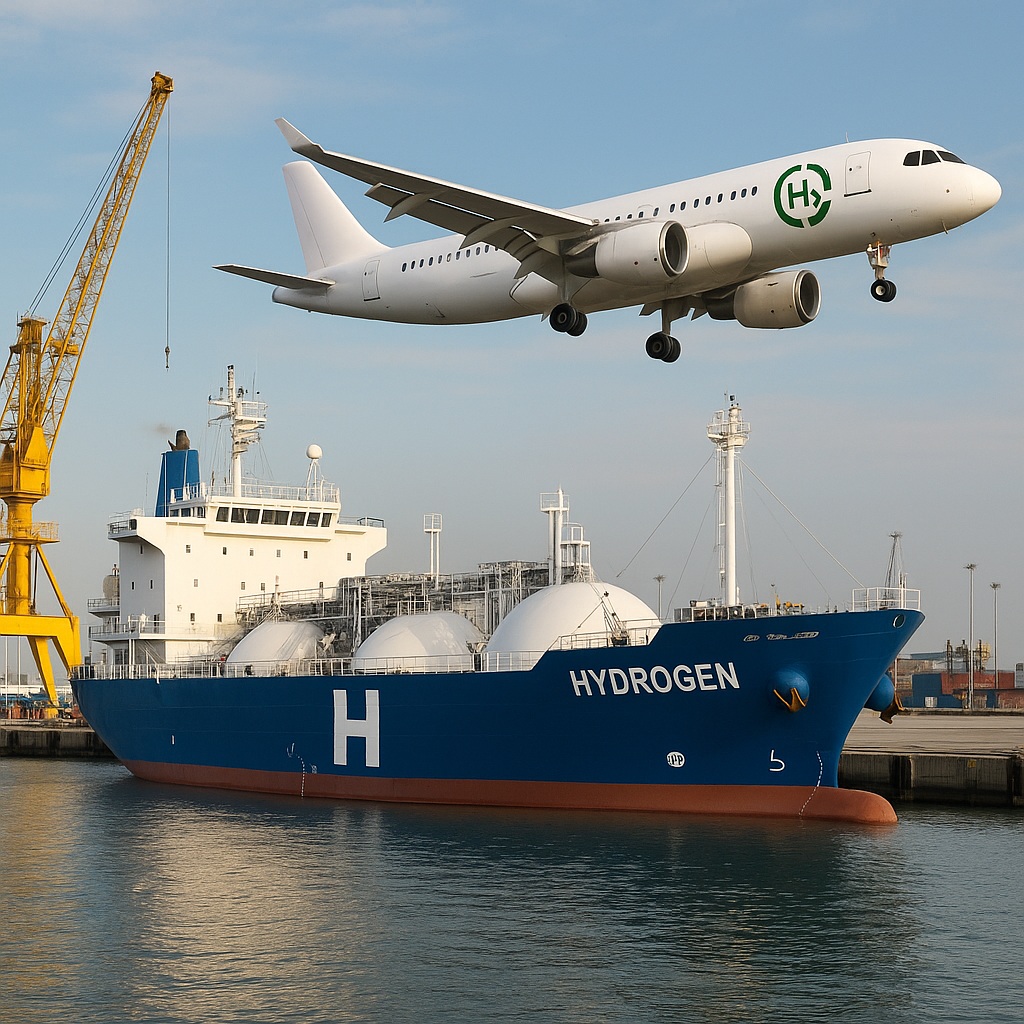
New EU funding signals a renewed commitment to sustainable
aviation and shipping as hydrogen-based fuels move closer to commercial reality
The European Union has announced a major €2.9 billion funding initiative aimed at accelerating the adoption of hydrogen-based fuels in aviation and shipping, marking one of the bloc’s strongest moves yet to decarbonize long‑distance transport. The announcement comes as Europe positions itself as a global leader in clean‑energy transition efforts, with policymakers and industry stakeholders framing hydrogen as a cornerstone of next‑generation climate strategy.
Under the new program, the EU will mobilize financing across member
states to support large‑scale demonstration projects, industrial
production of green hydrogen, and the rollout of supporting
infrastructure at major ports and airports. Officials say the goal is to
reduce reliance on fossil fuels in sectors that have traditionally been
among the hardest to decarbonize, due to strict energy‑density and
safety requirements.
Aviation and maritime transport account for a significant portion of
Europe’s greenhouse‑gas emissions. Although the sectors have made
progress through efficiency improvements and limited alternative‑fuel
adoption, hydrogen‑based solutions are increasingly viewed as critical for deep emissions cuts. The new EU initiative aligns with the bloc’s broader climate goals, including the ambition to reach climate
neutrality in the coming decades.
European Commission representatives emphasized that this new funding will help scale up technologies already under development by major aerospace and shipping companies. Hydrogen‑powered aircraft prototypes continue to advance, while several shipping firms have begun experimenting with hydrogen, ammonia, and other synthetic fuels as potential replacements for conventional marine diesel.
The EU’s financial commitment is expected to draw additional private
investment, particularly from companies seeking early leadership in the emerging hydrogen economy. Analysts note that Europe’s regulatory framework, combined with long‑term incentives, is helping accelerate commercialization timelines. However, industry experts caution that cost, infrastructure readiness, and global supply‑chain coordination remain major hurdles.
For aviation, the funding will support projects ranging from hydrogen
combustion engine development to liquid‑hydrogen ground‑handling
systems. In shipping, the initiative will expand terminal retrofits,
hydrogen bunkering facilities, and pilot operations for hydrogen‑powered vessels on commercial routes. Ports identified as strategic hydrogen hubs will receive priority backing to test new logistics models.
Environmental groups broadly welcomed the announcement, noting that hydrogen made from renewable energy offers one of the cleanest pathways for long‑haul transport. Still, they underscored the importance of directing funds toward green hydrogen production, avoiding reliance on hydrogen derived from fossil sources. Policymakers echoed this stance, stressing that the long‑term success of Europe’s clean‑transport reforms will depend on scaling renewable energy alongside new fuel systems.
As hydrogen technology gains traction globally, the EU’s move is seen as both an environmental measure and an economic strategy, designed to cement Europe’s leadership in clean‑tech innovation. Industry observers say the timing reflects growing international competition, with regions including North America and East Asia launching their own hydrogen initiatives.
The latest funding package signals a clear message: Europe intends to
build a future in which aircraft and ships no longer depend on
carbon‑heavy fuels. By accelerating hydrogen adoption across major
transport corridors, the EU hopes to turn a long‑term climate vision
into an industrial reality—with impacts that could shape global
standards for decades to come.




 The Tower Post