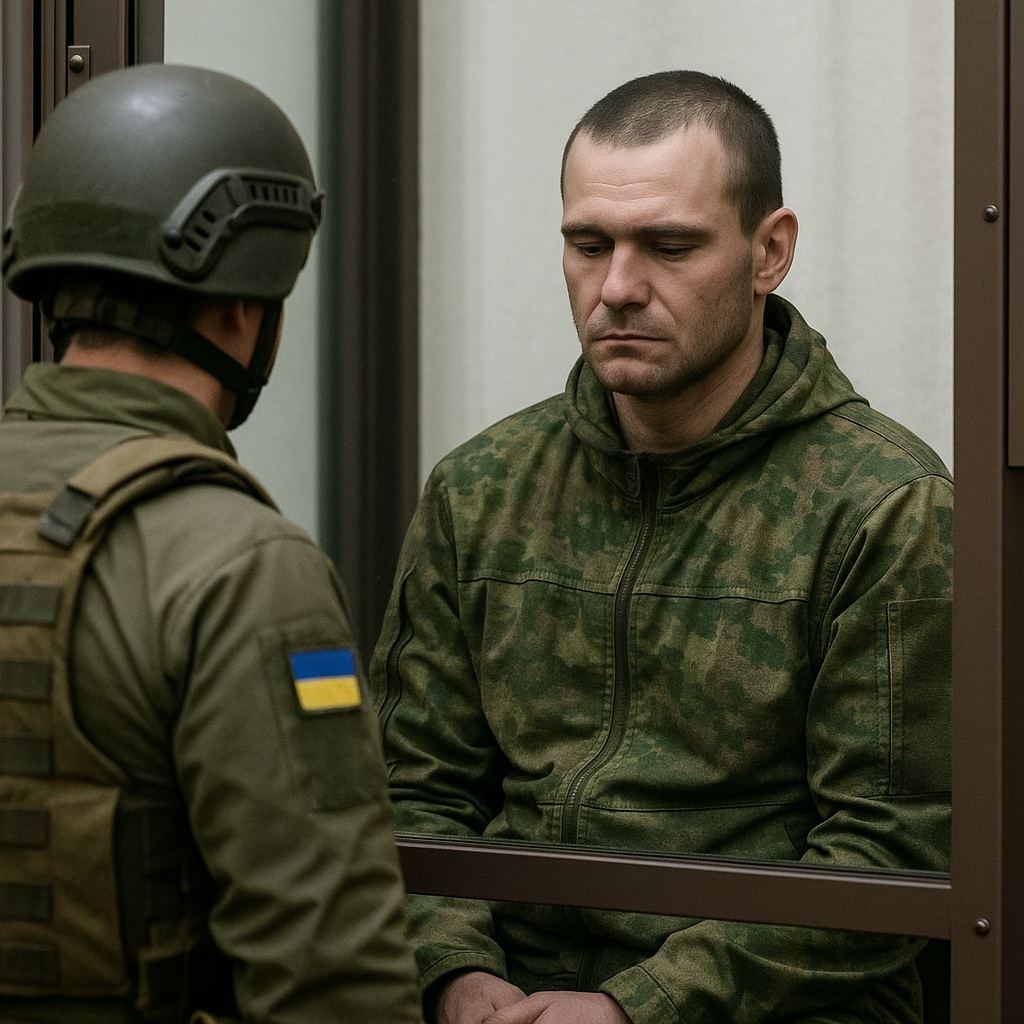
Ukraine Issues First Life Sentence to Russian Serviceman for Killing a Ukrainian POW
In the days leading into early November, as fighting continued along multiple axes of the front and diplomatic tensions remained high, a Ukrainian court delivered a watershed verdict that may shape the trajectory of wartime justice for years to come. A Russian serviceman, captured during combat operations in the east, was sentenced to life imprisonment after being found guilty of executing a Ukrainian prisoner of war. The case marks the first time a Ukrainian court has issued the country’s highest penalty to a Russian soldier for the killing of a captive—an act prosecutors described as a grave and deliberate violation of international humanitarian law.
The trial focused on the death of a Ukrainian soldier who had been wounded and disarmed following close-quarters fighting. According to investigators, the victim was clearly complying with orders and posed no threat when the Russian serviceman fired the fatal shot. Forensic experts presented detailed findings that supported the prosecution’s claim: the angle of the gunshot, the victim’s posture, and field testimony from Ukrainian troops who arrived shortly afterward indicated that the killing occurred outside the chaos of active firefight. Video evidence, authenticated by independent laboratories, formed a linchpin of the case.
Ukrainian authorities emphasized that the proceedings followed both domestic criminal procedure and internationally recognized standards for war-crimes investigations. The court provided the defendant with legal representation, interpreters, and the opportunity to challenge evidence. Observers from human rights organizations were allowed to attend, and several segments of classified material were examined by neutral legal specialists before being presented publicly.
The defense argued that the soldier had acted under extreme psychological strain and uncertainty, suggesting that battlefield confusion created a distorted perception of threat. However, the judges rejected the argument, citing the consistency of the physical evidence and the absence of any indicators that the prisoner attempted to resist. In their written decision, the panel noted that the killing appeared to be “intentional, controlled, and carried out in circumstances that provided no justification whatsoever.”
The verdict triggered immediate reactions across Ukraine’s military and political institutions. Officials described the sentencing as a critical affirmation of Ukraine’s commitment to enforcing the laws of war—even during a conflict where frontlines are fluid and atrocities have become disturbingly common. “Justice cannot be suspended because a war is underway,” one official said after the reading of the decision. “If anything, justice becomes more important.”
Across the border, Moscow swiftly condemned the ruling. Russian officials dismissed the trial as “politically charged” and claimed the defendant had been pressured into cooperating with investigators—an accusation Ukraine categorically rejected. Kyiv pointed to the layers of oversight involved in the case, including reviews from international legal partners and external forensic experts.
Despite the political noise, human rights organizations monitoring the region described the sentencing as a milestone. Analysts noted that while Ukraine has prosecuted other Russian soldiers for looting, shelling civilian districts, and mistreating detainees, this case stands apart because it resulted in a life sentence for the killing of a POW—an escalation in judicial response that signals how seriously Kyiv views crimes committed against captives.
For the victim’s family, the ruling brought solemn acknowledgment rather than triumph. In a statement issued through the Ukrainian military, relatives expressed gratitude to investigators and said the verdict “allowed truth to be spoken out loud, even if justice cannot undo what happened on the battlefield.” Friends and fellow servicemembers gathered near the courtroom during the final hearing, many of them carrying photographs and unit patches in quiet remembrance.
Legal experts believe the decision may shape the handling of future war-crimes cases currently under investigation. Ukrainian prosecutors have opened files on dozens of alleged abuses involving prisoners, some of which involve far more complex chains of command. International bodies—including the International Criminal Court and several European investigative teams—are closely watching Ukraine’s legal approach, using such cases to assess Kyiv’s capacity to pursue accountability domestically.
Diplomatic observers say the ruling may also influence ongoing discussions about post-conflict legal frameworks, reparations, and prisoner-exchange negotiations. While many such conversations currently remain theoretical due to the continued intensity of fighting, the record created by this verdict could one day serve as foundational evidence in broader international proceedings.
Even as artillery exchanges and drone strikes dominate daily headlines, Ukrainian officials insist that events in the courtroom carry their own strategic weight. “Every lawful prosecution strengthens us,” one member of parliament said. “We cannot build a secure future if we ignore crimes committed in the present.”
As the war grinds on—with exhausted battalions rotating in and out of frontline trenches, communities enduring repeated bombardment, and international partners renewing debates about long-term support—the courtroom’s role has become increasingly symbolic. It represents persistence, dignity, and a refusal to let the worst acts of the conflict fade into the haze of war.
The life sentence handed down this week will likely remain a defining moment in Ukraine’s wartime judicial history: a statement that violations of the laws of war, even in the most unforgiving environments, will be documented, prosecuted, and remembered.

 The Tower Post