A bold initiative seeks to build AI systems that surpass human specialists in key healthcare domains
Microsoft is escalating the global artificial intelligence race with the creation of a new “superintelligence” unit aimed at developing systems capable of outperforming humans in highly specialized fields, beginning with medical diagnosis. The initiative, announced in early November, reflects the company’s conviction that domain‑specific AI systems can now be engineered to exceed expert‑level reasoning and reliability—without the broader unpredictability associated with general artificial intelligence.
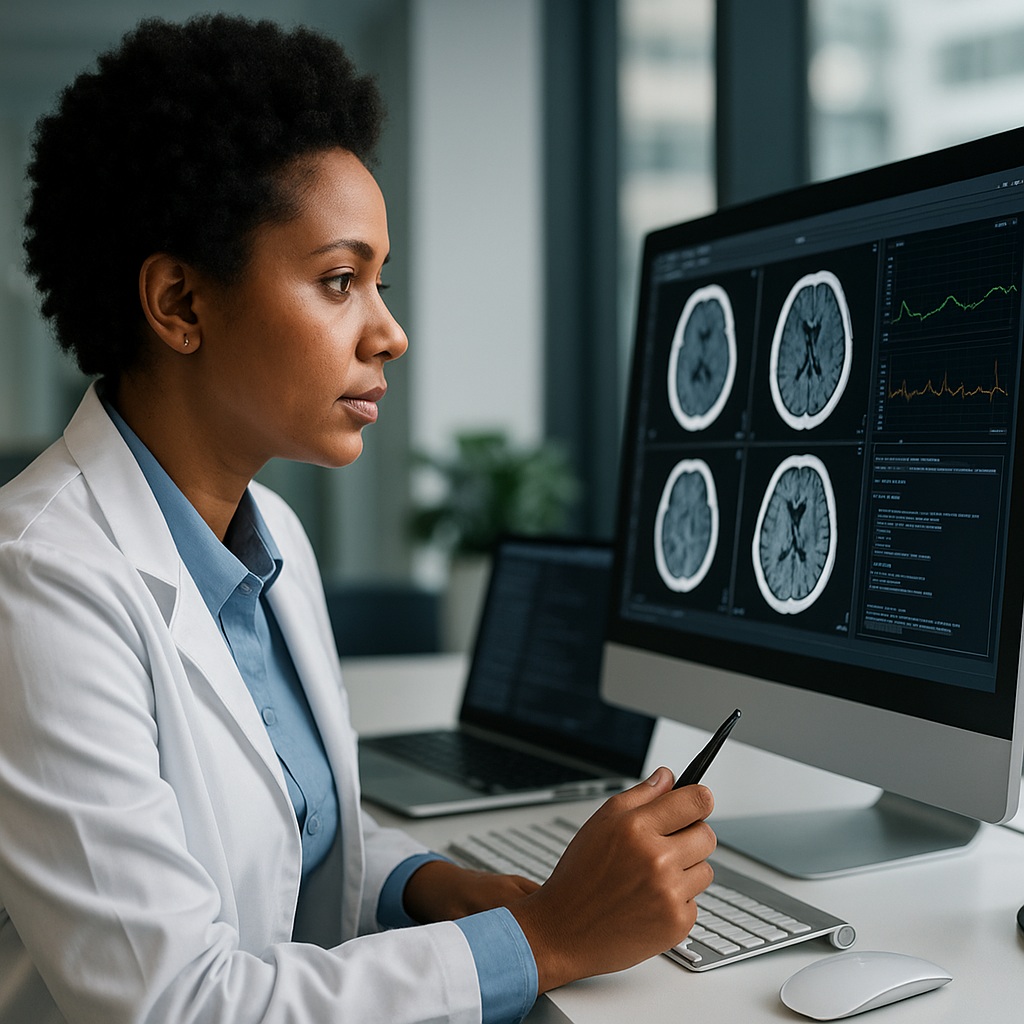
Although Microsoft is positioning this effort as a long‑term strategic bet, the company has already begun work on diagnostic models designed to analyze medical images, lab results, and clinical notes at a level it claims could rival or surpass top physicians. The project draws on Microsoft’s expansive access to cloud infrastructure, anonymized clinical datasets, and its rapidly growing AI research divisions. Insiders describe the goal not merely as improving healthcare workflows, but as producing systems that demonstrate “beyond‑human” precision in detecting early‑stage diseases, rare conditions, and multi‑factor syndromes that challenge even experienced specialists.
Industry analysts note that the move deepens Microsoft’s competitive posture against other major AI actors, especially those investing heavily in general-purpose models. Instead of trying to solve intelligence in the broadest sense, Microsoft appears to be focusing on vertical superintelligence—systems that may remain narrow but perform at levels no clinician could sustain. Executives have emphasized that the first deployment area, medicine, was chosen for its profound societal impact and the availability of structured, high‑value datasets.
Yet the strategy also raises questions around governance, medical liability, and the ethics of deploying models that exceed human capability but may still be fallible. Healthcare regulators in multiple regions have already begun engaging Microsoft to determine how such systems will be validated, audited, and integrated into existing clinical protocols. Researchers involved with the project say the company is designing new safety benchmarks intended to measure not only accuracy but reasoning transparency and model robustness under real-world pressures.
As of November, Microsoft’s leadership is presenting the superintelligence unit as an inflection point for the company’s broader AI roadmap. Rather than pursuing purely experimental research, the team is chartered with building deployable systems that demonstrate measurable, verifiable performance improvements in real clinical settings. Partnerships with hospitals, research institutes, and medical device manufacturers are expected to expand over the coming months, enabling trials across radiology, pathology, emergency medicine, and chronic‑care management.
Observers say the implications extend far beyond healthcare. If Microsoft can prove that superhuman AI is feasible—and stable—within medicine, similar domain‑first models could be developed for scientific research, climate forecasting, cybersecurity, and materials discovery. Some experts believe this approach may accelerate progress toward more general forms of intelligence by validating architectures and training regimes that support extreme reliability.
For now, the company is focused on its near‑term milestone: a diagnostic AI capable of consistent, explainable reasoning at a level exceeding top‑tier medical professionals. Whether the initiative reshapes healthcare or triggers new regulatory battles, Microsoft’s move signals that the era of domain‑specific superintelligence is no longer theoretical. It is being engineered in real time.




 The Tower Post