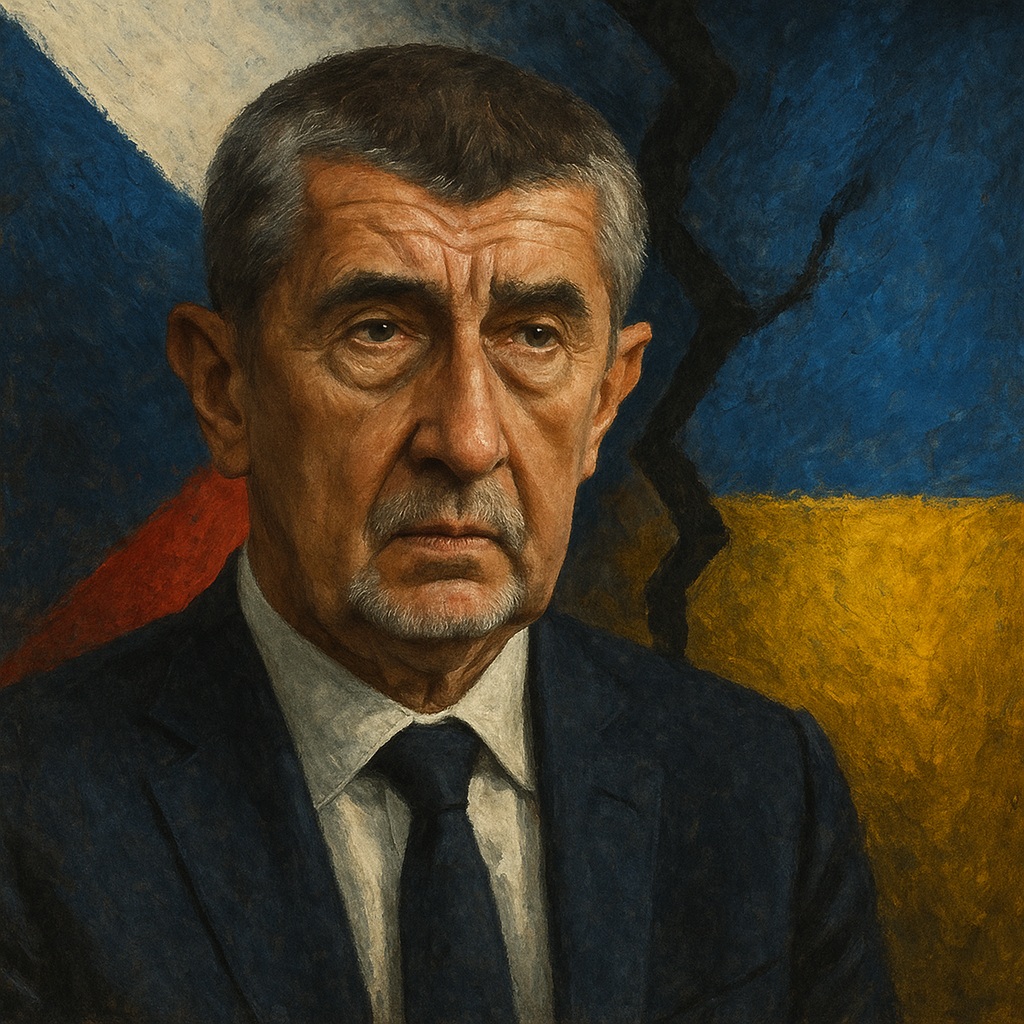
Andrej Babiš’s return to power triggers questions about whether Czech support for Ukraine can remain as firm as the war grinds on

A political shift taking shape in the Czech Republic is reverberating far beyond Prague. The return of Andrej Babiš to the prime minister’s office, supported by a coalition notably more right‑leaning than the one that governed during his earlier tenure, has prompted unease in Kyiv and among several European partners. At a moment when Ukraine is struggling to maintain military tempo and diplomatic momentum, even subtle changes in Central Europe’s political commitment could have outsized consequences.
Babiš’s comeback has been a defining moment in a region where politics have increasingly tilted toward nationalism, economic protectionism, and skepticism toward long‑term security obligations abroad. Although the new prime minister has avoided direct statements suggesting a withdrawal of support for Ukraine, several figures in his parliamentary alliance campaigned on platforms emphasizing domestic spending, tighter migration controls, and a reassessment of foreign aid. To Ukrainian officials, such rhetoric is an unmistakable warning sign.
The Czech Republic has been one of Europe’s most active contributors to Ukraine’s war effort, particularly in the early phases of the conflict. It provided weapons, coordinated international defense‑industry partnerships, and accepted refugees in numbers that far exceeded many wealthier EU countries. In diplomatic circles, Prague earned a reputation as a principled and outspoken supporter of Kyiv, often helping to rally hesitant EU members toward unified action.
But that era may be shifting. European analysts point to signals that the new Czech government aims to distance itself from what it views as expensive or open‑ended foreign commitments. Although no explicit policy reversal has emerged, officials within the foreign‑policy establishment acknowledge that internal debates about “balancing national priorities” have intensified. Privately, several diplomats express concern that Babiš’s coalition could slow or dilute key initiatives—ranging from arms deliveries to energy‑security cooperation—by driving them deeper into bureaucratic review.
For Ukraine, even a mild deceleration could be costly. Military planners in Kyiv are counting on a dependable flow of equipment, spare parts, and industrial cooperation agreements from Central Europe. A Czech pause, however temporary, could ripple across the region by emboldening other governments that face domestic pressure to trim their commitments. With political tides shifting in multiple European capitals, the prospect of fragmented support is increasingly realistic.
On the Czech domestic front, public opinion remains less polarized than the new government’s rhetoric might suggest. Polls show considerable sympathy for Ukraine’s struggle, rooted in shared historical experiences with foreign domination and a public understanding of Russian aggression as a threat to regional security. Civic groups, defense experts, and former diplomats continue to argue that maintaining support for Kyiv—militarily, politically, and economically—is in the Czech national interest.
Nevertheless, Babiš’s political instincts have long been shaped by pragmatism and populist messaging. Observers note that he is acutely responsive to voter sentiment, particularly concerns about inflation, rising prices, and social stability. If he perceives that reducing Ukraine‑related expenditures can shore up his domestic standing, analysts worry he may be tempted to recalibrate Prague’s commitments, even if only incrementally.
Kyiv, meanwhile, is watching for any signs of such recalibration. Officials there have expressed cautious optimism that Czech support will continue, but they emphasize that the margin for uncertainty is shrinking. The war has entered a stage in which political unity among partners is as important as battlefield logistics. A wavering ally—even one that insists it has not changed course—can alter the strategic environment.
Across Europe, the Czech shift is viewed as part of a broader pattern. Right‑leaning parties, skeptical of multinational institutions and wary of long‑term military engagement, are gaining ground. Their rise coincides with growing fatigue among populations who increasingly view the conflict as distant, costly, and unresolved. Against that backdrop, Prague’s new direction could be interpreted not merely as a domestic realignment but as a signal that regional consensus on Ukraine is becoming more fragile.
For now, the Czech government maintains that it remains committed to European unity and regional stability. Yet the ambiguity surrounding its next steps is unsettling allies who once counted on Prague’s consistent leadership. As Ukraine braces for the months ahead, its diplomats are working urgently to ensure that what happens in Prague does not echo across the continent in ways that weaken its ability to withstand Russian pressure.
Whether Babiš’s administration ultimately shifts course or stays the path, the political winds in Central Europe have clearly changed. For Ukraine, that change adds a new layer of uncertainty at a moment when stability and solidarity are more vital than ever.

 The Tower Post