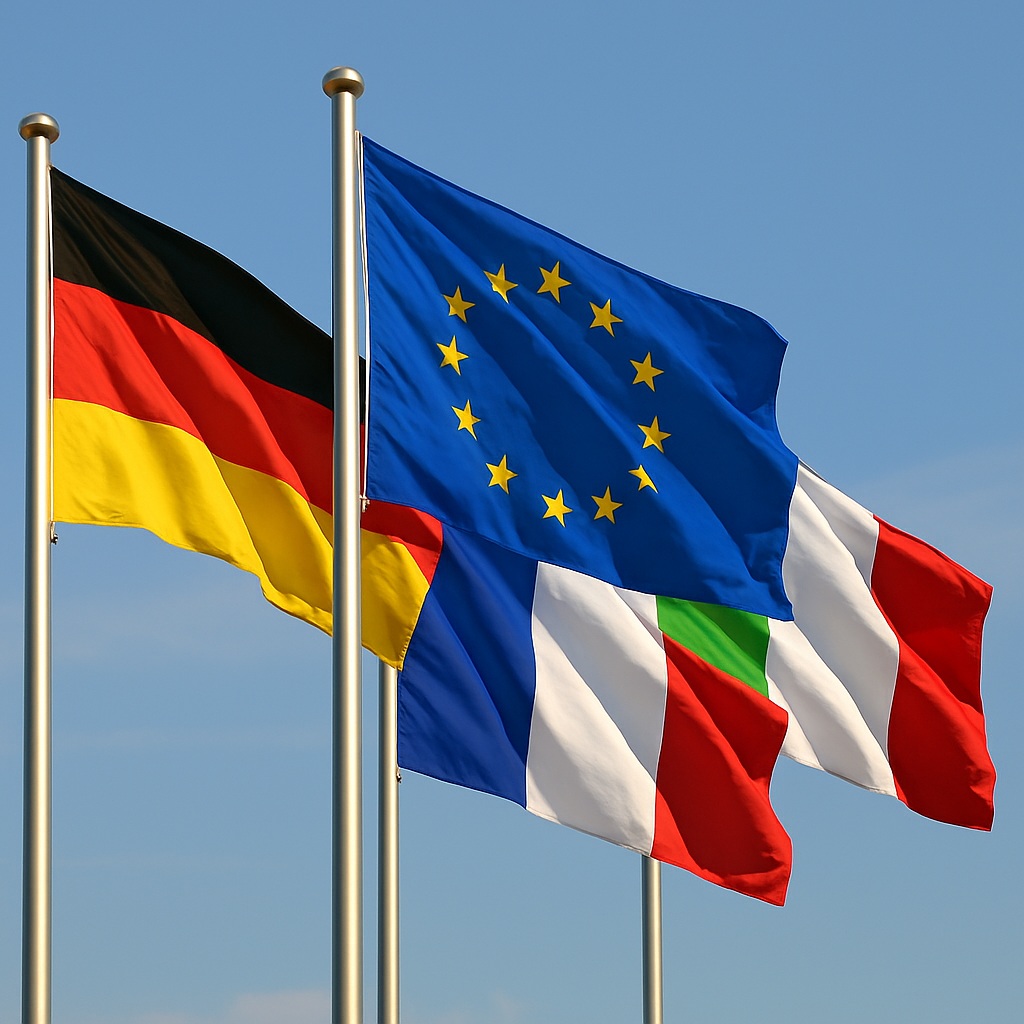
As populist narratives intensify, centrist movements across the continent are redefining national symbols to reflect unity, openness, and democratic confidence.
Across Europe, an unexpected evolution in political symbolism is
unfolding. National flags—once associated primarily with conservative, populist, or nationalist movements—are reappearing in moderate political spaces. From public squares to party conferences, the visual palette of centrist politics is shifting, signaling a strategic and cultural recalibration.
Moderates argue that the right’s long-standing claim over patriotic
imagery has created a distortion in the political imagination, where
national pride is too often interpreted through the lens of exclusion.
In response, centrist and liberal parties are reintroducing national
symbols as part of a broader effort to redefine what belonging means in contemporary Europe. Their pitch is simple but ambitious: patriotism can be inclusive.
In recent months, campaign stages and civic gatherings supported by
mainstream parties have increasingly featured flags displayed alongside European symbols. This aesthetic pairing illustrates a worldview that embraces layered identity—local, national, and continental—without forcing a choice between them. Strategists say the approach resonates with younger generations who see identity as plural rather than fixed.
The reclaiming of flags also reflects a changing cultural mood. Across
the continent, debates about immigration, security, and sovereignty have fueled polarization. Populist movements have been quick to capitalize on these anxieties, using national symbols as shorthand for cultural protectionism. Moderates now believe that vacating that symbolic space was a strategic misstep.
Their new approach frames national identity as something rooted in
democratic values instead of uniformity. Rather than rejecting
patriotism, they are attempting to broaden its meaning. Public events
supported by moderate coalitions increasingly pair national colors with messages of civic participation, media freedom, and institutional
trust—topics often overshadowed in emotionally charged political
environments.
Still, the shift carries risks. Critics caution that the tactic may
inadvertently reinforce the populist framing of political debate around
nationalism. Others question whether symbolic gestures can meaningfully address the economic frustrations and cultural insecurities that continue to drive support for the extremes.
But proponents argue that rebalancing symbolic politics is essential.
When national flags appear only in the hands of the far right, they say,
moderates lose access to emotional terrain crucial for building broad
coalitions. Reintroducing these symbols is not an aesthetic choice—it is a strategic one, designed to counter the narrative that patriotism
belongs to a single ideology.
The impact is already visible in public discourse. Cultural ministries
in several European countries are funding projects that highlight shared heritage while emphasizing inclusion. Local governments are
experimenting with civic ceremonies that blend tradition with diversity, making space for newer communities within national narratives.
As Europe navigates uncertainty—economic shifts, geopolitical tensions, and widening political divides—the act of reclaiming national flags speaks to a deeper transformation. Moderates are working to rebuild a political center that does not shy away from identity but engages with it directly. Their message is clear: national symbols can belong to everyone.
Whether this new brand of patriotism will reshape political outcomes
remains unclear. But one thing is certain: the flags flying at the heart
of Europe’s public life now carry more than historical meaning—they
represent the ongoing struggle to define the future of democratic
identity on a continent in transition.



 The Tower Post