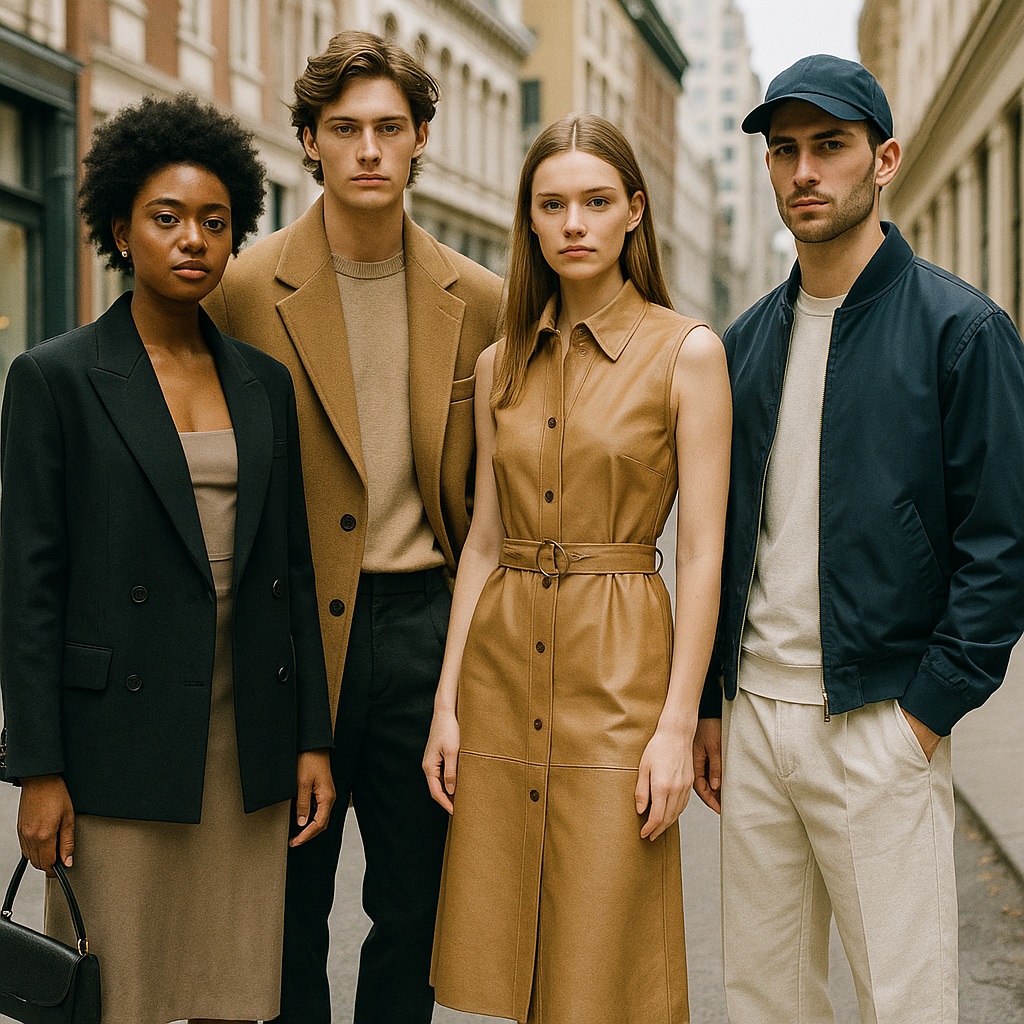
A survey of the creative forces defining U.S. fashion’s evolving identity

American fashion in 2025 is marked by a convergence of craftsmanship, cultural fluency, technological integration, and a renewed emphasis on sustainability. Across cities long established as creative capitals and others newly ascendant, a cohort of designers is setting the tone for the country’s aesthetic vocabulary. The following eleven figures represent a cross-section of the creativity reshaping silhouettes, materials, and the narratives that fashion now carries.
- Telfar Clemens
Telfar’s influence continues to radiate across fashion and culture, driven by a democratizing ethos that challenges conventional notions of luxury. The brand’s signature accessibility-first philosophy has expanded into new categories, reinforcing a uniquely American language of utility, fluidity, and cultural resonance. Clemens’ continued focus on community-led design keeps the label at the center of conversations about inclusivity and modern consumerism. - Aurora James
Through both Brother Vellies and her broader advocacy, Aurora James has remained a leading voice in ethical fashion. Her work foregrounds transparent sourcing, artisan partnerships, and a sophisticated sense of material storytelling. James’ aesthetic blends refinement with political consciousness, reminding the industry that beautiful design can—and should—carry social purpose. - Emily Adams Bode Aujla
Bode continues to redefine American menswear through narrative-rich garments crafted from repurposed textiles and archival references. The designer’s emphasis on memory, domestic labor, and handcrafted detail reflects a deeper national turn toward authenticity and heritage. Her expanding influence demonstrates that tradition, when reinterpreted with integrity, can become the cornerstone of modern design. - Mike Amiri
Amiri’s rise from cult West Coast label to major global presence illustrates the expanding geography of American luxury. His brand’s fusion of rock-and-roll attitude, technical tailoring, and precise fabrication offers a distinctly Californian vision of contemporary fashion. Amiri’s collections showcase how U.S. design can be glamorous without sacrificing craftsmanship. - Virgil Abloh’s Ongoing Legacy
Though Abloh’s life was cut short, his imprint on American fashion persists. His ideas continue to guide new dialogues around design, collaboration, and the permeability of creative disciplines. The teams and designers influenced by his approach maintain his momentum, ensuring that his impact remains a living part of the American fashion ecosystem. - Kerby Jean-Raymond
At Pyer Moss, Kerby Jean-Raymond continues to build on a body of work rooted in storytelling and cultural critique. His collections interweave historical reference with high craft, often illuminating the contributions and struggles of underrepresented communities. Jean-Raymond’s approach exemplifies an American tradition of fashion as both artistic expression and social commentary. - Grace Wales Bonner
Though based in London, Wales Bonner’s deepening ties to U.S. cultural history and her growing American presence make her a critical voice within the country’s fashion narrative. Her work blends literary research, diasporic aesthetics, and archival study, resulting in garments that feel simultaneously global and distinctly attuned to American identity formation. - Heron Preston
Preston continues to push the boundaries of streetwear, sustainability, and digital integration. His work incorporates circular design principles and experimental material technologies, making him one of the leading American designers exploring the intersection of physical and virtual fashion spaces. Preston’s influence captures the restless innovation that defines the country’s creative spirit. - Zac Posen
After a period of reinvention, Posen has reemerged with a new design perspective that blends the sculptural glamour he is known for with modern modularity. His recent work reflects a matured sensibility: more flexible, more wearable, and deeply attuned to contemporary dressing habits. Posen’s return signals the enduring relevance of American formalwear. - Raul Lopez
The Luar founder continues to define the frontier of New York’s fashion energy. Lopez’s work merges nightlife culture, sharp tailoring, and cross-cultural references, producing silhouettes that feel both intimate and electrifying. The brand’s accessories and ready-to-wear collections have achieved wide acclaim, placing Lopez firmly among the most influential designers of the moment. - Hillary Taymour
At Collina Strada, Hillary Taymour maintains her position as a leader in experimental sustainability. Her designs integrate biodegradable materials, organic dyes, and playful construction techniques that challenge traditional fashion systems. Taymour’s work visualizes an optimistic, ecologically grounded future for American style—one in which responsibility and creativity operate hand in hand.
American fashion today is shaped by the tension between innovation and memory, glamour and pragmatism, community and individuality. These eleven designers—each distinct in vision but united in impact—underscore a broader truth: U.S. style remains most compelling when it embraces multiplicity. As fashion continues to evolve, their contributions form a dynamic portrait of the country’s aesthetic pulse.

 The Tower Post