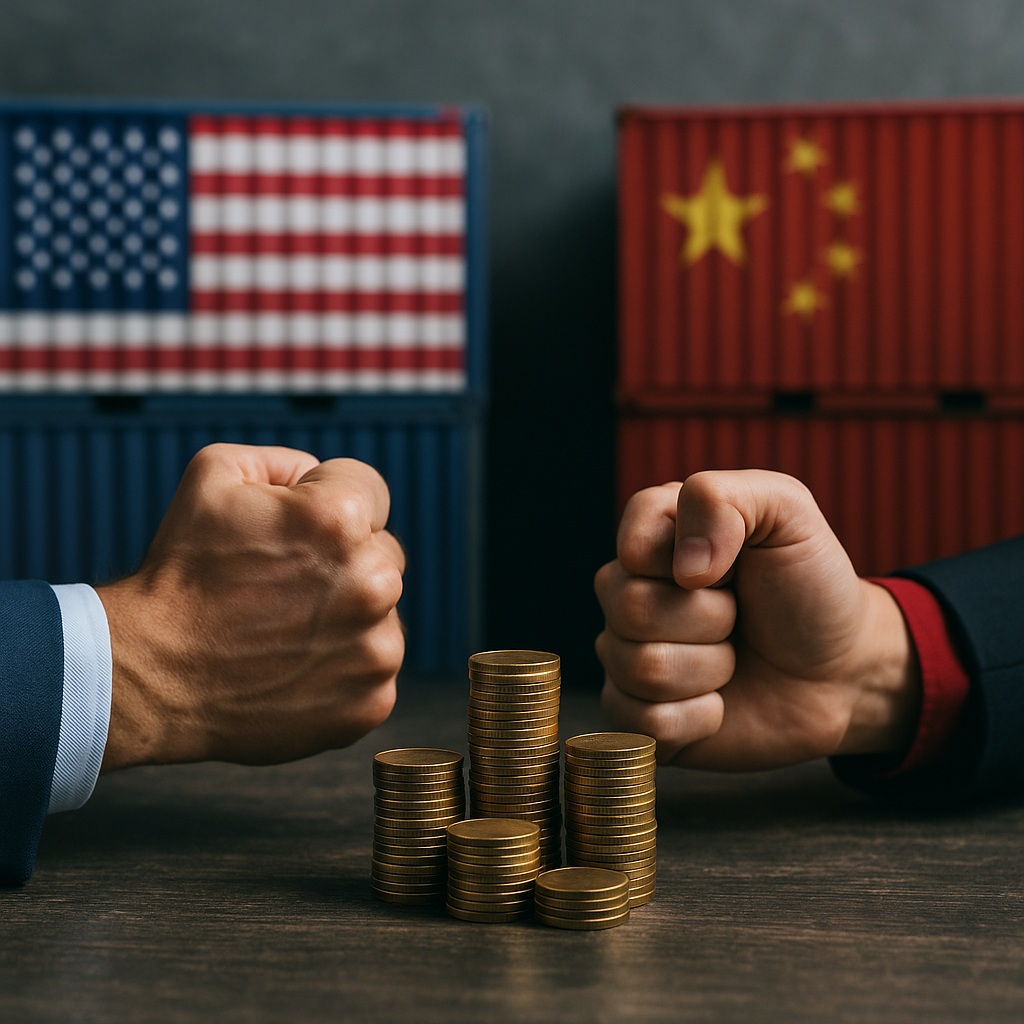
IMF analysis warns Europe is emerging as one of the biggest losers in the intensifying U.S.–China rivalry

Europe is finding itself squeezed between two economic giants whose rivalry is reshaping the global order. As the International Monetary Fund releases its latest assessment of worldwide economic dynamics, analysts caution that the continent is drifting into an increasingly disadvantaged position.
On one side stands the United States, newly energized by aggressive industrial policy, vast subsidies for strategic sectors, and a renewed push to reclaim manufacturing might. On the other is China, leveraging its technological scale, diplomatic clout, and expanding export capacity. Both powers are locked into a rivalry that is restructuring trade routes, investment flows, and the rules that govern global commerce.
Caught between these forces, European economies are experiencing mounting pressure. Analysts note that the continent’s industries—long dependent on open markets and dependable global supply chains—are facing a new environment defined by fragmentation and state intervention. European firms, positioned for stability rather than strategic confrontation, now confront a series of shocks: redirected supply chains, rising production costs, and a global competition that no longer plays by familiar norms.
Financial institutions and economic researchers highlight another vulnerability: Europe’s limited room to maneuver. Without the fiscal firepower of Washington or the centralized industrial coordination of Beijing, European policymakers find themselves struggling to respond. Even ambitious initiatives, aimed at revitalizing domestic manufacturing and accelerating green technologies, risk being overshadowed by the scale of U.S. incentives and China’s industrial momentum.
The IMF’s assessment underscores a deeper concern. As global investment increasingly flows toward regions favored by newly protectionist or strategic policies, Europe risks becoming the “collateral damage” of a broader geopolitical transformation. Some sectors, such as electric vehicles and advanced batteries, are already feeling the strain. European manufacturers face intense competition from heavily supported Chinese producers while also grappling with heightened regulatory expectations at home.
Diplomatically, the tension deepens. European leaders continue efforts to balance transatlantic alignment with economic ties to China, yet the space for neutrality is shrinking. With Washington urging partners to limit strategic dependencies and Beijing expanding economic partnerships beyond Europe’s borders, the continent struggles to maintain autonomy in critical domains—technology, energy, and defense.
Despite these challenges, analysts note that Europe retains significant strengths: robust institutions, a highly skilled workforce, and long-standing leadership in sustainable innovation. But these assets require coordinated continental action to remain competitive in a world reoriented around strategic rivalry. As conversations intensify across European capitals, the question is not merely how to respond to the shifting global landscape, but how to define Europe’s place within it.
In a moment marked by uncertainty but also opportunity, the continent faces a stark choice—adapt boldly or risk being shaped by forces beyond its control. While the IMF’s analysis does not predict inevitable decline, it warns that the trajectory of global change is accelerating. For Europe, the challenge now is not only economic resilience but strategic relevance in a world where rivalry is reshaping the future.

 The Tower Post