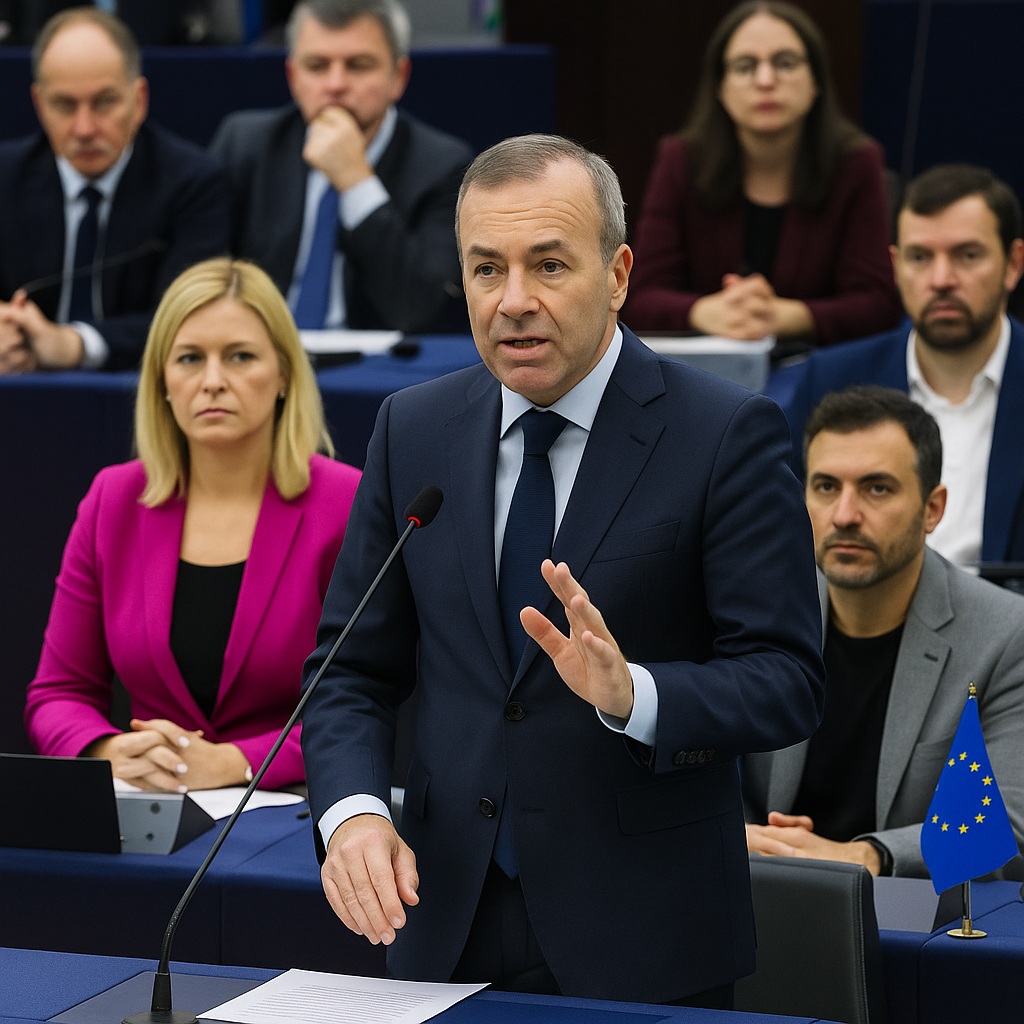
Amid shifting political alliances, the EU’s largest political group seeks far-right backing to dilute landmark environmental regulations
In Brussels, the political mood has turned markedly more transactional. The European Parliament’s dominant centre-right bloc, the European People’s Party, is moving to consolidate its influence by courting support from far-right formations to weaken environmental legislation that once defined the Union’s global leadership on climate policy.
The shift, unfolding as the legislative calendar intensifies and negotiations sharpen, reflects a recalibration within the mainstream conservative leadership. Although couched in procedural language and framed as a pragmatic correction to what they describe as “overreach,” the manoeuvre signals an unmistakable departure from the broad consensus that underpinned the green regulatory wave of recent years.
Across parliamentary committees, MEPs aligned with the centre-right have increasingly tabled amendments aimed at relaxing biodiversity obligations, reducing emissions‑reduction targets in specific sectors, and scaling back compliance requirements for industry and agriculture. Observers note that these amendments mirror long-standing demands from far-right parties, particularly those representing constituencies disaffected by rising energy costs and by what they view as intrusive environmental mandates.
Behind closed doors, negotiators from the centre-right have explored tactical cooperation with far-right groups that were once considered off-limits for legislative partnerships. According to several parliamentary officials, these discussions have included preliminary vote‑trading arrangements designed to secure enough support to block or dilute provisions within flagship regulations on emissions, land use, and sustainable finance.
Such alignments are provoking apprehension among pro‑European lawmakers who argue that the Union’s environmental framework is being reshaped without a clear public mandate. Progressive and liberal groups have warned that piecemeal rollbacks could erode investor confidence, weaken the regulatory certainty that industries rely on, and undermine the EU’s credibility in global climate diplomacy.
Business representatives themselves are divided. While some industry associations welcome reduced compliance obligations, others caution that abrupt shifts and political unpredictability risk creating a fragmented policy environment. Executives in sectors such as renewable energy and green manufacturing are particularly concerned that backtracking at this stage could stall capital flows and jeopardise technological leadership.
Within the Commission, officials responsible for climate and environmental portfolios are preparing impact assessments in anticipation of potential changes. These analyses reportedly outline the cumulative effect of incremental deregulation, suggesting that even modest amendments could collectively slow the EU’s emissions‑reduction trajectory and complicate long-term planning. Senior figures privately acknowledge that while legislative recalibration is not unprecedented, the current dynamic represents a qualitatively different political moment.
The centre-right’s strategy is grounded in electoral arithmetic. With traditional coalitions less stable and political fragmentation increasing, leadership figures view targeted cooperation with the far-right as a means to secure decisive parliamentary majorities. They argue that their approach reflects voter sentiment, particularly in regions where environmental rules are perceived as burdensome or disconnected from local economic realities.
Critics counter that this engagement normalises groups that challenge core democratic norms, reject established climate science, or espouse exclusionary political platforms. They contend that the centre-right’s overtures could shift the Parliament’s ideological centre of gravity and lead to more sweeping legislative revisions in the future.
As the Parliament enters a decisive phase of committee votes and plenary negotiations, the emerging alliances are poised to shape the next iteration of the Union’s environmental architecture. Lobbyists, diplomats, and civil society organisations are closely tracking the negotiations, aware that any changes adopted now will reverberate through national policy frameworks and regulatory planning cycles.
What remains unclear is whether the strategy will yield durable political gains. While the centre-right may succeed in securing short-term legislative victories, the longer-term implications for coalition dynamics, policy stability, and the Union’s environmental commitments remain unsettled.
Across member states, capitals are watching the developments with a mixture of caution and calculation. National governments will ultimately be responsible for implementing any altered rules, and several have already signalled resistance to abrupt shifts. Yet others, especially those contending with economic pressures or political challenges at home, may find alignment with the emerging parliamentary direction.
For now, the centre-right’s bet on far-right support marks a defining test of Europe’s evolving political landscape. The recalibration unfolding within the Parliament will shape not only the trajectory of the Green Deal, but also the broader contours of democratic cooperation in an era marked by volatility, fragmentation, and competing visions of the Union’s future.



 The Tower Post