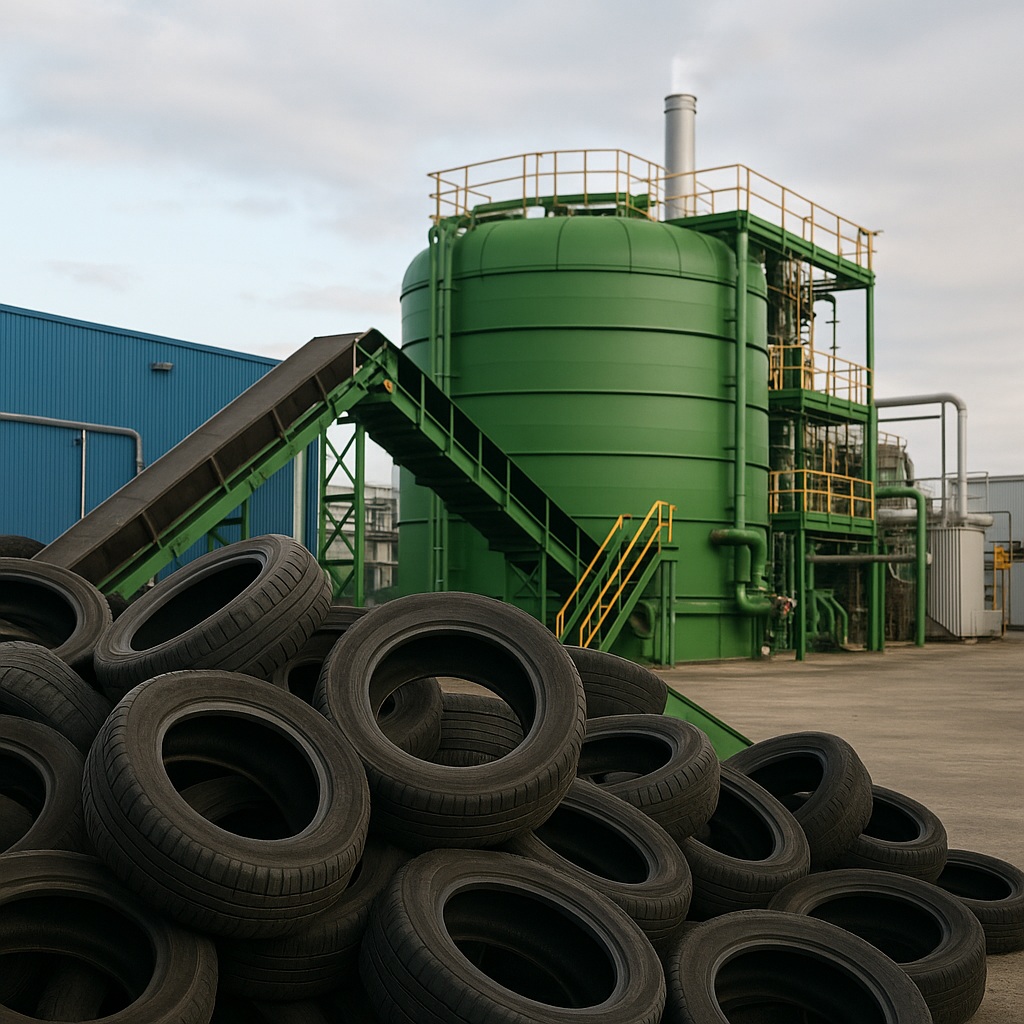
A new milestone for the continent’s circular economy transformation

Pyrum Innovations AG has taken a decisive step forward in Europe’s transition toward a full circular economy, securing EUR 29.4 million in EU-backed funding to scale its tyre‑recycling footprint into Southern Europe. The investment, which strengthens Europe’s industrial resilience and climate agenda, is being directed toward a new facility in Greece that will apply Pyrum’s patented thermolysis technology to end‑of‑life tyres—turning a waste stream long considered intractable into valuable secondary raw materials.
Across the European market, the recycling sector has been under increasing pressure to meet ambitious decarbonisation targets, manage escalating waste volumes, and reduce dependency on virgin fossil‑based inputs. Within this context, Pyrum’s expansion is viewed by policymakers and industry stakeholders as a tangible demonstration of how technology‑driven recycling infrastructure can advance regional sustainability goals while delivering commercially viable outputs.
A STRATEGIC PUSH TOWARD SOUTHERN EUROPE’S CIRCULAR ECONOMY
The forthcoming Greek site is positioned to become one of the most technologically advanced tyre‑recycling facilities in the region. According to Pyrum, the plant will be engineered to process end‑of‑life tyres using its continuous thermolysis system, delivering high‑quality recovered carbon black, pyrolysis oil, and reclaimed steel—resources that can be reintegrated into manufacturing supply chains.
Greece has long faced logistical hurdles related to tyre‑waste management, including fragmented collection streams and limited large‑scale recycling capacity. European regulators have therefore welcomed the project as a major contribution to regional waste‑management reform and a signal of what coordinated EU‑industry collaboration can achieve.
SECTOR IMPLICATIONS FOR AUTOMOTIVE, CHEMICALS, AND MANUFACTURING
The automotive sector, already undergoing structural transformation due to electrification and environmental regulation, stands to benefit significantly from the expansion of high‑quality secondary raw materials. Recovered carbon black is attracting particular interest as manufacturers seek to reduce reliance on carbon‑intensive virgin materials. By supplying consistent, certified outputs, Pyrum’s technology aligns with both OEM sustainability targets and the emerging requirements for material traceability.
In the chemicals and advanced‑materials sectors, pyrolysis oil provides a renewable feedstock alternative for refineries and polymer producers aiming to reduce their carbon footprint. Analysts note that the availability of such feedstocks at scale is fundamental to meeting Europe’s climate commitments without compromising industrial competitiveness.
UNLOCKING EU POLICY PRIORITIES
The EU funding awarded to Pyrum aligns closely with the bloc’s strategic priorities for circularity, climate‑neutral industry, and technological sovereignty. The support reinforces the European Commission’s call for rapid deployment of innovative recycling solutions capable of closing material loops at scale.
Furthermore, the financing is emblematic of the shift toward industrial partnerships that combine public incentives with private‑sector innovation. Observers see this as part of a broader move to accelerate market deployment of environmentally critical infrastructure, particularly in sectors historically challenged by waste‑management inefficiencies.
POSITIONING EUROPE AS A GLOBAL FRONT‑RUNNER IN TYRE CIRCULARITY
Across global markets, tyre recycling remains a considerable challenge. In many regions, tyres continue to be landfilled, stockpiled, or incinerated—practices that pose environmental and public‑health risks. Europe, by contrast, is now demonstrating what coordinated policy, capital, and technology can deliver. Pyrum’s expansion is being widely interpreted as a showcase of the continent’s potential to set global standards in circular‑economy infrastructure.
Industry analysts point out that Europe is on the cusp of creating a fully traceable, scalable, and economically stable market for recycled tyre‑derived materials. This momentum is expected to encourage more investment into advanced‑recycling companies and accelerate the adoption of similar technologies throughout the EU.
OUTLOOK FOR PYRUM AND THE BROADER MARKET
For Pyrum Innovations AG, the EU funding represents both validation of its technological roadmap and a catalyst for future growth. The company has indicated that its medium‑term strategy includes expanding capacity across multiple European regions to support the increasing demand for circular raw materials. Market dynamics—including tightening regulatory frameworks, rising material prices, and growing corporate commitments to sustainability—are expected to amplify demand for Pyrum’s recycled outputs.
At a broader level, the Greek project could serve as a reference point for additional public‑private investment partnerships across Europe. Analysts expect similar funding mechanisms to be mobilised as member states race to meet their circular‑economy and emissions‑reduction obligations.
AN INFRASTRUCTURE MILESTONE FOR EUROPE’S SUSTAINABILITY TRANSITION
The EU’s commitment to supporting large‑scale recycling initiatives signals an inflection point for Europe’s environmental‑industrial policy. While the challenges of waste management, resource scarcity, and climate neutrality remain significant, the Pyrum project demonstrates that meaningful progress is achievable when technology, capital, and regulatory alignment converge.
As Europe enters a decisive phase in its sustainability transformation, Pyrum Innovations AG’s expansion stands as a prominent example of the continent’s determination to build resilient circular‑economy infrastructure—turning a persistent waste problem into an industrial opportunity that supports jobs, innovation, and long‑term environmental stewardship.



 The Tower Post