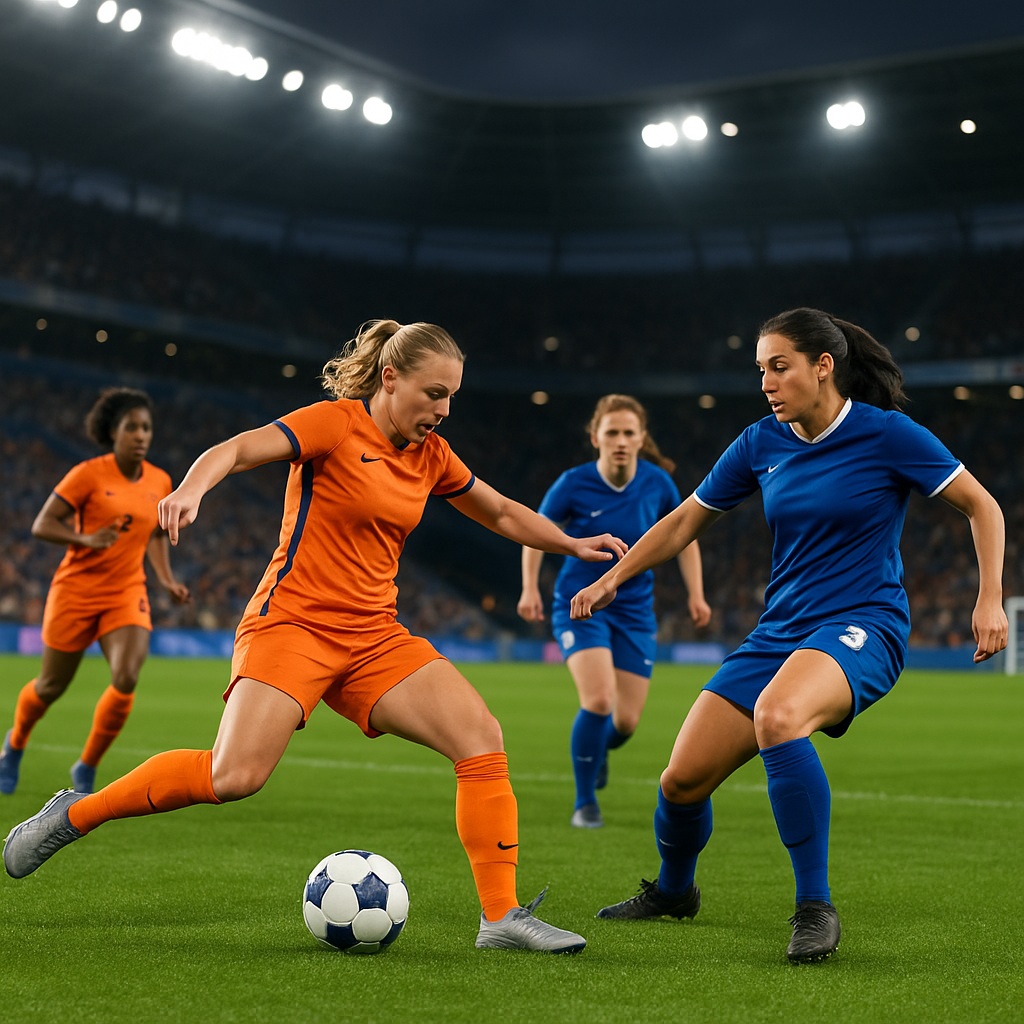
A landmark competition expands opportunity and visibility for women’s football across Europe
The Women’s Europa Cup has advanced into its inaugural round of 16, marking a consequential moment for the sport’s continental landscape and broadening competitive access for clubs beyond traditional power centers. Introduced by European football administrators as part of a wider agenda to deepen pathways for emerging teams, the tournament is already reshaping expectations among federations, athletes, and supporters.
The competition’s architecture mirrors established European structures but with a distinct developmental mandate. Clubs from mid‑sized and smaller football nations—long challenged by limited budgets, modest domestic visibility, and restricted international exposure—now find themselves with a platform capable of elevating both performance and institutional credibility. Coaches describe the group stage as a proving ground that compressed tactical preparation cycles while intensifying competitive parity.
Stakeholders note that the early phases of the competition delivered a broader geographical spread of clubs than anticipated. Analysts attribute this to a combination of maturing domestic infrastructures and a surge in professionalized training environments across the continent. Several clubs that historically exited qualifying rounds in other tournaments have advanced deeper, reflecting an upward trend in technical sophistication and player development investments.
With the knockout stage now open, the strategic calculus for competing teams is shifting. Technical directors emphasize the importance of roster depth, given the demands of balancing domestic league commitments with European travel and recovery protocols. Sports‑science departments across the participating clubs report increased workloads as they refine individualized conditioning programs and integrate expanded data‑analysis frameworks.
The momentum around the event has also triggered commercial interest. Broadcast partners observe that early‑season viewership numbers indicate a rising appetite for diversified women’s competitions, particularly those that introduce unfamiliar matchups and narrative unpredictability. Sponsorship advisors point out that the tournament has provided brands with an opportunity to align with an emergent property still early in its growth cycle but positioned for long‑term relevance.
Players entering the round of 16 describe the moment as both historic and highly tactical. Several captains highlighted the complexity of preparing for opponents with limited shared competitive history, requiring scouting departments to assemble comprehensive dossiers built from fragmented data sources. Nevertheless, many players view this challenge as emblematic of the competition’s purpose: to broaden horizons, encourage technical experimentation, and cultivate new rivalries.
As the next phase begins, observers emphasize that the broader significance of the Women’s Europa Cup extends beyond immediate results. Its early success signals a shift in competitive architecture within European women’s football, one that prioritizes structural access and the elevation of clubs previously operating on the periphery. The round of 16 now stands as a benchmark moment—a demonstration that the landscape is expanding, ambitions are rising, and the sport’s continental future is diversifying at pace.



 The Tower Post