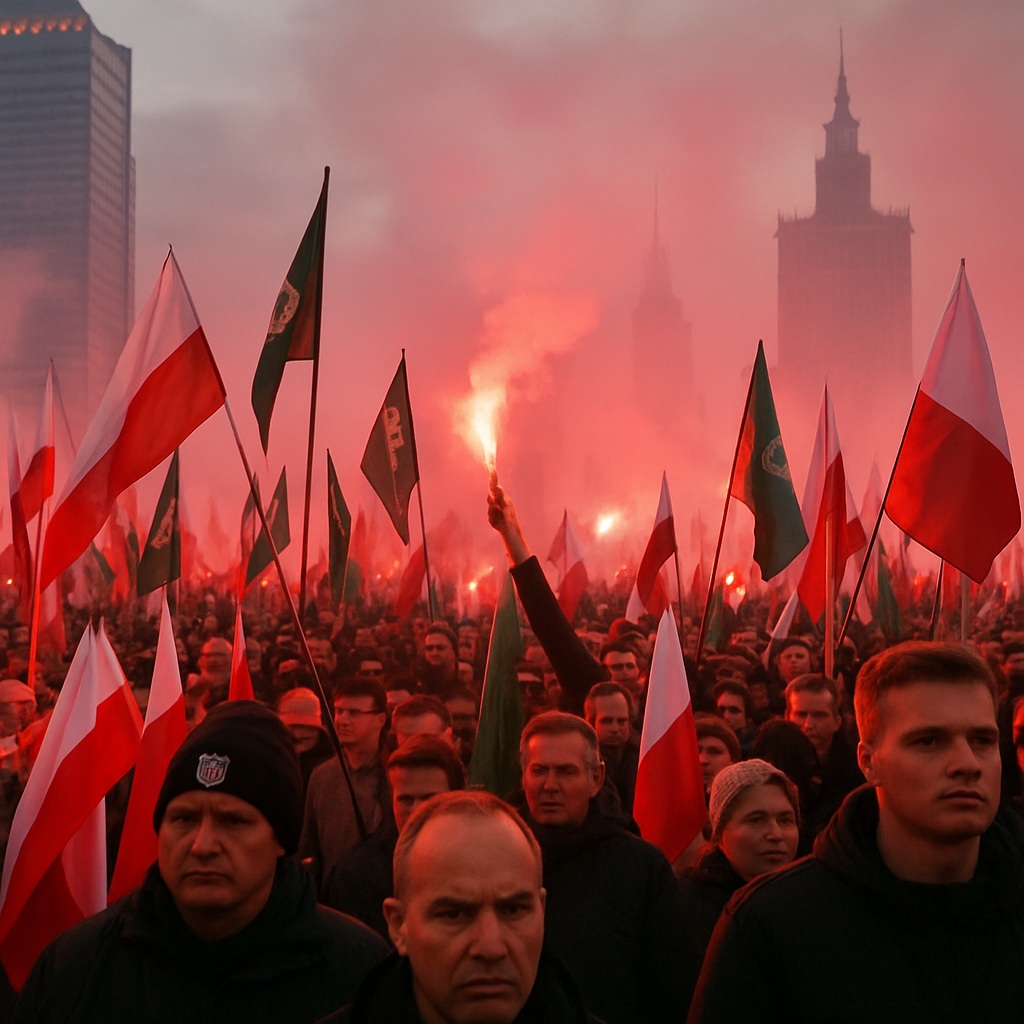
Tens of thousands gather in Poland’s capital for the controversial far‑right procession, highlighting deep divisions over national identity and democratic values

The streets of Warsaw were again transformed into a stage for one of Poland’s most polarizing annual events as tens of thousands of participants assembled for the Independence March. This year’s gathering, marking the 107th anniversary of the country’s restoration of sovereignty, unfolded under heightened political and social tension. The march is widely recognized as the largest nationalist demonstration in Europe, drawing both committed supporters and vocal detractors.
The procession stretched from the center of the capital toward its eastern districts, with red‑and‑white flares, Polish flags, and nationalist symbols lighting the route. While the event is formally organized by far‑right groups, it consistently attracts a broad spectrum of attendees ranging from families to extremist organizations. Police deployed in substantial numbers, maintaining a visible presence along key intersections and public squares to manage the scale of the gathering.
For supporters, the march remains a celebration of patriotism and historical resilience. Many participants described it as a vital assertion of cultural identity during a period of geopolitical uncertainty across Europe. They view the event as an opportunity to honor the sacrifices made by earlier generations and to champion what they regard as traditional national values.
Critics, however, argue that the march has increasingly become a platform for xenophobic rhetoric and political radicalization. Several civil society groups and opposition figures expressed concern that far‑right organizers continue to shape the march’s tone and messaging, overshadowing the inclusive spirit that national commemorations are meant to embody. Observers noted banners and chants promoting exclusionary narratives and, in some cases, overtly extremist themes.
This year’s march unfolded against a backdrop of debate within Poland’s political establishment over democratic safeguards, civic freedoms, and the role of nationalist movements in public life. Government officials offered differing responses, with some emphasizing the right to assembly and others warning that extremist elements should not define national celebration. European institutions and international watchdog organizations also monitored the event closely, citing its influence on broader regional trends in nationalism and political polarization.
While no major clashes were reported, several minor incidents occurred between marchers and counter‑protesters stationed along parts of the route. Police briefly intervened to separate groups, and local authorities reiterated that public safety remained the top priority. Residents in several districts reported disruptions, including transportation delays and temporary business closures.
Despite widespread criticism, organizers declared the march a success, emphasizing its scale and continued public resonance. They argued that the presence of so many attendees reflected growing frustration with global instability and a desire for stronger national cohesion. Detractors countered that the event highlighted the societal rifts that have intensified in Poland over recent years.
As Warsaw returns to normal operations, national debate surrounding the march’s purpose and implications shows no sign of abating. For many, the event has come to symbolize an ongoing struggle over the values that will shape Poland’s future. Whether viewed as a patriotic tradition or an annual display of radical nationalism, the Independence March remains a defining and contentious fixture in the country’s public life.



 The Tower Post