
At its annual general assembly in Paris, the European Volleyball Confederation brings 55 national federations together to chart the sport’s digital future and innovation roadmap.

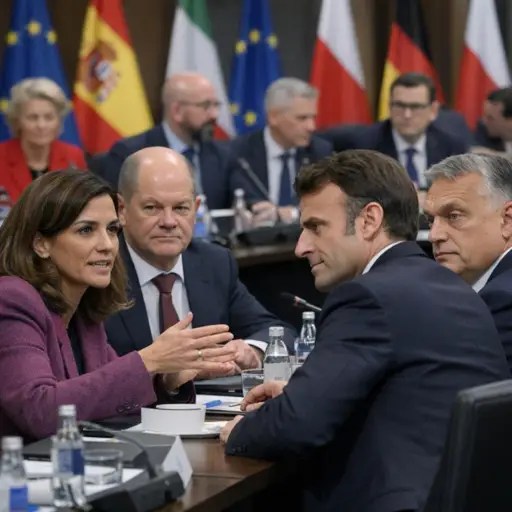
The European Volleyball Confederation (CEV) convened its annual general assembly in Paris, hosting delegates from 55 national federations across the continent in a wide‑ranging review of the sport’s future. The gathering, held at a key juncture in European sport’s digital acceleration, set out an ambitious agenda — pivoting not only on performance and competitions but on innovation, digital growth and sustainable development of volleyball.
A united front for growth
The assembly opened with speeches emphasising unity and shared purpose among Europe’s volleyball federations. In a year marked by evolving fan expectations and heightened competition from digital entertainment alternatives, the CEV — representing the continent’s indoor, beach and snow volleyball interests — stressed that the moment for transformation is now. With 55 national federations present, the breadth of representation underscored a collective commitment to an integrated strategy across regions and formats.
Throughout the morning session, participants reviewed progress on recent objectives: improved broadcast and streaming coverage, expansion of youth programmes, and partnerships with technology firms to enhance fan engagement. According to senior federation officials present, there was broad consensus that simply maintaining the status‑quo is not sufficient in an age where sports consumers expect instantaneous, interactive experiences.
Innovation at the heart of the agenda
One of the most talked‑about items on the agenda was the CEV’s Innovation & Digital Growth Programme. The assembly heard presentations on three key strands:
- Digital fan‑engagement platforms — exploring mobile apps, interactive live‑stream widgets and community features to deepen connection with younger audiences.
- Data‑driven athlete performance and event management — leveraging analytics tools to refine training, match recovery and broadcast storytelling.
- Sustainability and infrastructure tech — examining how smart arenas, energy‑efficient facilities and connected systems can reduce costs and environmental impact.
In breakout sessions, federations from both large and smaller countries shared case‑studies of piloting new digital formats — such as live‑stats overlays in streaming, augmented reality fan‑zones, or in‑event social‑media competitions. The CEV confirmed it will establish a dedicated “Innovation Fund” to co‑finance pilot projects across member federations.
Strategic direction for competitions and talent
Beyond the digital sphere, competition structure and talent development featured prominently. The assembly reaffirmed the federations’ shared objective of elevating Europe’s standing in all formats of volleyball — indoor, beach and snow. Discussions touched on how to refine calendar planning to avoid fixture overload, how to ensure emerging federations have access to top‑level events, and how to incentivise innovation in formats (e.g., mixed‑gender events, fast‑paced exhibition matches) to expand appeal.
A special panel addressed youth development and inclusion, emphasising the need for federations to invest in grassroots systems, leadership training, and cross‑border initiatives to promote volleyball in less‑developed regions. The message: investing in tomorrow’s stars and tomorrow’s markets is just as critical as winning medals today.
Digital growth metrics and measurement
One challenge the CEV acknowledged is measurement: how to define and track “digital growth” for a sport that remains rooted in live competition but must increasingly straddle digital ecosystems. The assembly agreed on a set of core indicators: streaming view‑minutes, mobile‑app monthly active users, social‑media engagement and partner‑sponsored innovation pilots activated.
The CEV Secretariat committed to providing a baseline report at the next assembly and issuing quarterly updates to member federations. Federations large and small welcomed this transparency, noting that benchmarking will allow smaller markets to measure their relative progress rather than simply behind the scenes.
Future priorities and commitments
As the meeting drew to a close, the CEV issued a formal “Declaration of Innovation and Growth”, committing to:
- Launching the Innovation Fund by mid‑next year.
- Holding a Europe‑wide “Digital Volleyball Week” to showcase new fan‑engagement tools.
- Enhancing broadcast‑streaming agreements to ensure access in emerging markets.
- Supporting federations with fewer resources through matching‑grants for pilot programmes.
- Hosting an annual summit on technology‑for‑sport specifically for volleyball stakeholders.
Many delegates emphasised that while “innovation” has become a buzzword in sport, the reality requires investment, partnership with non‑traditional tech players and a willingness to experiment — and yes, occasionally fail. One national federation head remarked, “We must be ready to test, learn and pivot — our young fans expect nothing less.”
Why this Paris meeting matters
Holding the assembly in Paris carried symbolic weight: the French capital is preparing for broader sport spectacles in the coming years and embodies the intersection of tradition and disruption. For the CEV, the location underscored its dual identity: rooted in a century‑old sport culture, yet pushing into digital frontiers.
The timing also aligns with other major sport governance shifts in Europe: federations everywhere face the impact of streaming disruption, evolving sponsorship models and an increasingly globalised athlete market. For European volleyball, the CEV assembly delivered a clear signal: the sport is not simply reacting, but proactively shaping its future.
What to watch next
In the coming months, the most tangible indicators of progress will include:
- The launch and uptake of the Innovation Fund: which federations win initial grants and what projects they initiate.
- New digital‑fan platforms rolling out in selected markets and their reception by users.
- The degree to which youth and less‑resourced federations secure access to competitions and innovation pilots.
- Stand‑out “proof‑points” of change: for example, a federations launching a mixed‑gender event, or an augmented‑reality fan experience that becomes widely adopted.
In summary, the Paris assembly of the CEV may not produce overnight headlines of sweeping reform, but it laid critical groundwork. With 55 national federations aligned around a strategy of innovation, digital expansion and sustainable growth, European volleyball is positioning itself not just to keep pace — but to lead in a sport ecosystem in flux.



 The Tower Post