As partner to rising politician Zohran Mamdani, Duwaji trades tailored suits for cultural commentary — and in doing so, reshapes what a “first lady” can look like.

As the city’s skyline glows with holiday lights, the limelight has shifted inside the halls of civic power. In one corner of that spotlight stands 28‑year‑old Syrian‑American artist Rama Duwaji — soon to be the face beside New York’s newly elected mayor Zohran Mamdani — and in doing so she’s quietly forging a new fashion lexicon for political spouses.
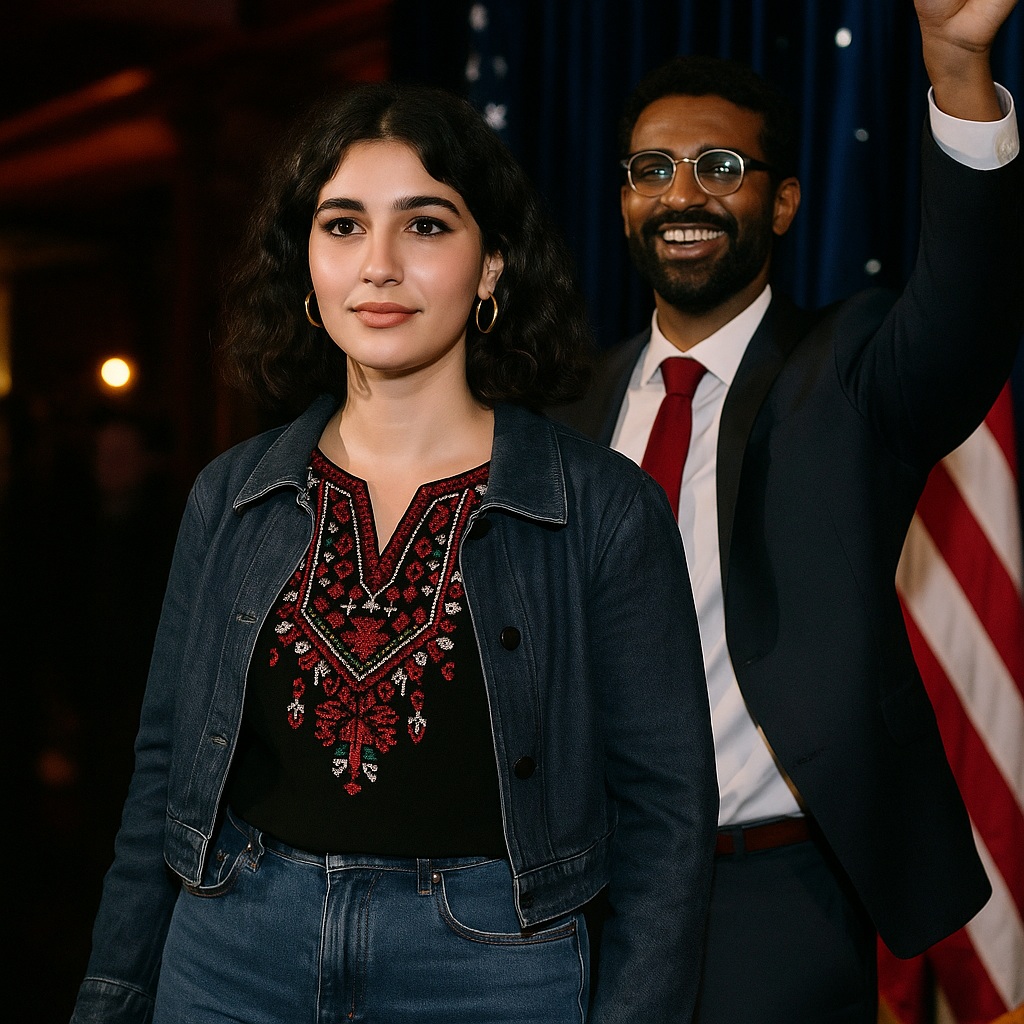
Gone are the rigid, monochrome power suits. Instead, Duwaji’s style blends youthful sensibility with cultural resonance: think laser‑cut denim, tatreez embroidery, asymmetrical hems, pointy boots, and a studious nod to her artist roots. Her appearance at the victory party for Mamdani—where she sported a top by Palestinian‑Jordanian designer Zeid Hijazi and boots she’s worn in brooks and galleries alike—was widely read as a declaration.
A departure from expectation
When a political campaign enters broadcasting mode, wardrobe often becomes shorthand for gravitas. For decades, the “first lady” archetype in U.S. politics has meant the buttoned‑up sheath dress, the carefully coordinated color palette, the minimal jewellery. Duwaji dials that back — intentionally. Her recent outing featured the symbolic tatreez embroidery top: centuries‑old Palestinian needlework worn in a fashion that flipped “traditional entourage” on its head.
By wearing design pieces that carried cultural weight — not just visual polish — she used fashion as messaging. Her silhouette remained elegant, but her vocabulary was different. The boots, the cropped jacket, the layering: these were nods to Brooklyn streets, studio hours, gallery openings — not state dinners. One style piece described her look as “free‑flowing clothes, boots, bold colours, minimal jewellery, and kohl‑rimmed eyes” — an anti‑power‑wardrobe that somehow still read powerful.
Identity meets aesthetic
Duwaji’s background as an illustrator, animator and ceramicist gives her a vantage rarely seen in political spouse style. Her portfolio includes features in major publications and collaborations with global brands; her art explores Arab identity, communal labour and womanhood. That creative identity isn’t left backstage when the cameras turn on. Instead it seeps into her wardrobe: her palette is muted but meaningful, her silhouettes modern but personal, her accessories loaded rather than generic.
At the victory event, her choice of a Palestinian designer wasn’t just aesthetic — it was solidarity, heritage, and voice. In a political cycle rife with image‑making, having a partner who does both vision and vantage is notable. Mamdani’s campaign visuals bore her fingerprints; and now the First Lady‑designate’s wardrobe is part of the movement story.
Resonating with Gen Z – and beyond
This new style code aligns with the sensibilities of a younger generation. Gen Z, raised on social media, visual identity, and brand transparency, recognizes authenticity when it appears. Duwaji is one of the first high‑profile figures in U.S. civic life to merge artist credibility, cultural commentary and public‑role visibility in one package — and her aesthetic is timely.
In practical terms, the shift could influence future campaign optics: a political spouse doesn’t have to wear navy or black; they can wear cultural resonance, layered meaning, and still read composed. The public notices. The press writes. And the aspirational crowd imitates.
The balancing act of visibility
Yet for all the points of breakthrough, the role remains complex. Duwaji is stepping into a space historically defined by templates — receptions, handshake tours, partner stand‐bys. She’s simultaneously a creative professional and a public figure. Choosing to maintain her artistic voice while taking on the public role demands vigilance. Her wardrobe becomes commentary, yes — but also performance. It must satisfy public expectation while signalling something fresh.
Her victory‑night outfit was comfortable in that tension: structured but not stiff; elegant but not aloof. In the weeks since, fashion analysts have mapped her every accessory, haircut and boot. One piece credited her for turning fashion into a statement of “identity, resistance and solidarity.”
Looking ahead: a new paradigm in political fashion
As winter transitions to holiday gatherings, the public will get new glimpses of Duwaji’s style: gala appearances, charity walks, civic engagements. Each outfit may carry as much weight as the event itself. If she continues on this path, she may be remembered not only for her partner’s historic win, but for steering the “first lady” role into its 21st‑century form.
This shift has three key ramifications:
- Cultural coding over neutrality: Dresses and suits will increasingly bear meaning beyond aesthetics — heritage, ideology, collaboration.
- Artist‑partner visibility: When a spouse has an independent creative identity, their wardrobe signals their own brand, not just a supporting role.
- Gen Z visual savvy: With younger electorates comes younger language — and the public expects the roles around power to reflect that.
For now, Rama Duwaji has shown how fashion isn’t superficial when layered meaningfully. As the couple moves into civic life in the city, her style offers a blueprint: listen to your roots; shape your message; dress it accordingly. The suit is not dead — but adapted. And for her generation, that’s the point.