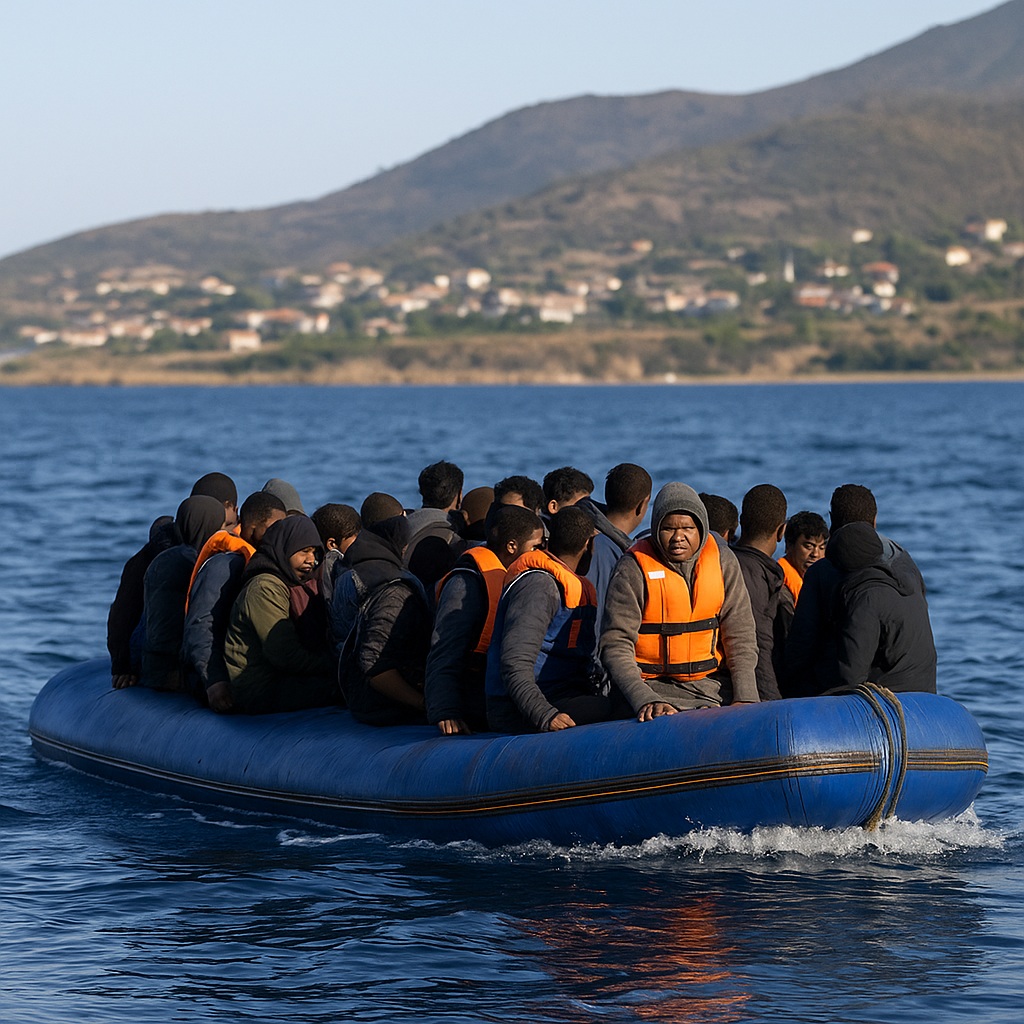
Greece, Cyprus, Spain and Italy positioned to receive fresh support as the bloc’s migration pact gears up for mid‑2026 activation
As the turmoil around migration across the Mediterranean persists, four frontline European Union member states — Greece, Cyprus, Spain and Italy — are slated to become eligible for a new EU‑wide “solidarity pool” designed to ease the pressure of irregular arrivals and asylum processing when the bloc’s upcoming migration pact finally comes into force around mid‑2026.
For governments in the Mediterranean arc, the announcement signals a long‑awaited shift in Brussels’ approach from bilateral ad hoc support toward a structured mechanism of burden‑sharing. According to officials briefed on the matter, the pool will operate as a reserve of resources—financial, logistical and operational—that can be drawn upon when a member state faces “exceptional migration pressures” under the forthcoming EU Asylum and Migration Pact.
Setting the scene
In recent years, Greece, Cyprus, Spain and Italy have grappled with recurring waves of maritime arrivals and land‑border crossings, largely stemming from conflicts, economic desperation and climate‑related displacement in North Africa, the Middle East and beyond. These flows have placed disproportionate burdens on the nations at the EU’s external frontier, creating tension among member states over fairness, solidarity and responsibility.
The pledge to create a dedicated solidarity pool reflects recognition at the EU level that migration pressure is no longer episodic but structural, especially around the Mediterranean. Under the pact, member states experiencing high inflows will be able to trigger support from the pool, which may include personnel such as border guards and asylum case‑workers, rapid funding to expand reception capacity, and relocation or redistribution options.
How the mechanism will work
While final legislative texts are still being ironed out, the broad contours of the solidarity pool mechanism are emerging:
- A member state declares via EU channels that it is under “exceptional migration pressure”.
- The pool is then activated: support can flow in from a central EU reserve rather than depending solely on bilateral offers.
- Eligible support may take several forms: additional border‑management assets, temporary reception facilities, logistics assistance and possibly a faster relocation of asylum seekers to other states.
- Greece, Cyprus, Spain and Italy are explicitly named as primary beneficiaries for the Mediterranean region, though the pool is conceived to assist any member state facing acute pressure.
- The timing of the pool’s operational launch is tied to the full activation of the EU’s migration pact, expected by mid‑2026, allowing time for implementation, budget allocation and capacity‑building across national systems.
The decision underscores Brussels’ shift from crisis management to forward‑looking structural solutions. One EU official described it as “moving from firefighting to building the fire brigade”.
Challenges and caveats
Despite the promise, several risks remain. First, the definition of “exceptional migration pressure” may prove contentious: states facing steady but high flows may not meet the threshold, or some may argue they do while others disagree. Second, the success of the pool depends heavily on member states agreeing to share asylum‑cases and relocation burdens — a politically sensitive topic in several EU capitals.
Spain, for example, has stressed the need for relocation mechanisms that do not rely entirely on voluntary offers. Italy has insisted that external border control and return capacity must accompany solidarity if imbalances are to be addressed. Greece and Cyprus, meanwhile, continue to call for fixed safe‑and‑legal pathways so that irregular arrivals can be reduced before they reach the same crowded reception centres.
Another complication is timing. Though the pool is slated to kick in around 2026, migration flows do not wait. Mediterranean countries may face acute pressure well before the mechanism is fully operational, forcing temporary stop‑gap measures that revert to current strained arrangements.
Budgetary allocation presents yet another hurdle. The solidarity pool will require EU funding plus possibly contributions from member states. The European Commission will need to negotiate allocations, define triggers, ensure accountability and monitor how funds and personnel are used.
What it means for Mediterranean states
For the four named states — Greece, Cyprus, Spain and Italy — the pool offers important benefits:
- A clearer sense of long‑term support rather than ad‑hoc emergency aid.
- Access to shared resources and expertise from across the Union.
- A signalling effect: the EU acknowledges the burden these countries carry and commits to institutionalised assistance.
- Potential to strengthen national systems for reception, screening and asylum processing with EU help.
For Greece and Cyprus, which face external land and sea borders with Turkey and the Middle East, the pool could ease pressure on islands and remote coastal regions. For Italy and Spain, both major entry points from North Africa, it could help manage peaks and shift away from sole national burden‑bearing.
Nonetheless, for each country the pool also raises political sensitivities: how to balance national control, how to accept shared relocation, and how to avoid perceptions of being “dumping grounds” for migration flows. National governments will need to communicate clearly to domestic audiences how the pool works and why it serves both national and EU‑wide interests.
Broader implications for the European migration debate
The solidarity pool symbolises an evolution in EU migration policy. Until now, solidarity largely meant occasional funds or relocation pledges that often fell short. A dedicated mechanism signals that the bloc is attempting to integrate external‑border states into a more systemic framework of responsibility‑sharing.
This move may ease political tensions among member states by offering tangible relief to the most exposed countries. It may also create incentives for stronger deterrence and return policies in partner countries, as the burden is recognised more clearly.
However, the pool is not a panacea. It must operate in conjunction with upstream efforts: boosting legal pathways, dismantling smuggling networks, reinforcing return and readmission agreements and addressing root causes of displacement. Without progress in these areas, the pool may offer relief but not fully reverse the structural imbalances of Mediterranean migration.
A look ahead
As the EU migration pact presses toward implementation, the coming year represents a transitional phase. National governments in Greece, Cyprus, Spain and Italy will likely reconfigure their systems, seek to strengthen preparedness and engage with Brussels on how the solidarity pool can best function for them.
The challenge now is to ensure that the pool is more than a headline: that it becomes an operational tool with rapid deployment, clear triggers, fair burden‑sharing and transparency. If that happens, November may mark not just another migration announcement, but a meaningful shift toward collective European responsibility for what has long been a Mediterranean front‑line issue.
In the months ahead, the Mediterranean states will be watching closely — and the success of the mechanism will depend on whether solidarity moves from principle to practice.



 The Tower Post