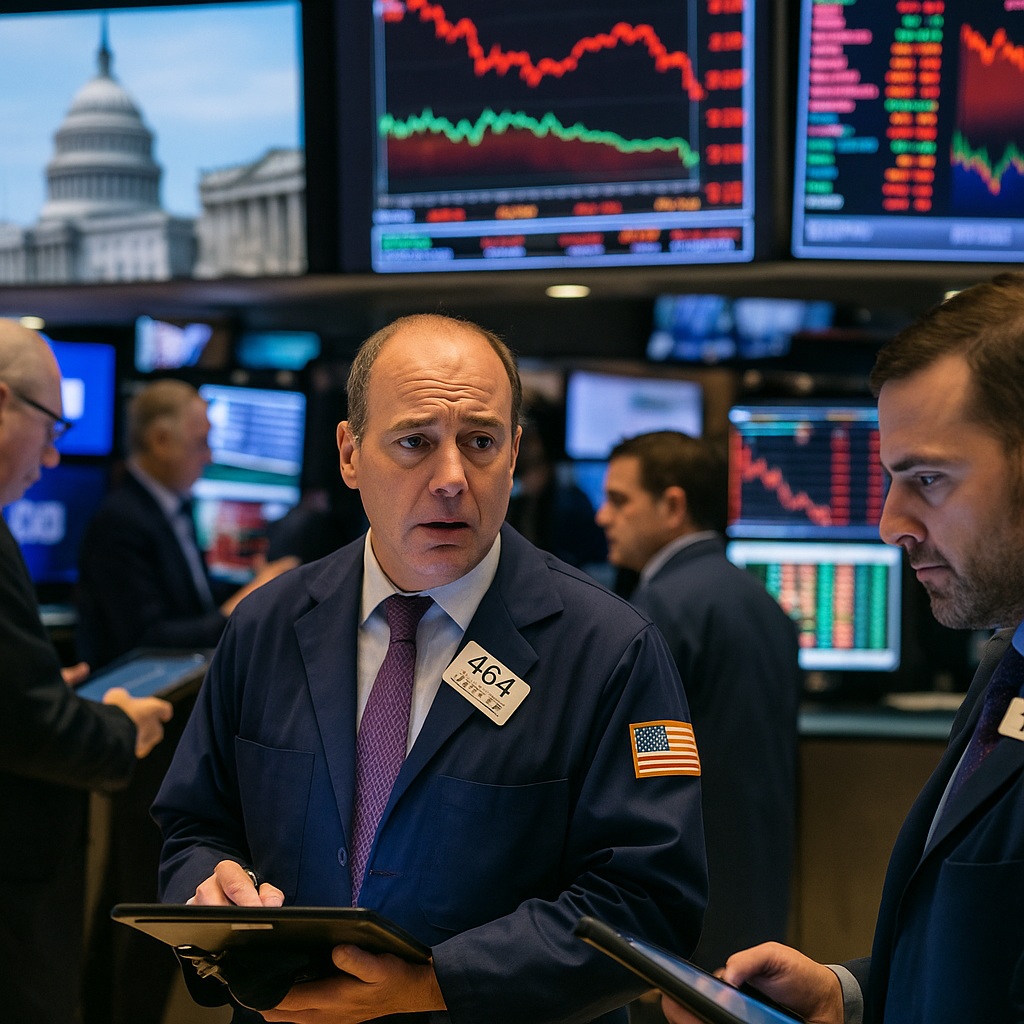
As the U.S. government edges toward reopening, broader markets gain traction — yet tech‑heavy names such as SoftBank and CoreWeave face steep drops under the weight of elevated valuations and funding risk.
In recent sessions, the broader U.S. equity market has earned something of a reprieve, buoyed by growing optimism that the prolonged government funding impasse may finally be on the way out. Talks in Washington have advanced, setting the stage for an end to the federal shutdown that has weighed on economic data, consumer sentiment and investor confidence.
Yet the relief is uneven. The highly speculative tech sector, once the star of the rally, is showing signs of strain. Two in particular — the Japanese conglomerate SoftBank Group and the U.S. cloud‑and‑AI infrastructure provider CoreWeave — have become focal points for unease, pointing to a broader recalibration of investor appetite.
Funding jitters in the fast lane
SoftBank recently disclosed that it had off‑loaded its entire stake in Nvidia Corporation, a move that grabbed headlines and raised eyebrows across global markets. Although SoftBank reported stronger‑than‑expected profits in its most recent period, the sale of the Nvidia holding — a company central to the AI investment thesis — has stirred questions about how confident the firm is in the current valuation trajectory of tech and AI assets.
At the same time, CoreWeave, long seen as a beneficiary of the generative‑AI boom, lowered its full‑year revenue guidance amid delays at one of its major data‑centre partners. The company’s shares plunged sharply, underscoring that while demand for AI compute remains strong, execution risks and scaling headaches are real and present.
Together, these moves signal that the flood of capital into high‑flying tech may face headwinds — not from a drought of innovation, but from a more cautious stance on financing, valuations and deliverables.
Valuations hit a delicate sweet‑spot
The tech sector’s momentum in recent years rested on a dual promise: that AI and cloud infrastructure would deliver outsized growth, and that cheap money would fuel that expansion. With the era of easy financing showing signs of moderation, the margin for error is shrinking. Analysts note that many of the favored tech names now trade at premium valuations relative to more conventional companies, increasing sensitivity to any missteps.
On a macro level, the impending resolution of the shutdown has helped lift the market’s broader mood: the Dow Jones Industrial Average recently reached a record high as investors anticipated government functions returning to normal. But the tech‑heavy Nasdaq Composite lagged, with industry watchers pointing to the turn in investor preference away from frothy themes and toward steadier, less flashy sectors.
In this environment, companies like SoftBank and CoreWeave become bellwethers: not only for their own businesses, but for the broader question of whether the tech investment boom can sustain itself under tighter margin for error and elevated expectations.
Shutdown nearing its close, but the tech hangover lingers
The U.S. government shutdown, which dragged on for weeks, created a backlog of risk. Missing data releases, delayed federal contracts and diminished consumer confidence all contributed to a thin cushion for risk assets. With progress now made in Congress toward a spending bill that could reopen government functions, those clouds are beginning to clear.
Still, reopening alone does not erase the structural concerns in tech. With the broader market rally gaining steam, capital is flowing—but more selectively. Investors are asking tougher questions: What if AI infrastructure scaling costs rise faster than revenue? What if the next round of funding is harder or more expensive? What if valuations revert? These are the shadows now falling across once‑unstoppable themes.
For SoftBank, the stake sale in Nvidia suggests a strategic shift (or at least a recognition of risk) within one of tech’s most aggressive backers. For CoreWeave, the guidance cut is a reminder that even in hot markets, execution matters. Together, they illustrate that the tech rally is no longer unchallenged.
What to watch next
In the coming days, market participants will monitor:
- The final passage of the funding bill in the U.S. House and the resumption of delayed federal data releases.
- Earnings reports from major tech and AI infrastructure players: any sign of softness, cautious guidance or funding strain could ring alarm bells.
- Whether the rotation away from tech into other sectors continues — or reverses if valuations reset.
- The broader interest‑rate and monetary‑policy outlook: if financing conditions tighten further, growth‑heavy tech plays will feel the squeeze.
In short: the rebound in markets looks real, but the tech sector’s recent stumble is a reminder that sentiment alone will not carry the weight of elevated expectations. The next phase of the tech story may be less about exponential growth and more about robust execution, sustainable funding and disciplined expansion.
As the government gears back to work, the question for tech investors is this: will the next chapter reward conviction or demand caution?




 The Tower Post