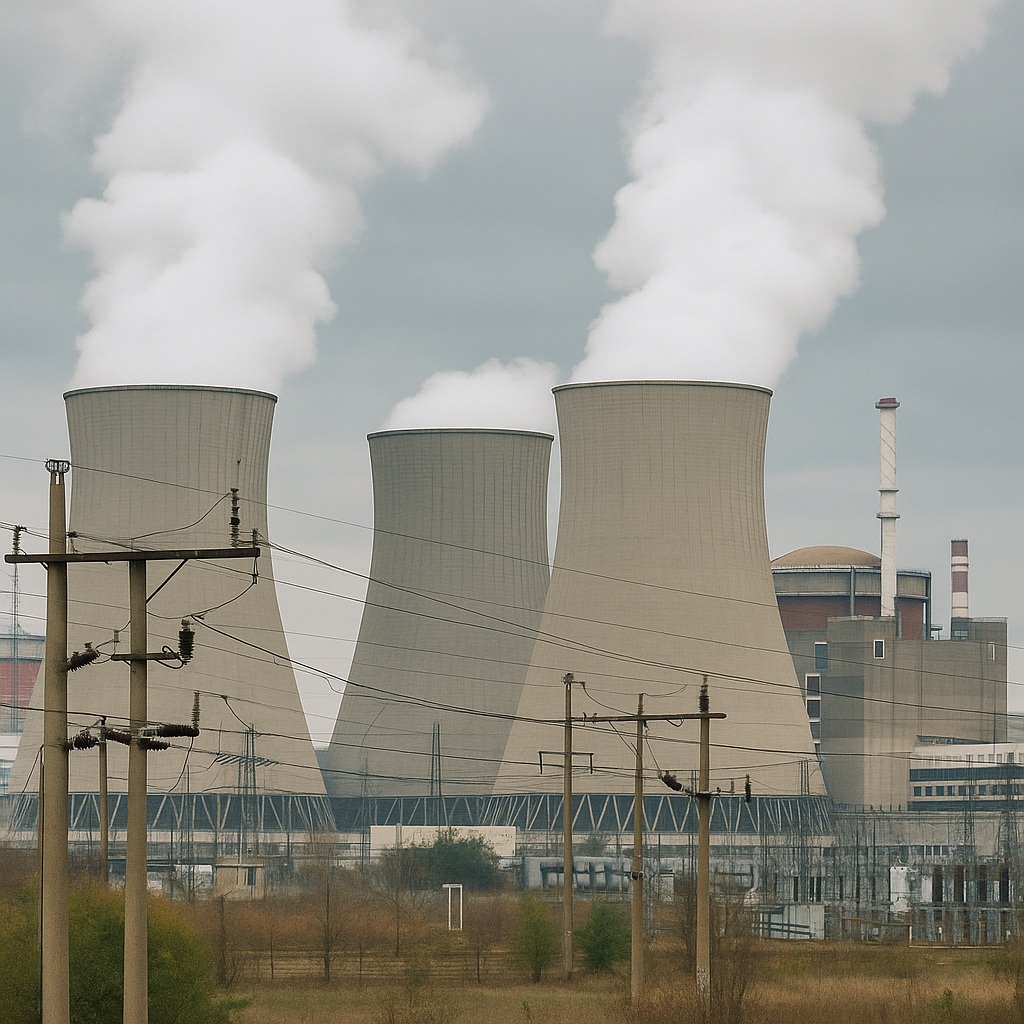
Suspension of Justice Minister amid major energy‑sector graft investigation lays bare deeper governance vulnerabilities as war grinds on
As the guns continue to roar, blackouts drag on and the war effort demands national unity, a scandal unfolding in Kyiv is threatening exactly that: public trust. The government of Ukraine has suspended its Justice Minister amid a sweeping investigation into alleged corruption worth roughly US $100 million in the energy sector — a probe that underscores the perils of governance under wartime strain and the limits of reform under fire.
The country’s top anti‑corruption agency, the National Anti‑Corruption Bureau of Ukraine (NABU), in coordination with the Specialized Anti‑Corruption Prosecutor’s Office (SAPO), says it has uncovered an alleged kickback scheme tied to the state‑run nuclear power company Energoatom. The scheme — reportedly in the region of US $100 million — is said to have been operating via forced “commissions” in procurement contracts that were meant to bolster Ukraine’s brittle energy infrastructure.
In response, the Cabinet removed the Justice Minister, who had previously served as Energy Minister, placing his role in suspension as investigators continue their work. While formal charges have been brought against several individuals tied to the scheme, the minister himself has not yet been charged.
In a time of war, Ukraine’s energy system remains a frontline in its own right. Russian missile strikes and sabotage have repeatedly targeted infrastructure, leaving communities vulnerable to outages and cold winters. Against this backdrop, revelations that part of the energy procurement process may have been compromised hit particularly hard. The timing is fraught: as Kyiv presses Western allies for continuing support, internal fragility in transparency and governance raises additional red flags.
Moreover, the scandal comes at a moment when Ukraine’s efforts to align with the European Union and international institutions hinge on demonstrating credible anti‑corruption action. The very agencies leading the investigation were themselves under pressure earlier this year when the President signed a controversial law that stripped some independence from them — sparking protests and EU concern.
Public confidence is also at stake. In wartime, the implicit contract between state and citizen tightens: you endure hardship now, we deploy resources responsibly — even heroically. When a major graft case emerges in the very sector that supplies power to homes, hospitals, troops and shelters, the social contract frays.
According to NABU, the investigation draws on roughly 15 months of work, including thousands of hours of audio recordings and operational searches across Kyiv and other regions. The scheme reportedly revolved around the Energoatom procurement chain: contractors, forced to pay kickbacks of around 10–15 % in order to secure large contracts, allegedly passed funds through shell companies or controlled intermediaries.
Seven suspects have been formally charged so far; among them figures described as close to the energy ministry, security services at the nuclear company, and private business associates. The suspended minister has asserted his innocence, describing the suspension as “civilised and appropriate” but vowing to defend himself in court.
Wartime governance is inherently daunting: procurement must be fast, infrastructure must be hardened, expenditures balloon, and oversight often snaps in the heat of urgency. Ukraine’s leaders have repeatedly stressed that corruption is a threat not just to morality but to national survival. Yet when senior officials and state‑owned enterprises become entangled in graft allegations, the message reverberates: if we cannot defend the state from within, how can we defend it without?
Some analysts argue that the crisis reflects not only individual malfeasance but structural strain: overlapping mandates, compressed timelines, an influx of emergency contracts, and staff stretched between war‑recovery and reform. As one observer put it, “corruption during wartime is doubly corrosive” — weakening capacity and legitimacy at the same time.
While the governing coalition remains intact and war preparedness continues, the scandal gives opposition forces and external critics ammunition. It dips into the delicate trade‑off Ukraine must maintain: asking the West for billions in military and energy support while demonstrating domestic control of institutions and funds. International donors often stipulate transparency and rule‑of‑law as preconditions or scaling‑factors for further aid. The optics, in this case, matter.
Moreover, the war effort itself could feel ripple effects. If public morale erodes, if winter blackouts become more visible due to procurement delays or misallocated budgets, the battlefield becomes not only physical but psychological. Ukraine’s leadership knows that perception of probity matters just as much as artillery barrels.
For now, the interim Justice Minister is overseeing the office while the investigation proceeds. A full audit of Energoatom and its procurement units has been promised; some contracts may be renegotiated or suspended pending review. Ukraine’s energy ministry and the Cabinet are under pressure to overhaul processes, increase transparency, and reassure both citizens and donors that lessons are being learned.
But the deeper question remains: can a society at war reform itself while managing war? The suspended minister’s case may stand as a test of whether Ukraine can hold its own even when the guns don’t stop. If successful, it may strengthen internal unity and external credibility alike. If mishandled, it risks reinforcing long‑vine perceptions of elite impunity and institutional weakness.
In the cold months ahead, while the war continues and the lights must stay on, Ukraine faces not only a battle of arms but a battle of trust. And in the sum of it all, the cost of failure may be measured not merely in lost contracts or forfeited lives—but in lost confidence.


 The Tower Post