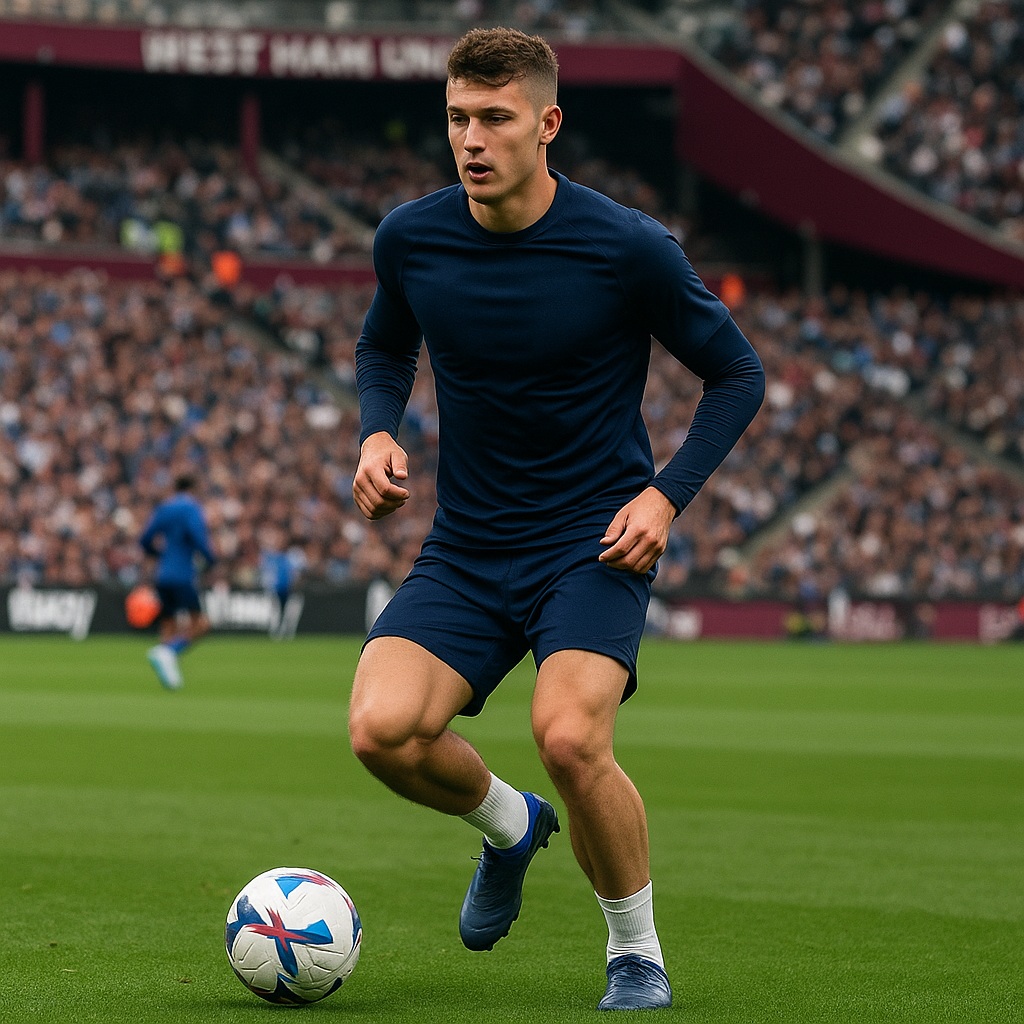
As West Ham United circle and media comparisons to Thiago Silva mount, England’s promising centre‑back faces the reality: the World Cup clock is already ticking.
From a scouting perspective, very few prospects arrive hyped as heavily as the young English centre‑back who now finds himself at the intersection of Premier League transfer intrigue and international urgency. The narrative writes itself: a towering defender, mastered in aerial duels and positional intelligence, labelled the “next Thiago Silva” and linked with a return to England via West Ham. Yet behind the compelling headlines lies a more nuanced truth: the imminent World Cup squad deadline looms—perhaps too fast for the talent to fully mature.
A Rising Star in Ligue 1
The defender in question currently plies his trade abroad, but his English background and clear physical and tactical attributes have drawn the attention of top clubs in England. Having logged a full season of first‑team minutes in a major European league, he has showcased his ability to dominate aerially, step into build‑up play, and provide the kind of calm, composed presence at the back that has historically been in short supply for England.
Reports suggest that West Ham are among the Premier League clubs actively monitoring his situation, believing that his combination of size, athleticism and technical poise could make him a long‑term defensive asset. What makes the interest even more compelling is the way he is being framed: not simply as a strong English centre‑back, but as one possessing the rare mix of maturity and ambition to draw comparisons with Thiago Silva — the Brazilian whose longevity, consistency and calmness in defence set the bar high.
The Premier League Factor
For England’s national coaches, a player of this profile is an obvious asset. Yet the transition from promising talent abroad to Premier League mainstay is not trivial. The recognition is clear: even if he continues his progression, making the full England senior side—and by extension earning a place in the upcoming World Cup squad—requires a step up in profile, competition and exposure. One European football observer has suggested that while his years abroad have aided his development, his club currently lacks the continental challenge that pushes defenders from good to elite.
This is where West Ham’s interest takes on additional significance. A move back to England — to a club that competes in a rigorous domestic environment — could accelerate his integration into the national picture. Moreover, playing week in, week out in the Premier League would test his pace, decision‑making and physical resilience in ways that a mid‑level European club may not. For England, having a domestic centre‑back who is battle‑hardened is a clear advantage.
England’s Defensive Agenda: Why Timing Matters
The timing of this talent’s development is crucial. With the national team looking ahead and the World Cup cycle already in motion, defenders forging reputations now will push onto tournament squads. But the window is narrow. The message to the player seems to be: you’re on the radar — but we need you ready, tested, playing at the highest level. Otherwise, the opportunity may slip. Some analysts have noted that the World Cup may be “coming too fast” for him in his current environment.
This creates a dual pressure: to secure a club move that demonstrates ambition and readiness, and to deliver consistency and adaptability in the months ahead. England’s coaching staff must balance the desire to blood promising talent with the imperative of tournament‑readiness. For the player, this means no rest. Every minute counts.
The “Next Thiago Silva” Label: Gift or Burden?
Labels are tricky. Comparing a young English defender to Thiago Silva is flattering, but also loaded with expectation. Silva’s career spanned top clubs, continental trophies, and senior international leadership. To be cast in that mould sets a high bar — for both the player and those evaluating him. The upside is clear: Silva is widely regarded as one of the modern era’s best centre‑backs. The comparison signals serious potential. But the caution is equally present: young players can falter under such comparisons if their development stalls or the transition to major‑club football becomes overwhelming.
Nevertheless, the signs from this player’s performance so far are encouraging: strong aerial presence, effective build‑up involvement, and maturity beyond his years. If he can secure a move to a club where he is challenged week after week, the trajectory could be compelling.
What’s Next? The Move and the Mission
First: transfer activity. If West Ham or a similar Premier League club act decisively, the narrative may accelerate. But any move must entail playing time, a demanding environment, and ideally a European competition challenge to meet England’s standards.
Second: national‑team pathway. England’s hierarchy will monitor him closely. A successful stretch of matches could see him considered for senior call‑ups, especially if injuries create opportunities in defence. But the more realistic horizon is positioning for the next major tournament, with the current World Cup cycle potentially just beyond reach.
Third: personal preparation. The defender must adapt to higher press intensity, faster attackers, and the unique pressures of Premier League football. If he can show resilience, leadership, and a consistent performance plateau, the comparison to Silva moves from headline metaphor to genuine possibility.
Final Take
In the world of English football defence, it’s rare to find a young centre‑back combining physical presence, aerial control and composed ball‑play while still flying under the radar. That’s exactly what this player offers, and that’s why the label “next Thiago Silva” persists. Beyond the hyperbole, the reality remains: the World Cup clock moves quickly, and England’s defensive core requires players who are tournament‑ready, not just promising.
If West Ham secure a deal and the player adapts rapidly to the demands of English top‑flight football, the vision of him anchoring the Three Lions’ defence could become reality. If not, he may still emerge as an exceptional centre‑back — but perhaps not in time for the immediate World Cup cycle. As mid‑November arrives, the decisions ahead may define the direction of his career.



 The Tower Post