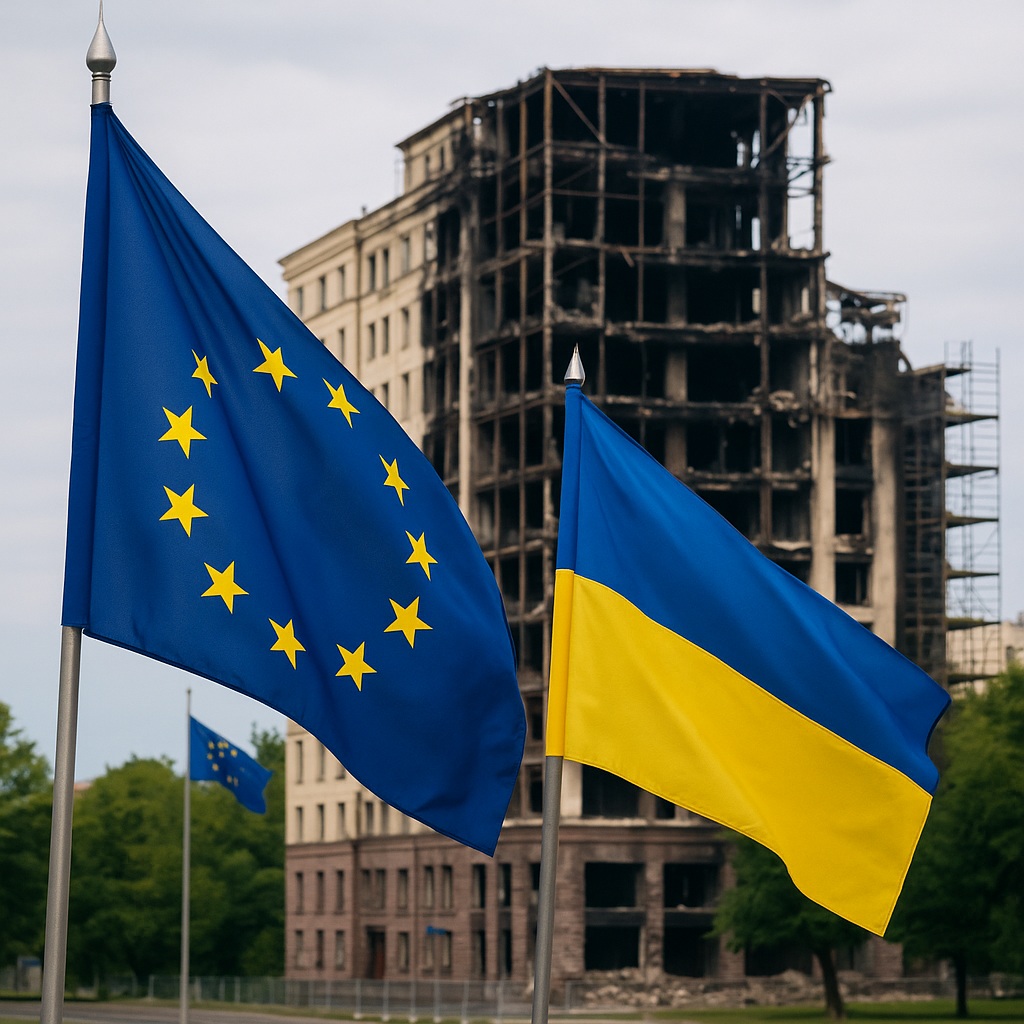
EU greenlights €722 million under the Ukraine Investment Framework to unlock billions for reconstruction
As Ukraine’s struggle against Russia’s invasion continues into another winter, the European Union has intensified its commitment to the country’s long‑term recovery and reconstruction. In a major move this month, the EU approved €722 million in investment under the Ukraine Investment Framework (UIF), a strategic mechanism designed to mobilize public and private capital for Ukraine’s critical rebuilding needs. Officials expect this latest package to generate roughly €2 billion in total investment once leveraged through partner institutions, grants, and risk‑sharing tools.
The decision reflects the EU’s steady shift from immediate humanitarian response toward a more structured reconstruction agenda. European Commission representatives emphasized that rebuilding is not a future project to begin after the war, but an urgent process already underway. The UIF is becoming one of the main vehicles for channeling funds into essential infrastructure, housing, energy resilience, and private‑sector revival—sectors that have absorbed repeated damage but are central to restoring economic stability.
Much of the newly approved financing is tailored to strengthen Ukraine’s capacity to operate under wartime conditions while preparing the groundwork for sustainable development. Planned investments include the rehabilitation and modernization of transport corridors vital for trade; upgrades to electricity networks increasingly strained by targeted attacks; and the expansion of municipal services in regions welcoming internally displaced families. Financial guarantees are also expected to play a major role, coaxing hesitant private investors back into the Ukrainian market by reducing risk exposure.
For Kyiv, the greenlight signals both material support and political reassurance. Members of Ukraine’s reconstruction ministry noted that the EU’s willingness to accelerate capital infusion has helped unlock several co‑financing arrangements with European development banks and international partners. Beyond the numbers, the UIF funding serves as a vote of confidence that Ukraine’s institutional reforms and anti‑corruption efforts remain on track, a prerequisite for more expansive post‑war integration with European systems.
On the ground, the needs remain vast. Ukrainian cities continue to restore water systems, public transport, and digital infrastructure in cycles of repair and disruption. Rural regions face equally daunting challenges, particularly in demining farmland and rebuilding agricultural supply routes. Local officials repeatedly stress that predictable, multi‑year financing is essential—not only for physical reconstruction but also for retaining skilled workers who are critical to operating utilities, hospitals, and manufacturing hubs.
The EU’s approach under the UIF attempts to meet those needs through a blend of grants, loans, and insurance instruments that can mobilize capital at scale. Analysts say that the emphasis on crowding‑in private investment distinguishes this model from traditional reconstruction aid. If market confidence continues to rise, Ukraine could see an expanding flow of investment into renewable energy projects, small‑business development, and technology partnerships that position the country for long‑term competitiveness.
Still, challenges persist. Oversight mechanisms must keep pace with the speed and diversity of incoming projects, especially in high‑risk areas close to the front. Coordination between EU agencies, international donors, and Ukrainian ministries remains complex, often requiring real‑time adjustments as conditions shift. European officials acknowledge these hurdles but argue that failing to invest now would risk prolonging Ukraine’s economic paralysis.
For many observers, the latest UIF package represents more than financial assistance: it reflects Europe’s strategic bet on Ukraine’s future stability and alignment with the EU community. By supporting reconstruction even before a lasting peace is secured, European leaders are signaling a belief that Ukraine’s recovery is inseparable from Europe’s own security landscape.
As winter approaches and the war shows no sign of slowing, the infusion of €722 million—and the billions it is expected to mobilize—marks a pivotal moment. It reinforces the message that Ukraine is not alone and that the groundwork for its recovery is being laid in parallel with its defense. The coming months will test how efficiently these funds can be deployed, but the commitment places Ukraine’s reconstruction firmly at the center of Europe’s long‑term political and economic priorities.
 The Tower Post