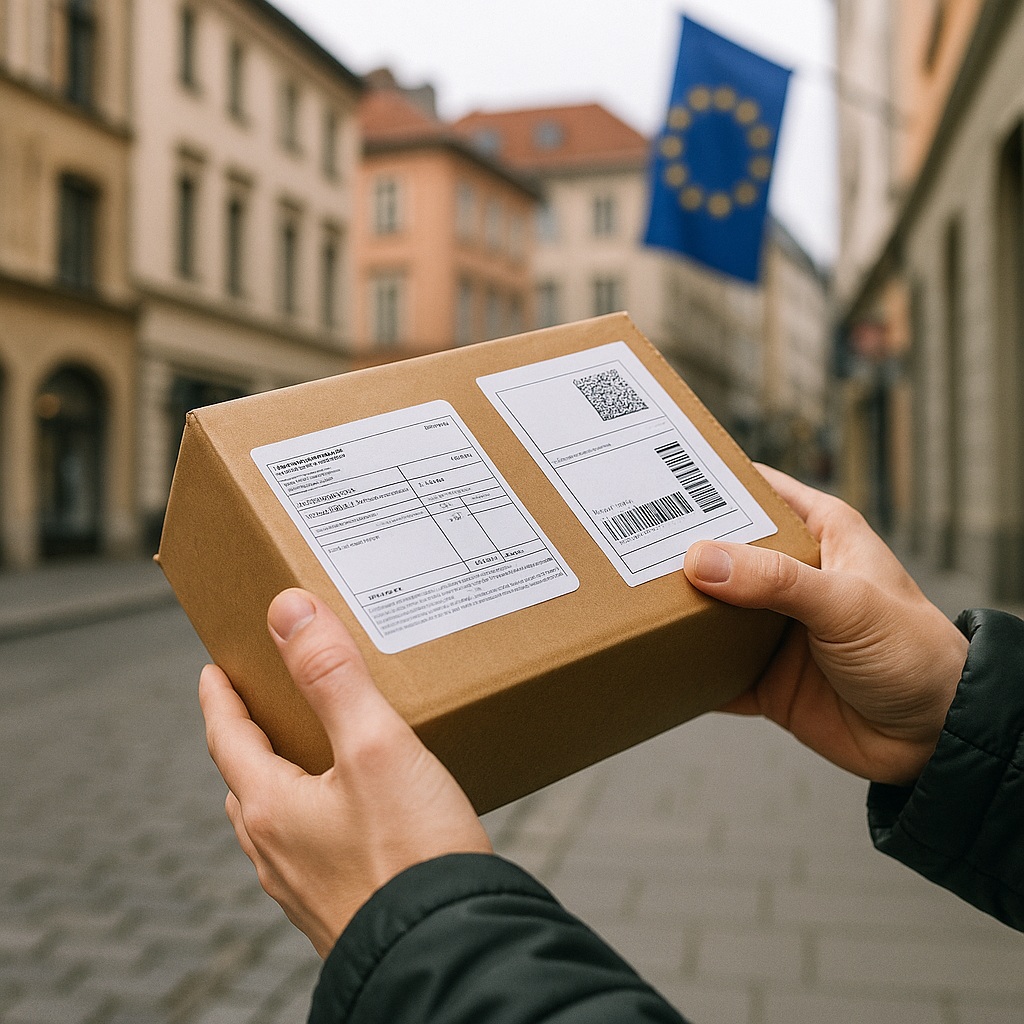
The EU’s accelerated clampdown on small-parcel imports reshapes global e-commerce
The European Union is moving to rapidly advance its plan to impose stronger charges and stricter customs controls on small parcels imported from outside the bloc—a shift that has triggered widespread debate across Europe’s retail and logistics sectors. As mid‑November discussions gain intensity, the measure is increasingly seen as a defining moment in the EU’s attempt to rebalance the competitive landscape between foreign e‑commerce giants and domestic retailers who argue they have been at a systematic disadvantage.
For years, platforms such as SHEIN and TEMU have relied on a model that ships millions of lightweight parcels directly to consumers throughout the Union. These packages, typically priced low and often classified as low‑value goods, frequently benefited from simplified customs treatment. Retail associations across the EU say this practice artificially suppresses prices and makes it nearly impossible for brick‑and‑mortar shops—and even European online sellers—to compete.
The EU’s updated approach aims to close these gaps by requiring all parcels, regardless of their value, to undergo duty assessment. Policymakers argue that the previous exemption, designed in a different era of global trade, has outlived its usefulness. The swelling tide of low‑value shipments has placed enormous strain on customs authorities, many of which now process volumes unimaginable when the rules were first drafted.
Officials involved in the reform stress that this is not simply about lost revenue, although the sums are significant. It is also about restoring credibility to the single market. They contend that the cumulative effect of millions of under‑declared or duty‑free imports has distorted competition, undercut EU‑based sellers, and contributed to the decline of many traditional retailers. Several member states—particularly those with strong textile, footwear, and household‑goods sectors—have been among the loudest voices calling for immediate implementation.
European retail groups have welcomed the shift as overdue. Many smaller businesses, already battling rising energy costs and supply‑chain constraints, say that the current environment rewards platforms that can exploit scale while avoiding obligations that domestic shops must shoulder. Industry representatives argue that the new customs rules could help level the playing field and encourage more sustainable commercial practices.
The platforms targeted by the reform have begun recalibrating their public messaging. SHEIN and TEMU emphasize that they follow EU rules and intend to comply with any changes. Yet analysts say the implications for their operations could be far‑reaching. The companies may need to overhaul logistics systems, invest in EU‑based distribution centers, or adapt their pricing strategies to mitigate new costs associated with duties on every parcel. Some experts predict that even small duty charges, applied at scale, could affect the ultra‑low‑price models that helped the platforms attract millions of customers.
Consumers are also likely to feel the impact. While officials are careful not to frame the reform as a consumer‑focused measure, they acknowledge that shipping times may lengthen and prices may inch upward. The era in which a flood of inexpensive garments, gadgets, and accessories arrived quickly with minimal friction may begin to shift toward slightly more regulated flows. EU policymakers insist this adjustment is a reasonable trade‑off if it restores fairness and strengthens domestic commerce.
Customs administrations across the Union face the steepest operational challenge. Processing millions of additional declarations will require new technologies, staffing strategies, and digital infrastructure. To support implementation, the Commission is exploring expanded automation tools capable of handling high‑volume data inputs. Even with such systems, several member states warn that inconsistencies in enforcement could emerge unless coordination remains strong.
The move also reflects Europe’s broader ambition to modernize its trade governance. The rise of direct‑to‑consumer imports has outpaced regulatory frameworks that were built before the explosion of global fast‑fashion and ultra‑cheap online marketplaces. With this reform, the EU signals its intention to ensure that e‑commerce remains compatible with its internal rules, financial interests, and long‑term industrial strategy.
The political momentum behind the initiative is striking. What began as a technical customs proposal has evolved into a symbolic stand on economic fairness and consumer protection. Lawmakers emphasize that the measure is not designed to isolate Europe but to ensure that the benefits of global commerce are distributed more evenly—and without eroding local economies.
For Europe’s retailers, the accelerated reform represents a rare opportunity to address structural imbalances. For global platforms, it marks the beginning of a more tightly monitored operating environment in one of the world’s most lucrative markets. And for consumers, it is a reminder that the convenience of cheaply delivered parcels carries hidden costs—costs the EU is increasingly unwilling to ignore.
As the bloc prepares to finalize the details, one thing is clear: Europe is entering a new chapter in the governance of digital trade, one that could set a precedent for other regions grappling with similar challenges in an era of explosive cross‑border e‑commerce.



 The Tower Post