
As cooperation once deemed taboo becomes reality, Europe’s political centre braces for a reshaping of its identity
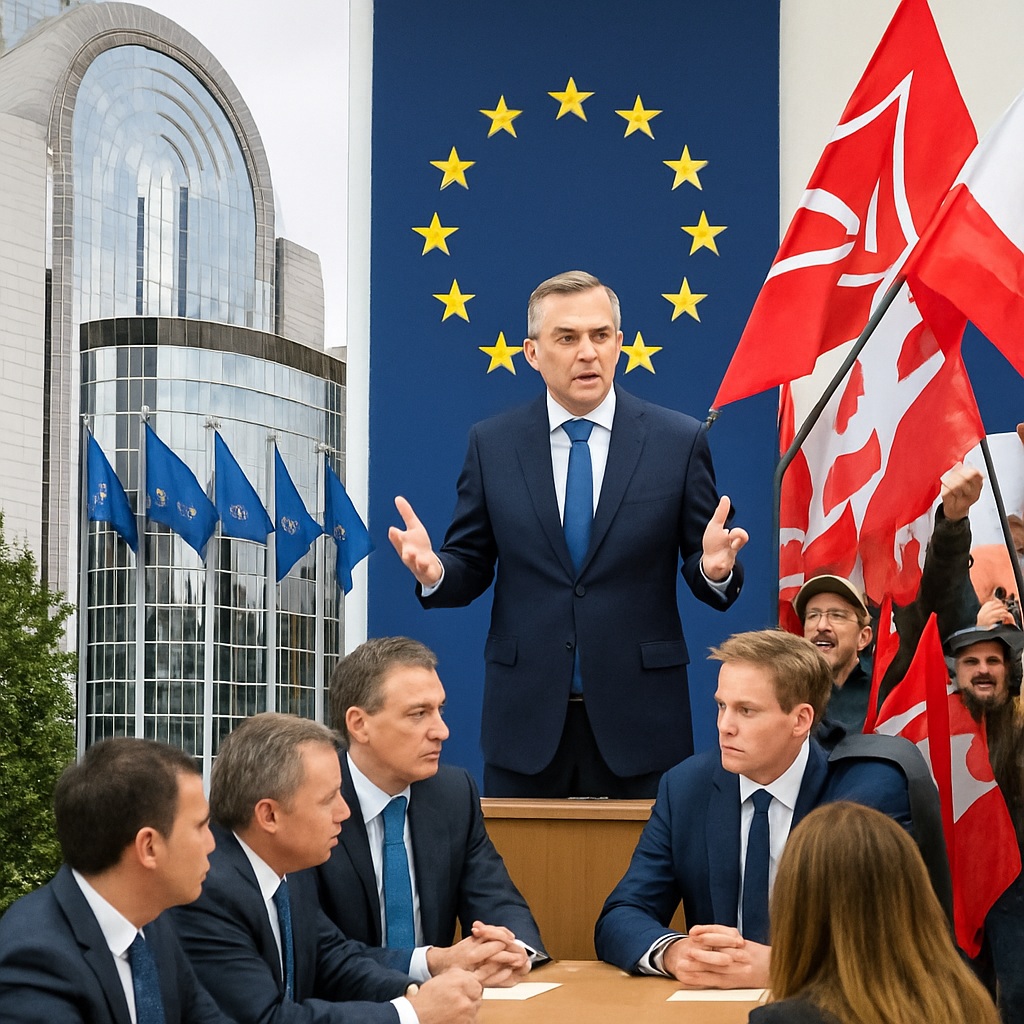
The European People’s Party — long seen as the institutional backbone of Europe’s moderate conservatism — has crossed a political threshold that many within its own ranks once described as unimaginable. Over recent weeks, senior EPP figures and parliamentary groups have moved into increasingly open cooperation with far-right parties on key legislative files. Though framed by EPP leaders as pragmatic, technical, or purely “issue-based,” the shift represents the most consequential repositioning of Europe’s centre-right in many years.
For decades, the EPP was the architect and defender of a certain vision of Europe: economically liberal, socially moderate, and firmly committed to the integration project. Its identity was shaped in deliberate contrast to nationalist and extremist movements — creating an implicit moral perimeter that political scientists often referred to as the cordon sanitaire. That firewall held through waves of populism, financial crises, and institutional stalemates. But now, after years of electoral pressure and shifting political winds, it is showing visible cracks.
A Turning Point in Brussels
The shift became undeniable when the EPP aligned itself with far-right and hard-right formations to advance a deregulatory agenda in the European Parliament. Though the cooperation unfolded quietly, analysts quickly identified it as a structural, not incidental, shift. It was the first time the EPP had relied so directly on nationalist forces to secure a parliamentary majority for a high-profile regulatory rollback.
Behind closed doors, the mood inside the Parliament’s committee rooms was described as tense but transactional. Conservative negotiators signaled they were no longer willing to be constrained by a fragile and ideologically divided liberal-green bloc. At the same time, far-right parties — once viewed as unpredictable outsiders — presented themselves as reliable partners on issues of deregulation, sovereignty, competitiveness, and industrial reform. For the moment, the incentives aligned.
What Is Driving the EPP’s Strategic Pivot?
- Electoral Pressures from the Right
Across Europe, nationalist and far-right parties have grown steadily. Many now govern or support governments at the national level. Their rise has reshaped the electoral landscape, pulling public debate toward issues such as migration, identity, and sovereignty. For EPP leaders worried about losing conservative-leaning voters, cooperation with right-wing nationalists can seem like a necessary adaptation. - Fragmentation of the Political Centre
The old grand coalition era — in which centrist parties cooperated to maintain continuity — has weakened. Liberals, greens, and social democrats are no longer dependable partners on major files, especially those involving industrial policy and regulation. This fragmentation forced the EPP to explore new alliances. - An Ideological Recalibration
The centre-right is undergoing an internal transformation. In many countries, conservative parties are more skeptical of ambitious climate regulation, more focused on security and borders, and increasingly receptive to arguments about national industrial competitiveness. Where the centre-right shifts, the EPP often follows. - Pressure to Deliver Quick Results
European industries have been vocal about regulatory burdens, global competition, and investment conditions. Some within the EPP argue that teaming with nationalist parties — which broadly favor deregulation — is the fastest route to legislative success, even if politically uncomfortable.
An Internal Struggle Over Identity
Yet beneath the surface, the EPP’s new strategy has triggered a deep internal debate. A number of member parties remain staunchly opposed to any form of cooperation with the far-right. They argue that the EPP’s historic role as a guardian of democratic norms and a pro-European bulwark is incompatible with alliances that legitimize illiberal rhetoric.
Inside several delegations, concerns are growing that cooperation could normalize parties that have challenged judicial independence, the free press, or minority rights in their home countries. For these critics, the EPP’s moderation is not merely a strategic brand; it is part of a post-war settlement that ensured stability and prevented the political extremes from gaining influence.
Implications for European Democracy
A New Parliamentary Geometry
If the EPP continues to rely on far-right partners, the traditional left-right balance in the European Parliament will be upended. Instead of coalition-building between mainstream parties, the centre-right could anchor a loose majority with nationalist forces — shifting legislative debates rightward.
Policy Consequences Beyond Regulation
The impact could extend into sensitive areas:
- Migration: Nationalist parties will demand tougher border controls and more restrictive asylum policies.
- Climate and Energy: Ambitious climate targets could be weakened or delayed.
- Rule of Law: Parties facing criticism for democratic backsliding may find new protection within European institutions.
- Budget and Governance: A right-leaning majority might push for tighter spending controls and a more intergovernmental approach to EU decision-making.
A Symbolic Shift with Long Shadows
Even if cooperation remains issue-based, its symbolism is immense. Political scientists note that once mainstream parties break taboos and form alliances with previously ostracized groups, normalization follows rapidly. The far-right gains institutional legitimacy, media credibility, and policymaking influence.
A New Phase in European Politics
The EPP’s moves this November have opened a new chapter. Whether this is a tactical experiment or the beginning of a durable realignment remains unclear. But the shift is already forcing Europe’s political class to confront fundamental questions:
- What does centre-right still mean in Europe?
- Where is the boundary between conservative pragmatism and ideological drift?
- Can the EPP maintain cohesion if national parties pull in different directions?
- And most importantly: what kind of Europe will emerge if mainstream conservatism embraces partners once considered incompatible with democratic norms?
For now, the EPP insists it is adapting to political realities. Yet the consequences reach far beyond a single vote or a single legislative file. Europe’s political centre — long the anchor of stability in the Union — is entering a period of uncertainty, experimentation, and redefinition. What the EPP has set in motion will shape not just its own future, but the future of European governance itself.

 The Tower Post