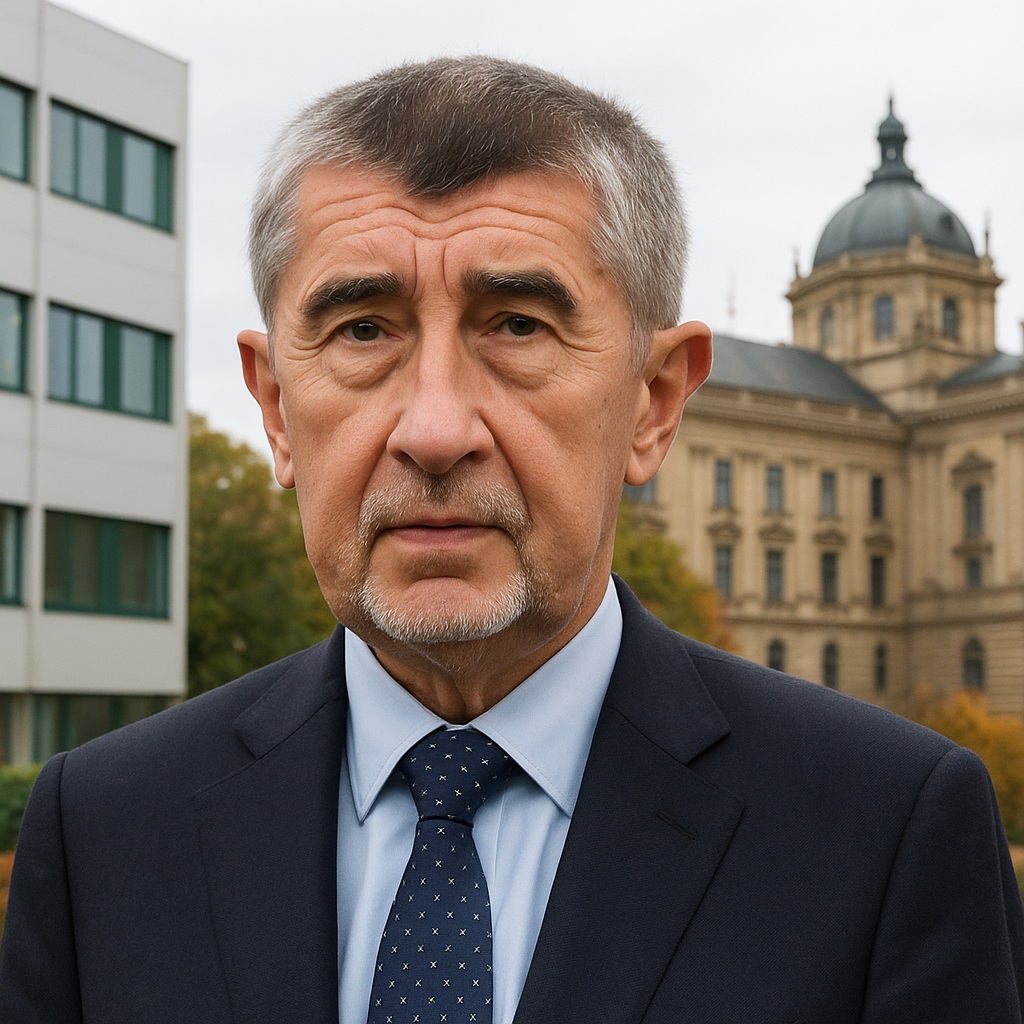
Czech populist leader proposes structural arrangement of his commercial empire to secure appointment as Prime Minister — but questions over EU subsidy rules and full transparency persist
The resurfacing of Andrej Babiš’s bid for the premiership has brought into sharp relief one of the most enduring controversies of his political career: the interplay between his sprawling business interests and the public office he aspires to hold. As the Czech Republic prepares to mark mid‑November, Babiš has signalled that he will lay out the framework by which he intends to “arrange” his business holdings prior to being appointed Prime Minister. Yet the extent to which his plan satisfies both domestic legal safeguards and the demands of Brussels remains uncertain.
Babiš, the billionaire founder of the Agrofert Group conglomerate and leader of the ANO party, secured the largest share of the vote in the recent parliamentary elections. His success has earned him nomination to form a new government. But ahead of his re‑entry into the prime ministerial office, he must address a familiar obstacle: the intersection of his private business empire and the public duty of government.
Reports indicate that Babiš intends to present a plan within days, under pressure from President Petr Pavel, who has insisted on a clear and publicly disclosed solution to the conflict‑of‑interest issue before formally appointing him. The core issue: Agrofert and its subsidiaries receive state and EU subsidies, and Czech legislation — in line with EU rules — prohibits government ministers or prime ministers from holding companies that benefit from such programmes.
What stands out in Babiš’ current position is that he has publicly declared he will not sell his main holding. Instead he claims he will “meet Czech and European legal requirements” by other means. He asserts that he will reveal the method in full before taking office — but he has so far declined to detail exactly what structural adjustments will suffice. That raises scepticism both at home and at EU level.
Legal experts and anti‑corruption advocates argue the options are limited. Either the holding must be permanently and fully separated from any box the Prime Minister uses — meaning either full divestiture, removal of all subsidy‑receiving business units from the sphere of influence, or Babiš stepping aside from the premiership. In his previous term (2017‑21) he placed his companies into trust funds, but courts and the European Commission deemed that arrangement inadequate.
The political stakes are high. Babiš’ rivals highlight that without a credible solution, the integrity of the incoming government — and the Czech Republic’s standing in the EU’s governance regime — could be undermined. The president has set the expectation: spectacle or delay will notch up the tension.
From a strategic vantage point, Babiš appears to be doing two things. First: signalling to coalition partners and the electorate that the business‑issue will not become a show‑stopper. Secondly: avoiding a wholesale sale of his business empire, which would trigger backlash among his financial base and possibly require significant loss of control. That balancing act is inherently tricky, because the law does not simply ask for some adjustment — it asks for a full removal of the conflict, in letter and spirit.
The EU dimension complicates matters further. Brussels has repeatedly flagged that member‑states must ensure prime ministers and ministers are not in a position to influence the awarding of EU funds from which they or their firms benefit. Babiš counts among the most prominent figures in central Europe to straddle massive private holdings and top political office; he is therefore watched closely. Failure to provide a robust solution risks both domestic and European scrutiny.
What will happen next? Observers expect that once Babiš presents his plan, the president will evaluate its sufficiency. If satisfied, the formal appointment can go ahead. If not, there may be a delay, maybe even a withdrawal of nomination. Meanwhile, questions will persist: Will the business structure be transparent and subject to independent oversight? Will subsidies to firms tied to Agrofert immediately cease? Will there be safeguards against future overlap of business‑and‑policy?
For the Czech public, the episode is more than a legal technicality. It touches on the broader question of whether political leaders with vast commercial interests can enter high office without the taint of vested‑interest. Babiš’ answer will help set the tone for the incoming government — and for how Czechia navigates its membership obligations in the EU.
In short, while Babiš appears determined to stay in the driving seat, the next few days will test whether his business‑holdings path is sufficiently credible to carry him into the prime minister’s office — or whether his empire will demand too high a price for the public role he seeks.




 The Tower Post