Kyiv Searing Overnight As Russia Unleashes Massive Drone-Missile Barrage

In a brutal overnight assault on the Ukrainian capital, Russia launched an unprecedented wave of drones and missiles, injuring dozens of civilians — including children — and ripping through multiple residential districts in one of the heaviest nighttime bombardments the city has endured in months.
The attack unfolded in the dark hours before dawn, when Kyiv’s air-raid sirens shattered the stillness and residents were jolted awake by the thunderous blast waves of explosions. According to local authorities, more than four hundred drones, accompanied by additional missile strikes, targeted densely populated neighborhoods where families were at home sleeping. Although air-defense teams intercepted a substantial number of the incoming threats, the sheer volume of the assault overwhelmed defensive capacity, allowing several drones and missiles to strike residential structures directly.
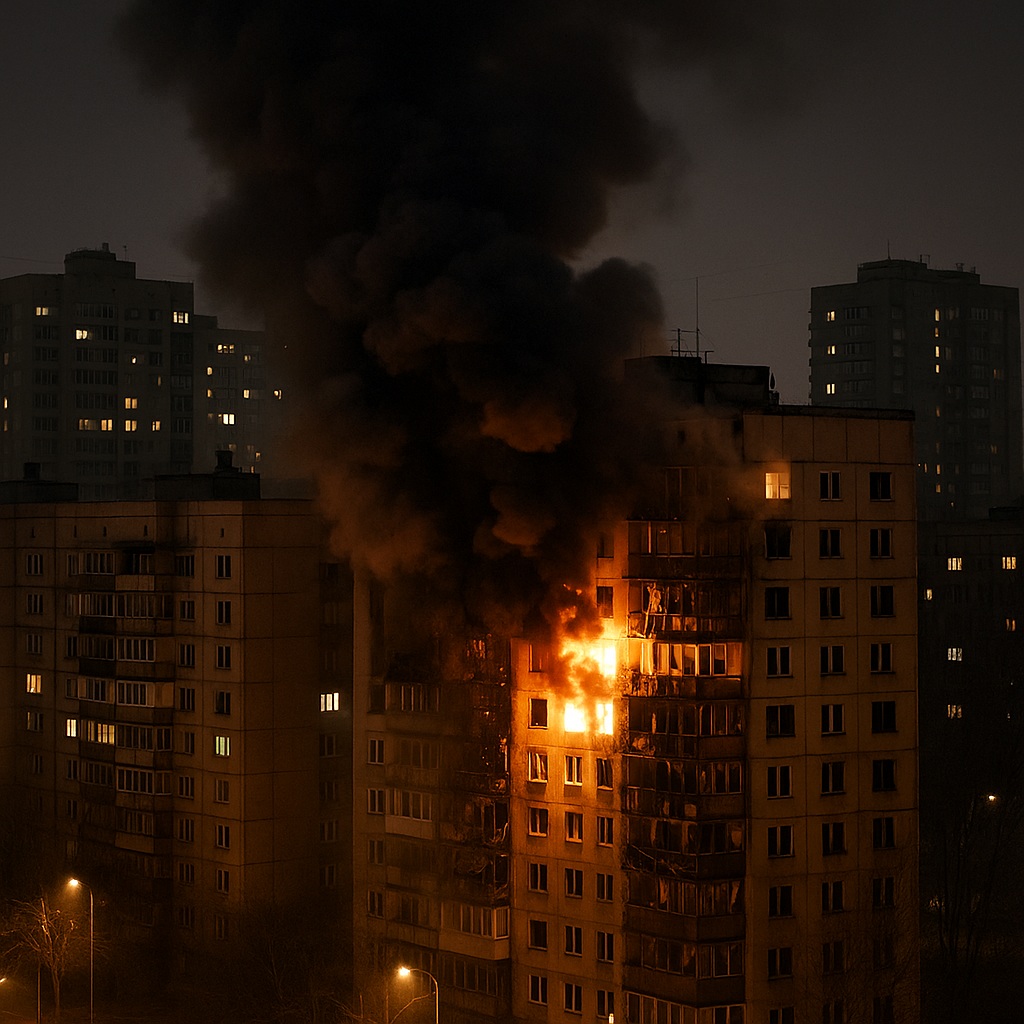
Across the city, apartment blocks suffered significant damage: shattered windows, collapsed balconies, scorched facades, and debris-filled stairwells. Emergency response teams navigated smoke, fires, and unstable structures as they pulled survivors from rubble and escorted residents down damaged staircases. Among the injured were children who had been asleep in bedrooms now reduced to broken glass and torn plaster. Hospitals reported an influx of patients suffering from burns, shrapnel wounds, and trauma-induced shock.
Witnesses described chaotic scenes in the aftermath. Families gathered in courtyards in their pajamas, clutching blankets and personal belongings. Volunteers distributed hot tea, clothing, and first-aid supplies while firefighters worked to extinguish stubborn flames still smoldering on upper floors. Rescue teams continued to locate survivors throughout the day, often performing delicate operations in partially collapsed sections of residential towers.
Officials condemned the assault as a deliberate escalation intended to instill fear throughout the capital. Analysts note that the high saturation of drones used in the attack reflects a shifting strategy prioritizing psychological pressure alongside physical destruction. By overwhelming air-defense systems, such strikes increase the likelihood of civilian casualties and infrastructure damage, particularly in urban environments where population density is high.
In addition to residential buildings, the attack caused interruptions to essential utilities. Power outages were reported in several districts due to damage to electrical substations and transmission lines. Emergency teams worked to restore electricity, though repairs were complicated by structural instability around affected areas. Transit disruptions also occurred as roads were temporarily closed for debris removal and emergency access.
International reactions followed swiftly, with numerous governments condemning the attack and reaffirming support for Ukraine’s air-defense needs. Security analysts expect renewed diplomatic pressure for the rapid deployment of additional defensive systems to protect Kyiv from similar future assaults. Humanitarian organizations mobilized quickly, offering shelter and psychological support for displaced families and children traumatized by the night’s events.
Despite the devastation, Kyiv’s residents demonstrated resilience. Neighbors opened their homes to those displaced. Local businesses provided warm meals, and community organizations worked relentlessly to coordinate relief. Scenes of solidarity — people clearing debris together, sharing generators, or comforting frightened children — underscored the capital’s determination to remain unbroken.
As emergency crews continue to assess damage and provide aid, questions linger about the long-term implications of the escalation. The strike serves as a stark reminder that the conflict shows no signs of abating, and the capital remains a primary target. While Kyiv begins the slow process of recovery, the attack adds another layer of hardship to a city already burdened by months of conflict, uncertainty, and constant vigilance.
Yet amid the smoke and wreckage, a consistent theme emerged: a steadfast refusal to yield. Residents expressed both grief and defiance, emphasizing that life in Kyiv — though shaken — would continue. Streets would be cleared, windows repaired, and communities rebuilt. And as the city looks ahead, it braces for the possibility of further aggression, even as it continues to stand firm.