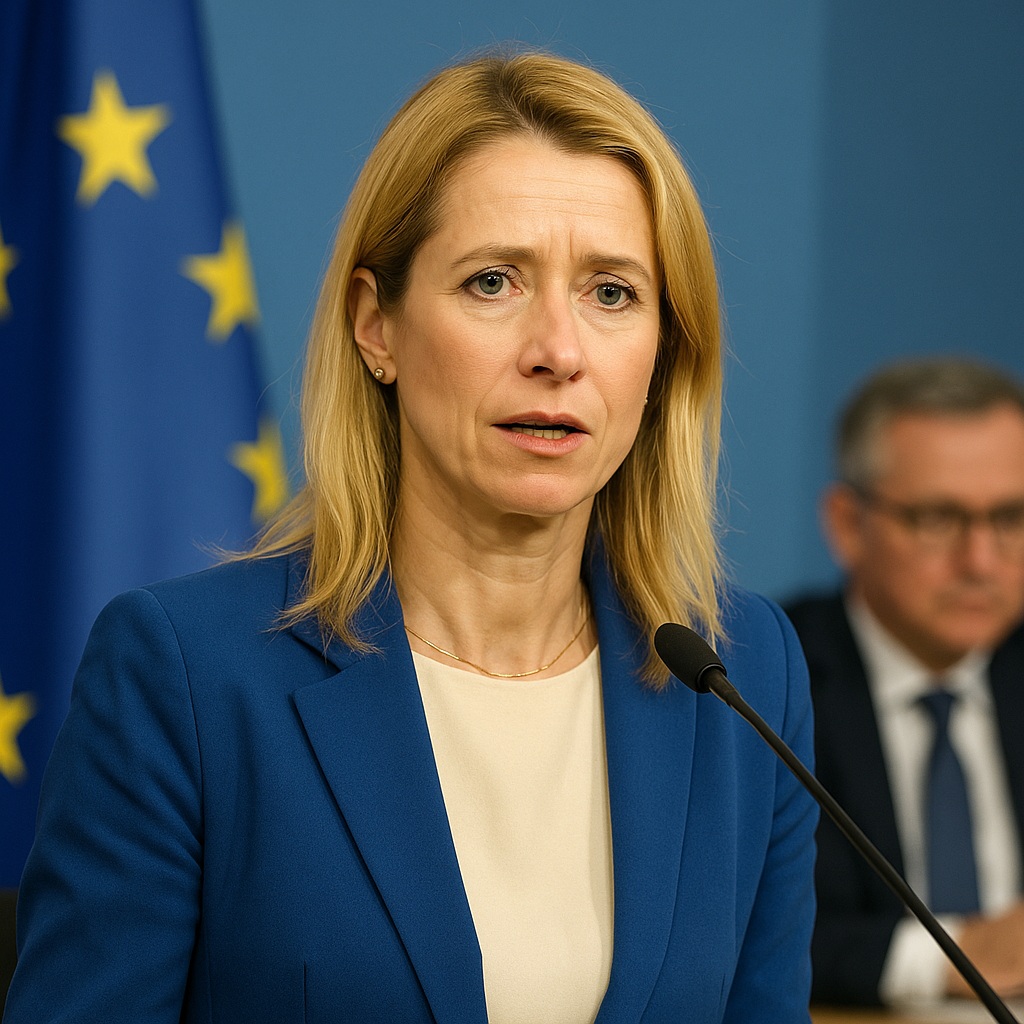
At a meeting of defence ministers, the EU’s top diplomat calls on the bloc to boost readiness and stop treating sabotage, cyber‑intrusions and disinformation as routine.
In a clear and urgent message delivered in the German capital, Kaja Kallas, the High Representative of the European Union for Foreign Affairs and Security Policy, warned that Europe cannot allow “hybrid threats” to slip into the realm of normalcy. Speaking after a meeting with defence ministers from major European states, Kallas insisted that sabotage, cyber‑attacks, drone incursions and sub‑threshold hostility must be met with collective resolve, not resigned acceptance.
“The fact that these operations today might feel routine does not make them less dangerous,” she said. “We must work together systematically to counter hybrid threats and restore deterrence.”
A Turning Point in European Defence Posture
The meeting in Berlin marked more than a routine gathering of defence officials. Against the backdrop of sustained pressure on Europe’s eastern flank, increased cyber aggression and the blurred lines of modern conflict, Kallas’ remarks signal a moment of reckoning for the Union.
Her message: the EU must stop treating hybrid warfare as a side‑issue and start treating it as a domain of confrontation on par with conventional threats.
The ministers in attendance represented both the heart and outer edges of the EU’s security architecture, underscoring the trans‑European nature of the challenge facing the bloc.
Kallas emphasised that the session was not merely symbolic. She pointed to ongoing efforts to improve military mobility, pool transport resources among member states and streamline permit processes for rapid deployment.
Why Hybrid Threats Are Gripping Europe’s Agenda
Hybrid threats have become an increasingly prominent concern in Brussels and capitals across Europe. Unlike overt military invasions, hybrid operations range from sabotage of critical infrastructure to coordinated disinformation campaigns and cross‑border drone raids. Their ambiguous nature allows adversaries to inflict disruption while avoiding formal thresholds of war.
Kallas warned that if these activities become simply “part of the background noise”, they risk eroding European resilience and democratic will. “We cannot accept hybrid threats as the new normal,” she stressed.
From Words to Capacity: The Road Ahead
The EU has announced several major defence initiatives—counter‑drone systems, expanded eastern flank monitoring and the development of a European air and space shield. But capacity takes time to build.
The Berlin meeting committed ministers to concrete steps: pooling resources, accelerating administrative procedures and improving joint logistics. Kallas underlined that Europe cannot rely solely on its trans‑atlantic partners and must strengthen internal cooperation and burden‑sharing.
Political and Strategic Implications
Kallas’ speech carries several layers of significance:
- It reflects a shift in tone—from reacting defensively to shaping a proactive European security posture.
- It places responsibility on member states to deliver real defence capability and readiness.
- It signals that persistent low‑grade aggression is unacceptable and will be confronted.
Challenges Ahead
Meeting these ambitions will not be easy. The EU faces structural and political hurdles, including divergent national priorities, resource constraints, slow bureaucracy and the inherent ambiguity of hybrid threats.
Legal and institutional frameworks must evolve to respond quickly to threats that fall below traditional war thresholds.
A Signal Beyond Europe
Kallas’ remarks also send a message beyond Europe’s borders. To adversaries, the signal is that hybrid tactics will not be allowed to become background activity. To allies, the EU is strengthening its own defence posture, complementing broader collective security efforts.
Conclusion: A Moment of Choice
Europe stands at a crossroads. The coming period will test whether unity expressed in Berlin becomes sustained action. Hybrid threats will continue to evolve, probing for weakness. In response, the EU must move from rhetoric to readiness, from coordination to cohesion.
As Kallas noted: “We must not accept this as our new normal.” Whether Europe rises to the challenge remains uncertain—but the call has been made, and the moment demands attention.

 The Tower Post