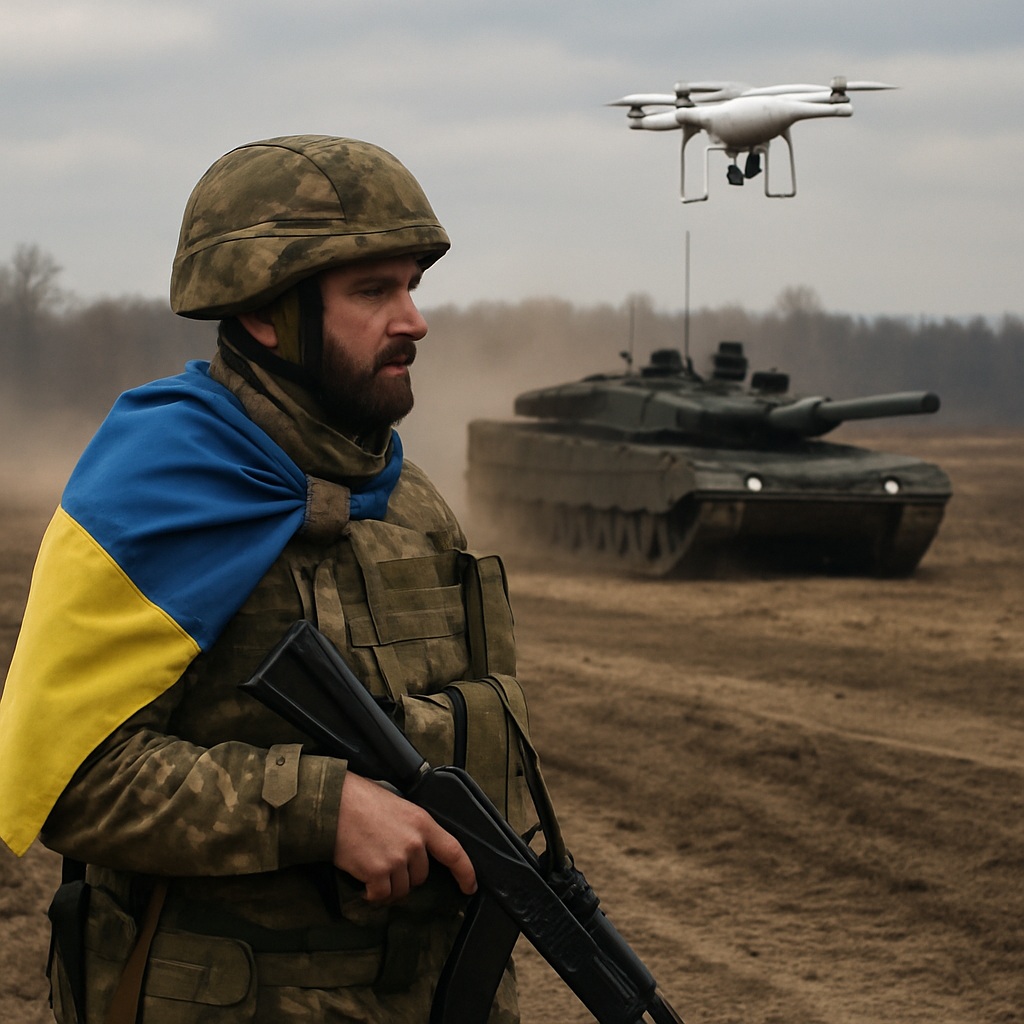
Frontline voices from Ukraine warn that Europe’s defence systems and NATO’s preparedness remain dangerously behind the realities of modern warfare.
In the grey early morning hours along the front-line east of a battered industrial city, veterans who have returned from months of combat speak with blunt urgency. They say that while NATO continues to project confidence in its readiness, those who have lived the war up close see a far more fragile picture—one that Europe can no longer afford to ignore.
“These aren’t the kinds of battles Western armies have spent the last decades preparing for,” one veteran medic explained. “Drones, electronic warfare, rapid missile strikes—everything moves faster and deadlier than the doctrine most NATO soldiers are trained on.” Their message, sharpened by years of fighting Russia, is that the alliance risks underestimating the scale and nature of the threat it may one day face.
Veterans who served across some of the most contested sectors of the conflict describe a battlefield defined by constant adaptation. Drone reconnaissance collapses what used to be safe rear areas. Artillery duels stretch for hours. Small infantry groups scatter and regroup under electronic interference. The fluid, unpredictable nature of the fight leaves little room for outdated manoeuvre doctrines. They argue that Western militaries, long shaped by counter-insurgency and small-unit expeditionary missions, are not yet mentally or structurally recalibrated for high-intensity conflict. “If NATO thinks it is ready,” remarked one foreign volunteer who fought alongside Ukrainian brigades, “I worry they’re preparing for the wrong kind of war.”
NATO officials emphasise that the alliance is undergoing historic modernisation. Member states have increased defence spending. Joint exercises are more frequent. New readiness forces have been announced. The alliance insists it can respond decisively to aggression. But veterans and analysts say the true test lies not in policy declarations but in whether Europe can actually sustain large-scale, months-long operations against a major power. NATO’s strength depends on logistics—munitions stockpiles, industrial capacity, secure transport corridors—and these remain areas of visible vulnerability.
Multiple shortcomings emerge repeatedly in conversations with those who’ve fought on the front lines. Training still emphasises linear assaults rather than dispersed, drone-dominated battlefields. Bureaucratic processes slow down adoption of new tactics and equipment. Production of artillery shells, air-defence missiles, and armoured systems continues to lag far behind wartime demand. Exercises rarely simulate the severe electronic warfare or constant reconnaissance pressure seen in Ukraine. Many European armies retain a peace-time mindset rather than one shaped by real combat urgency. These issues, veterans say, are not theoretical—they determine survival.
The conflict in Ukraine is a live demonstration of how Russia fights today. If NATO countries misjudge what it takes to counter that force, they risk a strategic miscalculation with continental consequences. Eastern European states, already within missile range of Russian territory, feel this acutely. Their defence officials privately echo the veterans’ message: readiness on paper is not readiness in practice. And deterrence only works if an adversary believes the alliance can and will fight effectively.
Veterans and defence specialists outline several steps to close the readiness gap. Integrate Ukrainian combat experience directly into NATO training frameworks. Rapidly adjust doctrine to account for drone swarms, contested airspace, and constant electronic disruption. Build sustainable, high-volume defence production across Europe. Reorient training toward harsh, realistic scenarios reflecting modern warfare’s tempo. Stress-test joint operations under the same levels of pressure Ukrainians face daily. These changes are essential not only for future conflicts but for ensuring the credibility of NATO’s core mission.
As Europe reflects on security commitments at this moment in mid-November, the voices from Ukraine resonate with renewed urgency. Veterans do not speak in abstractions—they speak from trench lines choked with mud, from shattered towns, from nights lit by drones humming overhead. Their warning is clear: the alliance must adapt now. Not next year. Not after another summit. Now—before the realities of modern warfare force NATO into a test it is not prepared to pass.



 The Tower Post