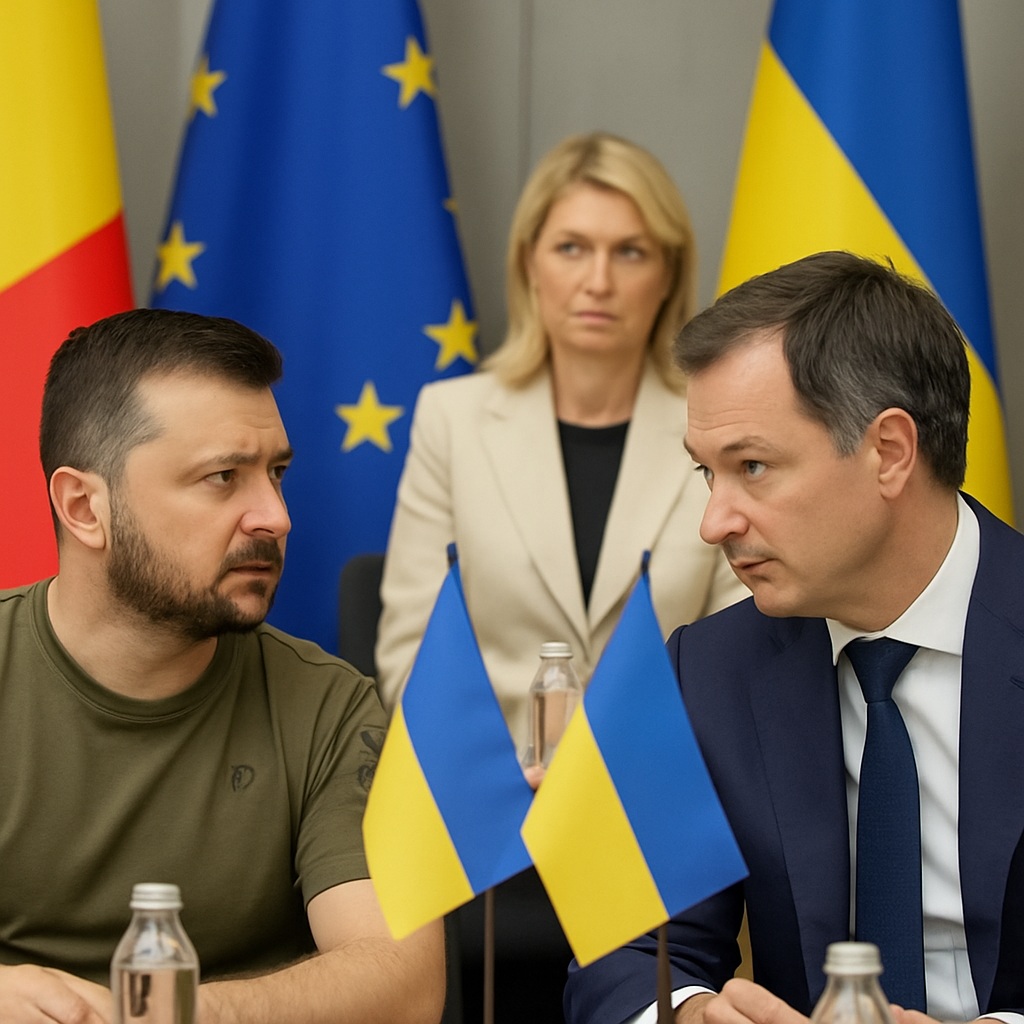
Internal political rifts and concerns over precedent slow Brussels’ backing for a landmark reconstruction package

Belgium is facing mounting pressure from European partners to endorse a proposed €140 billion loan package aimed at financing reparations and long-term reconstruction efforts in Ukraine. The initiative, driven by a coalition of EU states, seeks to establish a sustained financial framework to support Ukraine’s recovery, particularly as the war’s impact continues to reshape Europe’s political and economic landscape.
Yet as momentum grows in major EU capitals, Belgium has emerged as one of the more cautious voices. Officials in Brussels argue that the scale of the financing proposal raises important questions over liability, precedent, and the durability of political commitments across the bloc. The friction places Belgium in an increasingly uncomfortable position as negotiations intensify.
Within Belgium, the hesitation cuts across party lines. Members of the governing coalition express concern that endorsing such a large-scale debt mechanism could expose the country to unanticipated fiscal burdens. Others fear that the plan sets a precedent for future EU-level borrowing arrangements that might extend well beyond Ukraine’s reconstruction, potentially reshaping the bloc’s financial architecture.
Diplomats familiar with the discussions say Belgium does not oppose aid to Ukraine in principle. Instead, concerns center on the loan’s structure, the timeline for repayment, and whether the funds would be secured through Russian assets currently frozen under EU sanctions. Although several member states are backing a pathway that leverages those assets, Belgium remains wary about legal and geopolitical consequences if the assets are used without a clear international mandate.
Tensions have deepened in recent days as proponents of the initiative signal frustration. Some argue that delaying agreement sends the wrong message to Kyiv at a moment when European resolve is under renewed scrutiny. Others worry the hesitation might be interpreted as political fatigue within the EU, potentially undermining broader diplomatic efforts.
Belgian officials counter that prudence is necessary. They emphasize that decisions of this magnitude require careful deliberation—both to ensure financial sustainability and to avoid sparking legal disputes that could weaken the EU’s standing. Behind closed doors, there are also fears that domestic political actors will seize on the issue ahead of future electoral cycles, turning a European financing debate into a national flashpoint.
Despite the growing pressure, Belgian negotiators insist that progress is possible. They point to ongoing discussions aimed at modifying the loan’s guarantees, rebalancing risk-sharing among member states, and exploring additional layers of legal protection for the use of frozen assets.
For now, Belgium’s position continues to place it at the center of one of Europe’s most consequential financial negotiations. As diplomatic channels remain active, EU officials hope that compromise can be reached in time to maintain the bloc’s credibility and support Ukraine’s reconstruction trajectory.
Belgium’s ultimate decision will signal not only its stance on Ukraine but also its broader view of how far the EU should go in reshaping its collective financial tools for a new geopolitical era.



 The Tower Post