Eurostat’s latest data hints at a cautious decoupling between economic activity and greenhouse-gas output, but structural challenges continue to cloud the path ahead.
Across the European Union, greenhouse-gas emissions edged down by an estimated 0.4% in the second quarter of 2025, according to newly released Eurostat data. The drop, modest on its face, carries outsized symbolic weight: it marks another quarter in which emissions declined even as large parts of the EU economy showed signs of stabilization after a turbulent period of inflation, high energy costs, and geopolitical uncertainty.
For policymakers, the figures land at a delicate moment. The EU’s ambition to cut emissions by at least 55% by 2030 hinges largely on maintaining a long-term decoupling between economic activity and carbon output—something that has long been elusive. The latest data, while far from conclusive, offers cautious optimism that this separation may be slowly taking root.
Analysts point to several drivers behind the second-quarter decline. Industrial output remained relatively steady but more energy-efficient, helped by investments in cleaner manufacturing technologies and the gradual adoption of electrification across some of the bloc’s heaviest-emitting sectors. Meanwhile, households consumed slightly less energy overall, in part due to ongoing renovations supported by EU-level green-building incentives.
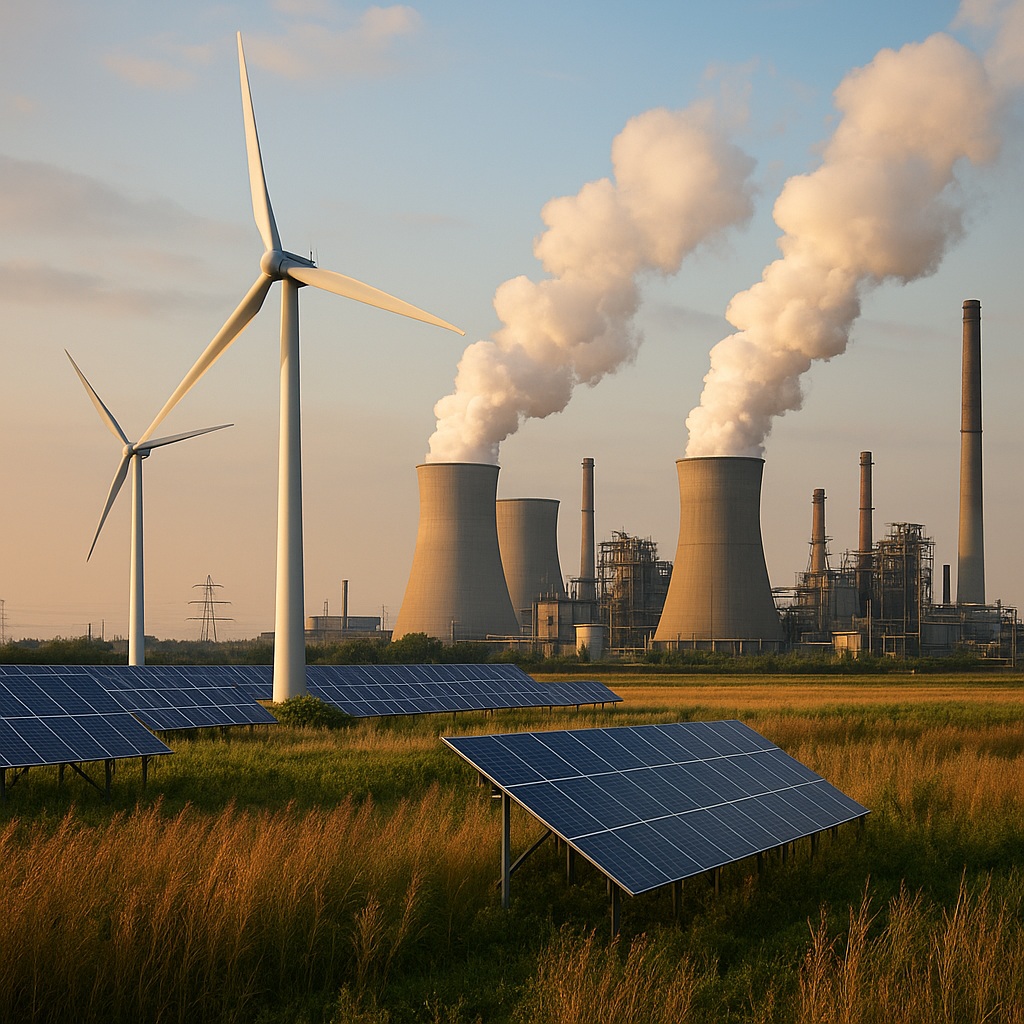
The power sector, once the main engine of emissions growth, continued its pivot toward low-carbon sources. Solar deployment accelerated through the summer, buoyed by streamlined permitting processes in several member states. Wind capacity also expanded, though grid-integration challenges and local opposition slowed progress in certain regions.
Still, the report underscores persistent vulnerabilities.
Transport emissions remain stubbornly high, reflecting a surge in road travel and slow adoption rates of electric vehicles in several eastern and southern member states. Freight activity, which had grown in response to intensified intra-EU demand, also contributed to the sector’s emissions inertia. Aviation, though still below its pre-pandemic peak, recorded a slight uptick that reversed part of last year’s gains.
Energy-intensive industries offer another mixed picture. While some sectors saw efficiency improvements, others—including chemicals and steel—struggled with volatile input prices and uneven access to clean-energy infrastructure. The divergence makes it harder for the bloc to achieve broad-based emissions reductions without further structural reforms.
Economists reviewing the data warn against over-interpreting the numbers. Weather patterns, inventory cycles, and timing of industrial maintenance can all influence quarterly emissions. A single quarter’s decline is encouraging but insufficient to confirm a sustained trend.
Moreover, the delicate balance between climate progress and economic resilience continues to test policymakers. Some member states remain wary that aggressive emissions-reduction measures could dampen industrial competitiveness, particularly in global markets where carbon pricing is less stringent.
The coming months may prove decisive. The EU is preparing revisions to several climate-related directives, including measures aimed at boosting renewable-energy integration, strengthening energy-efficiency standards, and accelerating the deployment of zero-emissions transport. With political negotiations intensifying, the latest Eurostat figures are likely to become a touchstone in the debate: proof for some that the EU can grow while emitting less, and a cautionary tale for others who see the reductions as too modest to meet long-term goals.
For now, the 0.4% decline offers a small but meaningful signal. As Europe moves toward the close of the year, the challenge remains not only to preserve this fragile progress but to transform it into a durable trajectory that aligns with the bloc’s climate ambitions.



 The Tower Post