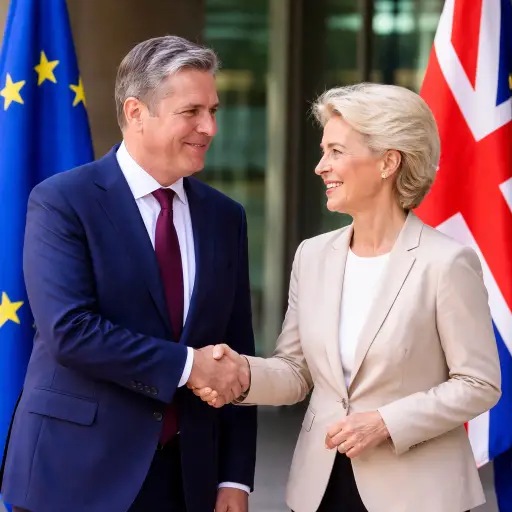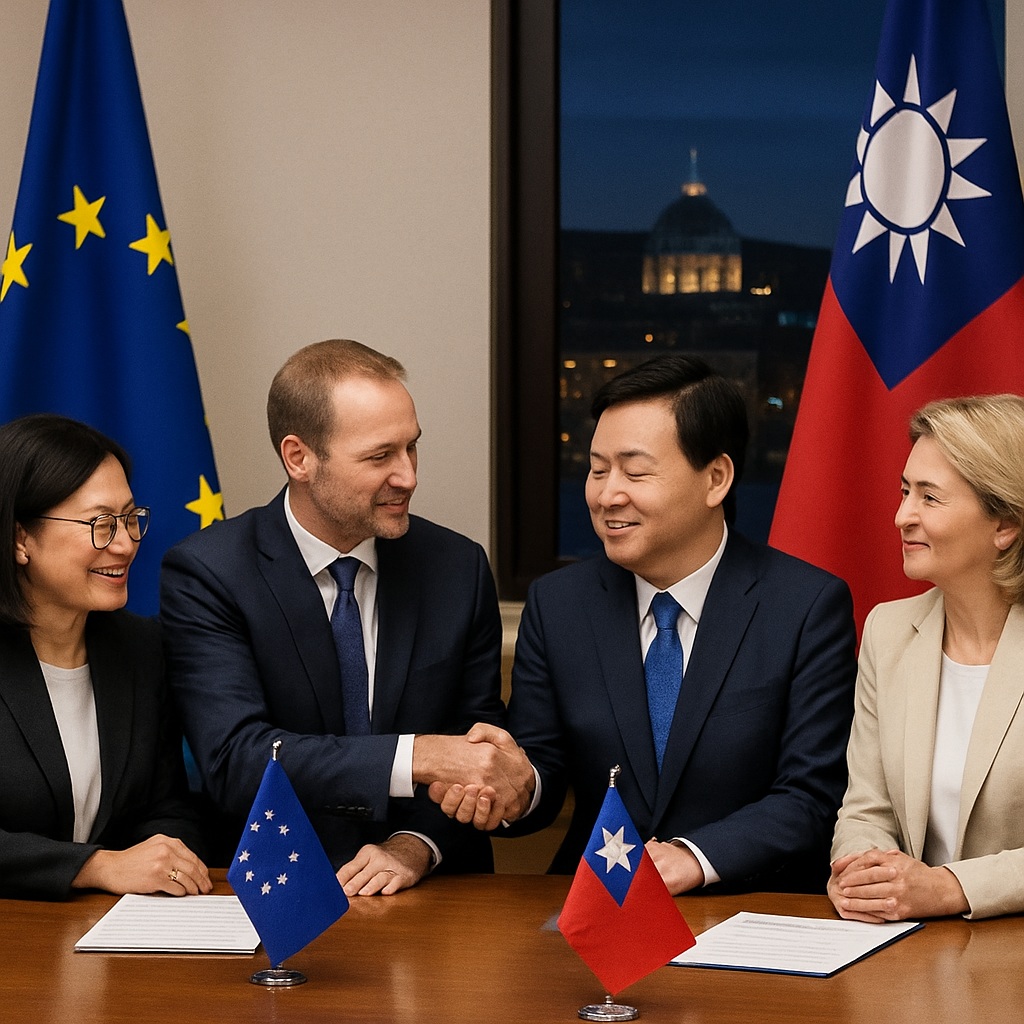
As China intensifies its diplomatic pressure campaign, Taiwan deepens political, economic, and cultural ties across Europe.

Taiwan’s expanding engagement in Europe is no longer a diplomatic footnote—it is becoming a structural feature of the continent’s evolving geopolitical outlook. In the quiet meeting rooms of Brussels, Prague, Vilnius, and other European capitals, Taiwan is strengthening relationships once constrained by China’s influence.
For years, European governments balanced a pragmatic relationship with Beijing against their democratic values. But this balance has shifted. Taiwan is gaining visibility in parliamentary discussions, research cooperation, supply‑chain strategies, and public political debate. Its representatives—long relegated to operating through quasi‑official channels—are increasingly welcomed as legitimate partners in conversations about technology, trade, security, and democratic resilience.
Europe’s Changing Posture
Across the continent, leaders are re‑evaluating what engagement with Taiwan means. The shift is driven by three major factors:
First, Europe’s push for semiconductor independence has highlighted strategic vulnerabilities. Taiwan, home to the world’s leading chipmakers, has become a critical partner for discussions about secure supply networks. European governments have begun hosting Taiwanese delegations focused on tech investment, training exchanges, and supply‑chain coordination.
Second, public opinion in many European democracies has hardened toward China. Concerns over human‑rights abuses, economic coercion, and security risks have prompted lawmakers to re‑examine long‑standing assumptions. Taiwan—framed as a fellow democracy under pressure—has gained sympathy and political attention.
Third, Europe’s Indo‑Pacific strategy increasingly includes Taiwan as a relevant actor. While not recognized as a sovereign state by most European countries, Taiwan is viewed as essential to regional stability. Diplomatic language has shifted from avoidance to cautious engagement, with parliaments and ministries acknowledging the importance of peace in the Taiwan Strait.
Taiwan’s Playbook: Soft Power, Values, and Technology
Taiwan’s approach in Europe is subtle but methodical. Rather than pursuing formal recognition—an unlikely goal—it focuses on impactful partnerships.
The island has expanded its network of representative offices across Europe, adding personnel dedicated to innovation, culture, education, and economic cooperation. Taiwan funds academic exchanges, cultural festivals, and joint technology programs, building goodwill and long‑term institutional links.
Taiwan also emphasizes shared democratic values. Its leaders frequently highlight similarities with European societies—open elections, vibrant civil society, and media freedom. This narrative resonates with European policymakers seeking to reaffirm their commitment to democratic principles amid increasing global authoritarianism.
Technology remains another cornerstone. Taiwan’s dominance in semiconductor production gives it leverage. Europe’s desire to safeguard critical technologies has opened the door to deeper cooperation, from joint research efforts to industrial‑policy discussions. For Europe, Taiwan is more than a diplomatic partner—it is a strategic asset.
Beijing’s Reaction — And Its Limits
Beijing’s protests against Taiwan‑Europe engagement have intensified. Chinese embassies across Europe lodge formal complaints when Taiwanese officials speak at public events or when lawmakers visit Taipei. Chinese state media routinely warns Europe that closer engagement with Taiwan will “damage bilateral ties.”
But these warnings now carry less weight than before. The political costs of supporting Taiwan are shrinking as more European countries engage openly. Diplomatic diversification, rising skepticism toward China, and recognition of Taiwan’s technological importance have all diluted China’s ability to enforce isolation.
Europe’s private sector also plays a role. As companies demand secure supply chains and alternative partners, engagement with Taiwan becomes economically rational—not merely symbolic.
Still, the risk of escalation remains. European governments are cautious, often framing their engagement as consistent with the “one China” policy. But the boundaries of that policy are being tested in practice, even if not in name.
The Road Ahead
Taiwan’s growing presence in Europe is not a sudden shift but a gradual reconfiguration of diplomatic space. The island is carving out a durable position built on shared values, economic complementarity, and a mutual desire for stability.
In the coming months, observers expect further expansion of parliamentary dialogues, technology partnerships, and cultural diplomacy. While Europe is unlikely to break with its official recognition of Beijing, the breadth and depth of Taiwan‑Europe engagement will continue to grow.
For Taiwan, this evolution represents a significant diplomatic success—one achieved not through confrontation but through persistence, cooperation, and a clear strategic vision.
On this mid‑November moment, Taiwan’s quiet advance across Europe signals a new chapter in the continent’s geopolitical landscape: one where democratic partnerships carry increasing weight, and where the island’s voice is being heard despite the pressure to silence it.