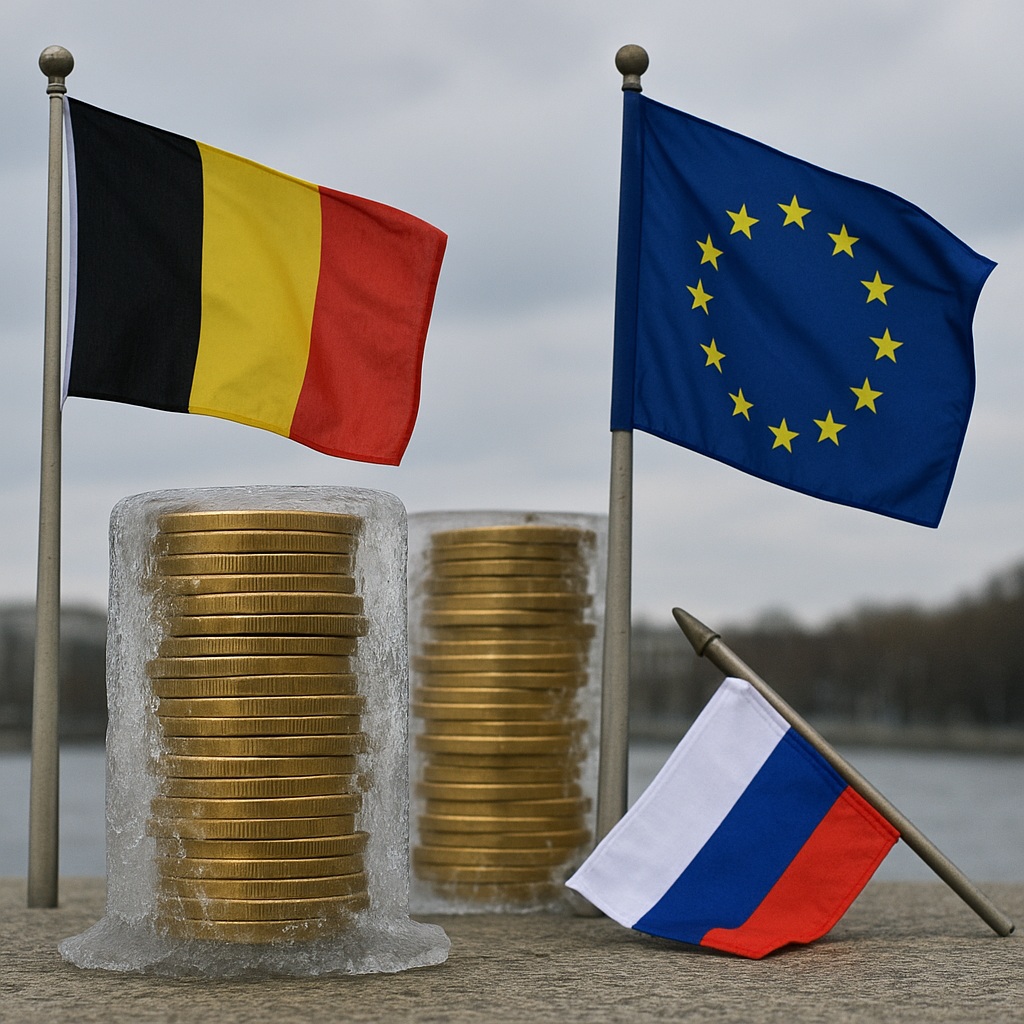
Brussels grows increasingly uneasy as the EU advances plans to repurpose Moscow’s immobilized funds for Ukraine, fearing potential retaliation and financial instability
Belgium has sharpened its tone in recent days as European Union institutions move closer to implementing a plan that would channel profits from frozen Russian sovereign assets into support for Ukraine. While the initiative has been presented as a strategic step toward ensuring long-term stability for Kyiv, Belgium is urging the bloc to consider the broader consequences, warning that the proposal could trigger financial backlash and geopolitical escalation.
Belgian officials argue that the plan—though politically popular among many EU members—carries substantial risks that have not been fully assessed. They caution that Russia may not limit its response to diplomatic protest. Instead, counter-measures could extend into the economic and cyber realms, potentially impacting European infrastructure, financial systems, or energy networks. The concern is particularly acute because Belgium hosts Euroclear, the clearinghouse responsible for holding a large portion of the frozen Russian central bank reserves.
Senior policymakers in Brussels have privately expressed frustration that the debate is being driven more by political urgency than by sober financial analysis. They emphasize that the European financial system’s credibility depends on the principle that sovereign assets are protected under international law, even during geopolitical conflict. To undermine this principle, Belgium fears, would create uncertainty in global markets, potentially prompting non-Western states to diversify away from European financial institutions.
The stakes for Belgium are uniquely high. Euroclear’s central position exposes the country to direct consequences if Moscow retaliates or seeks to undermine the clearinghouse’s role in the global financial architecture. Belgian officials are wary that retaliatory actions could include sanctions, asset seizures abroad, or targeted destabilization efforts. In recent briefings to EU partners, Belgium has stressed that these risks are not hypothetical but grounded in Moscow’s past behavior.
Beyond the immediate financial threats, Belgium has raised broader legal concerns. The government insists that any mechanism adopted by the EU must be firmly rooted in international law to avoid jeopardizing the reputation of European institutions. Belgian legal advisers have warned that if the EU is perceived as manipulating sovereign assets without rigorous legal grounding, the move could face challenges in international courts—challenges that could weaken the bloc’s standing.
Belgium is advocating for a more cautious, collective approach. From Brussels’ perspective, solidarity with Ukraine remains unwavering, but the path forward must be carefully structured to ensure long-term stability. Belgian representatives argue that the EU should explore alternative funding models that distribute financial risks more evenly across member states rather than placing disproportionate exposure on one country.
The debate reveals deeper tensions within the EU over how aggressively to use financial leverage against Russia. Some member states push for bold measures that demonstrate resolve and deter Moscow. Others, like Belgium, argue that the effectiveness of such measures must be weighed against the possibility of unintended consequences affecting Europe’s own security and economic resilience.
As discussions continue, the EU finds itself navigating a complex intersection of law, finance, and geopolitics. Belgium’s warnings serve as a reminder that decisions taken in the name of urgency may carry long-term costs, particularly when they challenge norms governing global financial stability. Whether these cautionary notes will alter the trajectory of the EU’s plan remains uncertain, but the growing unease highlights the sensitivity of weaponizing financial instruments in an increasingly volatile geopolitical landscape.
In the coming days, EU leaders will continue deliberations, balancing support for Ukraine with safeguarding Europe’s financial system. Belgium’s insistence on caution ensures that the debate will remain robust, signaling that the bloc must not only act decisively but also responsibly as it confronts the consequences of an era defined by geopolitical confrontation.

 The Tower Post