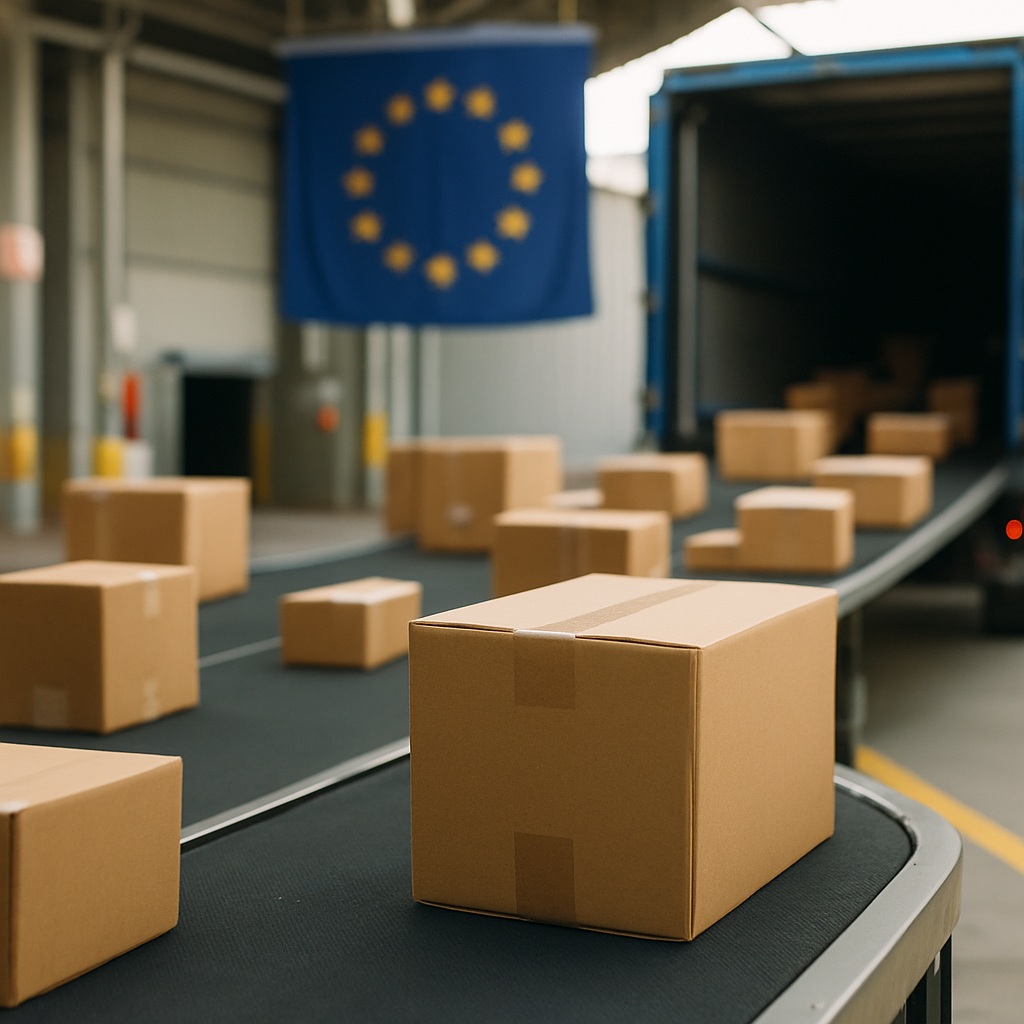
Europe’s move to crack down on low-value imports shakes margins, raises costs and risks higher prices for online shoppers
Brussels — In a sweeping move set to reshape the global e‑commerce landscape, the European Union is advancing plans to eliminate the long‑standing duty‑free threshold for low‑value parcels entering the bloc. The change is expected to heavily impact China‑based merchants who have relied on low‑cost shipping and minimal customs friction to reach European consumers.
The rules target parcels valued under €150 that have historically benefited from simplified customs treatment. While the measure has long been criticized by European retailers, the accelerated timeline has caught many foreign merchants off‑guard.
Impact on China‑based sellers
For small and mid‑sized exporters, higher compliance requirements are raising alarms. Many sellers already face thin margins, and the EU’s tightening of documentation, VAT registration, and customs classification could significantly increase operational costs. Some merchants report they may need to raise prices or limit product ranges to remain competitive, while others are exploring costlier options such as EU‑based fulfillment hubs.
Pressure on margins and strategy
The elimination of the threshold threatens the business model behind ultra‑cheap online goods that have proliferated across Europe. Sellers who built their offerings on scale and low margins now face increased financial pressure, and logistics partners anticipate a surge in processing workloads as more parcels require standard customs treatment.
Consumer‑price consequences
European consumers may see noticeable price increases as compliance expenses trickle down into retail pricing. Fewer low‑priced options and slower delivery times are expected as platforms and sellers adjust to the new regulatory environment. Some trade observers warn that this could introduce modest inflationary pressure in the online retail sector.
Broader ripple effects
As the EU reinforces its customs framework, the shift may prompt e‑commerce platforms to reconsider their regional strategies. Some may reduce their reliance on direct‑from‑Asia shipping or redirect global expansion efforts toward markets with fewer regulatory hurdles. On the European side, authorities argue the reforms will help reduce counterfeit, unsafe, or misdeclared goods entering the single market.
A watershed moment
With global scrutiny rising around low‑value import loopholes, the EU’s movement symbolizes a broader shift toward leveling the playing field between domestic retailers and heavily export‑driven foreign platforms. Although uncertainties remain regarding full enforcement and cross‑border coordination, the direction is clear: low‑value parcels will no longer enjoy the near‑frictionless access they once had.
As the holiday shopping season progresses, both consumers and merchants are preparing for a landscape in which ultra‑cheap imports may no longer define Europe’s e‑commerce ecosystem.



 The Tower Post